Who Is Michel Kuka Mboladinga? Meet the DR Congo Superfan Who Stands Still for 90 Minutes at the World Cup

Add us on Google
Who Is Michel Kuka Mboladinga? Meet the DR Congo Superfan Who Stands Still for 90 Minutes at the World Cup
Add us on Google
Imago
Michel Kuka Mboladinga
Imago
Michel Kuka Mboladinga
When DR Congo held Portugal to a surprising 1-1 draw at the 2026 World Cup, supporters celebrated across the country. Yet something felt different inside the stadium. One familiar figure was missing. For years, television cameras had regularly found Michel Kuka Mboladinga standing perfectly still among thousands of passionate fans. While everyone else jumped, sang, and waved flags, he remained frozen in place. His story connects sport, history, national identity, and one of the most important figures in Congolese history.
Watch What’s Trending Now!
Who is Michel Kuka Mboladinga, and why does he stand completely still for 90 minutes?
Michel Kuka Mboladinga is a Congolese football supporter known throughout Africa for a unique matchday ritual. Born in 1976, he has followed DR Congo’s national team, the Leopards, for years. Since 2013, however, he has supported them differently from everyone else.
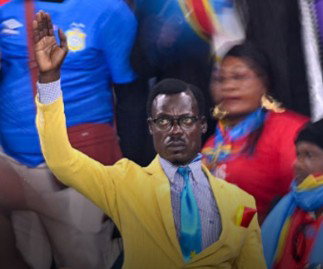
During matches, he stands completely motionless for the entire ninety minutes. Sometimes he remains still even longer during extra time. He often stands on a small platform while thousands of supporters move around him. His right arm points upward toward the sky. His face rarely changes expression. Television viewers often mistake him for an actual statue.
The pose is deliberate. Mboladinga copies the famous statue of Patrice Lumumba in Kinshasa. He even dresses to resemble another era, wearing suits in Congolese national colors alongside vintage-style glasses. Before major matches, he reportedly trains by standing still for nearly an hour. For him, the gesture isn’t entertainment. He describes it as a patriotic mission that combines art, memory, and support for football.
Who was Patrice Lumumba, and why is his statue so meaningful to DR Congo?
Mboladinga’s nickname, “Lumumba Vea,” reflects the figure he honors every match. Patrice Lumumba was DR Congo’s first prime minister after independence from Belgium in 1960. Many Congolese regard him as a national hero because he fought for sovereignty during a difficult period in the country’s history.
His story ended tragically. In 1961, during the Congo Crisis, Lumumba was executed after being transferred to the breakaway state of Katanga. Historians have documented direct involvement by Belgian officers and officials in events leading to his death. His assassination became one of Africa’s most significant political tragedies.
Today, Lumumba symbolizes dignity, freedom, and national pride for many Congolese citizens. Mboladinga’s raised arm mirrors the famous Kinshasa statue dedicated to him. Every match becomes a public reminder of Lumumba’s legacy. Through football, Mboladinga keeps that memory alive for younger generations who never experienced those historic events.
View this post on Instagram
When did Mboladinga go viral, and how did he become DR Congo’s most famous fan?
Although Mboladinga began his routine in 2013, global attention arrived much later. His breakthrough came during the 2025 Africa Cup of Nations in Morocco. DR Congo enjoyed an impressive tournament, drawing against Senegal and reaching the knockout rounds before losing 1-0 to Algeria after extra time.
Broadcast cameras repeatedly focused on the motionless supporter among emotional crowds. Social media quickly embraced him. Fans nicknamed him “the statue supporter” and “the grandson of Lumumba.” Images of his unwavering pose spread worldwide.
His popularity grew further after DR Congo’s elimination. Overcome with emotion, Mboladinga collapsed into surrounding supporters after the final whistle. Later, Algerian player Mohamed Amine Amoura faced criticism for mocking the gesture during celebrations. After learning its meaning, he apologized publicly. Algeria’s squad later presented Mboladinga with special jerseys, turning a controversy into reconciliation.
Why did Mboladinga miss DR Congo’s World Cup opener against Portugal, and when does he return?
Despite becoming a symbol of DR Congo’s qualification campaign, he missed the team’s opening World Cup match against Portugal. The reason had nothing to do with football.
Travel complications linked to U.S. entry restrictions during an Ebola-related health situation delayed his clearance. As part of the requirements, he was completing a 21-day quarantine period. While supporters watched DR Congo earn a memorable draw against Portugal, their most famous fan remained absent.
Fortunately, the absence was only temporary. He traveled with the wider delegation and is expected to return for DR Congo’s second match against Uzbekistan. His presence means more than colorful support. For many Congolese fans, he represents history standing alongside football, reminding them that every match carries memories reaching far beyond the pitch.
Written by

Edited by

Snehal Dogra