
Imago
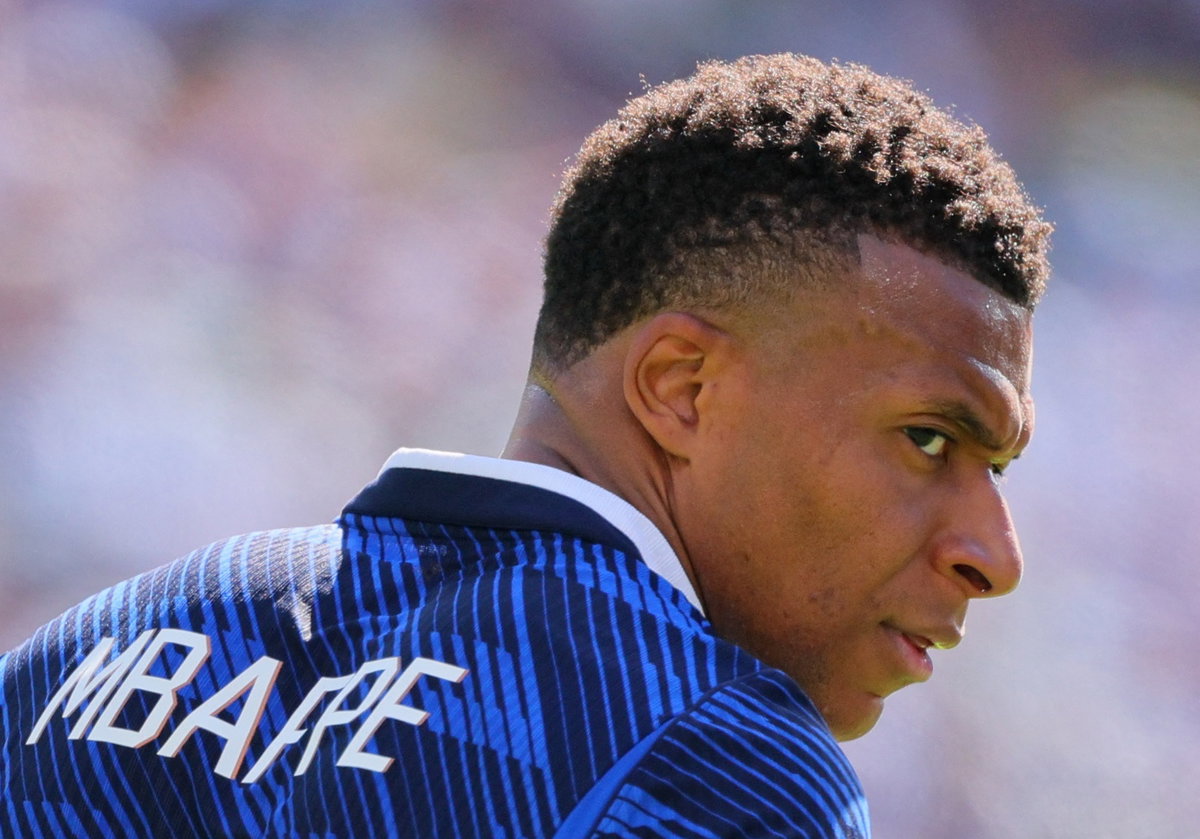
June 16, 2026; East Rutherford, New Jersey, U.S.; France’s Kylian Mbappe. Mandatory Credit: Caean Couto-Imagn Images
Imago
June 16, 2026; East Rutherford, New Jersey, U.S.; France’s Kylian Mbappe. Mandatory Credit: Caean Couto-Imagn Images
The 2026 World Cup’s hydration break has become the talking point for the entire soccer world. An effort from FIFA to protect players from the intense North American summer heat has players, coaches, and analysts all offering their takes. But one of the best players in world soccer, Kylian Mbappe, explained why players should be the last ones to have an opinion on the hydration break.
Watch What’s Trending Now!
Speaking to the media ahead of France’s next match, Mbappe replied to a journalist when asked about his views on the hydration break.
“Hydration breaks? Don’t ask us players for our opinion. We’re very reactionary. If tomorrow we’re dominating at the 25th minute and there’s a hydration break, we’ll be angry. Because it breaks our rhythm, but if the weather is hot, or we’re being dominated, I’ll be happy.”
The France skipper’s response caught everyone by surprise as he addressed the momentum-changing nature of the hydration breaks. The referee usually calls for a hydration break midway through each half, and FIFA mandated the break at every match regardless of temperature. The break usually lasts for three minutes, and broadcasters are using this window to cut to commercials.
🚨🗣️ Kylian Mbappé: "Hydration breaks? Don't ask us players for our opinion, we're very reactionary."
"If tomorrow we're dominating at the 25th minute and there's a hydration break, we'll be angry."
"Because it breaks our rhythm, but if the weather is hot, or we're being… pic.twitter.com/9xdvuy5oXM
— The Touchline | 𝐓 (@TouchlineX) June 22, 2026
This was deemed by many as an attempt to divide the game into four quarters and to add a new stream of revenue through advertising. Coaches have offered competing views on the break’s strategic value.
France coach Didier Deschamps praised the break for allowing them to break the game into different parts and try new tactics. While Germany’s Julian Nagelsmann said he needed the break to reassess the opposition and come up with new tactics.
But Uruguay’s legendary coach Marcelo Bielsa was unforgiving of the hydration break. “This change of culture does not add anything and takes away a lot. I will just say that before this decision, soccer had a characteristic; now it has another. People fall in love with the game because of its characteristics,” he said per Reuters.
Players too started pitching in, as Netherlands captain Virgil van Dijk was the first to speak on this.
“I was obviously watching almost all of the games up until today. I think every time we go to commercials, it’s not really something that I like,” he revealed after the Netherlands’ first game against Japan.
England goalkeeper Jordan Pickford has revealed he began to go along with the idea of the hydration break.
“They are not going to stop happening, so we may as well get used to them and treat them as an advantage, not a disadvantage,” he told the BBC.
Kylian Mbappe was the latest to add his voice to this issue. The 27-year-old answered with his usual honesty. From openly discussing the flaws in his defensive contributions to declaring he will never send his children into soccer, he earned many admirers for not being a PR-trained persona and speaking his heart out.
After scoring twice for France against Senegal in a 3-1 win, Mbappe became their record goalscorer with 58 goals, surpassing Olivier Giroud’s tally of 57. He also has 14 World Cup goals to his name and sits second behind Lionel Messi with 16. He will be in action against Iraq on Monday, as a victory will confirm France’s spot in the round of 32.
Hydration breaks are indeed momentum breaks, says an iconic coach
A hydration break offers much-needed gap to players from non-stop action. Unlike the NBA or the NFL, soccer has no provisions for a timeout or an enforced break. The hydration breaks often act like stop points, as the restarts tell a different story after the break. USWNT coach Emma Hayes made a fantastic analogy about hydration breaks.
“It’s advantageous for the team losing momentum. That’s why I call them momentum breaks,” Hayes told ITV. “When you’re on top, you don’t want it; when you’re losing, you do,” she added.
It was very similar to what Kylian Mbappe felt as the players look for a break when things are not going their way. The half-time break used to be the only respite for soccer stars until now. But the introduction of the break has been a game-changer, and numbers back that up.
After 35 matches at the World Cup, 59 of the 105 goals at the World Cup have been directly scored after the hydration break restart, according to SportStar. It’s not only about the goals, but it’s also about the change of momentum.
The 1-1 draw between Brazil and Morocco had a similar pattern. Morocco took a shock lead against Brazil and were cruising before the break. But they lost control of the match after the resumption as Brazil scored just minutes later.
Similar patterns were seen in Australia’s smash-and-grab 2-0 victory against Turkiye as both their goals came after the hydration break. Curacao were in dreamland when they equalized against Germany heading into the break in the first half. But Nagelsmann completely flipped the script as he used the break to come up with a new scheme and rally his Germany team to a 7-1 win.
“For me, it’s a coaching break more than a cooling break, so to me, it’s very important. Maybe if we are in a good moment, in a good flow, maybe it can interrupt, so this also we will see,” Belgium coach Rudi Garcia said.
The footballing world rarely comes together on any issue, but the hydration break certainly managed to achieve that rare feat, but Kylian Mbappe best believes players are left out for the time being.
