Imago
Credits: Imago
Imago
Credits: Imago
Historically, track and field has dealt with low funding and visibility, a problem that star hurdler Sydney McLaughlin-Levrone didn’t hesitate to call out last year: “There is not enough money in our sport to push it the way we really want to.” One year later, however, there are some positive signs for the sport.


McLaughlin-Levrone, who was previously limited by the financial means of the sport, is now earning $8.2 million, which places her and track and field on par with the most lucrative players in tennis and the WNBA.
Watch What’s Trending Now!
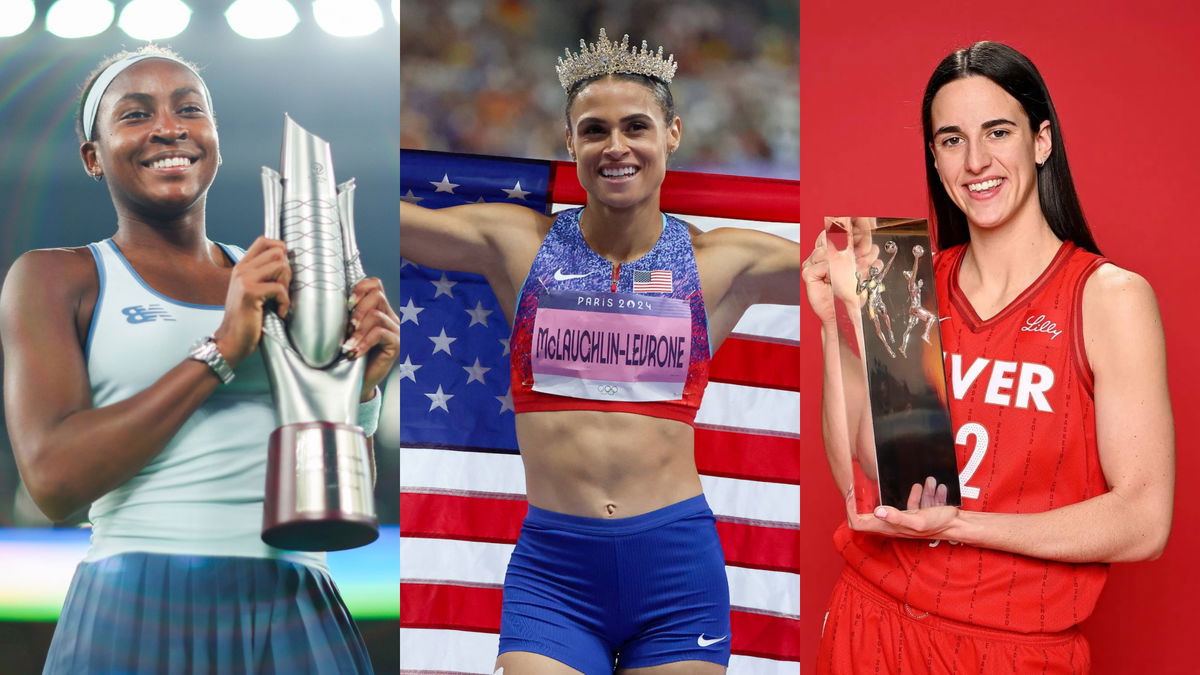
On December 16th, Forbes dropped its 2025 list of the World’s Highest-Paid Female Athletes. Topping the list were a number of tennis stars like Coco Gauff, in the lead with $33 million, and just ahead of Aryna Sabalenka, who made $30 million. Iga Swiatek came in third with $25.1 million, then came snowboarder Eileen Gu and another tennis star, Qinwen Zheng.
But in the mix was Sydney McLaughlin-Levrone, who broke through as the only track and field athlete to make the cut, with her $8.2 million tying her in 18th place alongside skiing’s comeback queen, Lindsey Vonn. What makes the 26-year-old’s inclusion more significant is the fact that it’s been nearly a decade since a track athlete last cracked the global earnings list.
Sydney McLaughlin-Levrone is the highest paid female athlete in Track and Field. Sydney was the only track athlete to appear in the Forbes top 20 list of the highest paid athletes of 2025.
She earned over 8 million dollars from brands such as New Balance, Neutrogena & TAG Heuer pic.twitter.com/vK2FBOu0E0
— Sydney McLaughlin fans (@sydmclaughlinle) December 16, 2025
Back in 2016, it was Usain Bolt who appeared at No. 32 with around $32.5 million, making him the highest-paid track athlete ever on the list. Now, for the first time, a female track star has reached that milestone.
So how did McLaughlin-Levrone do it? Her on-field earnings amounted to $0.2 million, while off-field she made $8 million. Off the track, she is a marketing powerhouse, with sponsorship from New Balance, Gatorade, Neutrogena, TAG Heuer, Visa, Oakley, Procter & Gamble, Google Pay, and more.
On the track, she’s unstoppable. Sydney McLaughlin-Levrone won the 400m gold at the 2025 World Athletics Championships in Tokyo with a time of 47.78 seconds, the second‑fastest 400m in history, and set a new championship record.
In doing so, she became the first person ever to win world titles in both the 400m flat and the 400m hurdles. At the same championships, she broke the American record in the 400m, running 48.29 seconds in the semifinals.
Throughout 2025, Sydney McLaughlin-Levrone remained undefeated in both the 400m flat and the 400m hurdles, with her winning streak extending across 24 consecutive races when in both disciplines. At the end of the season, she was also named the Female Athlete of the Year, one of the most prestigious individual awards in track and field, and was voted World Athlete of the Year by fans.
Despite track and field rarely making these global earnings charts compared to sports like soccer, basketball, the NFL, golf, boxing, and tennis, which historically dominate the list, Sydney McLaughlin-Levrone has shown that star power can break through.
Why do track athletes like Sydney McLaughlin-Levrone earn less than other sports stars?
Most of the massive money in sports today comes from TV rights and sponsorship deals, which pay leagues and athletes a share of the revenue. Sports like the NBA, NFL, and top football leagues sell huge broadcast contracts that generate billions of dollars.
Track and field, however, doesn’t have that luxury. There’s no major league TV deal paying athletes directly, and they don’t get a cut of Olympic broadcast income.
That means even when millions of people watch the Olympics, the athletes themselves rarely see benefit financially.
On top of that, track and field events get the most exposure at the Olympics or world championships. Other events such as the Diamond League have much smaller audiences and don’t get anywhere near the prime-time treatment on television that weekly basketball, football, and even tennis tournaments get.
And unlike team sports with contracts and guaranteed pay, track and field athletes generally win prize money at meets and are heavily dependent on sponsorships.
Winning a Diamond League competition may reward you with a few thousand dollars—$20,000 for a series meeting and $50,000 for the final—and even the prize for an Olympic gold medal pales in comparison to what athletes get playing in a professional league.
In contrast, leagues such as the WNBA pay less than men’s sports but have a steady income from ticket sales, media contracts, and merchandise, and player salaries are only growing. Track and field doesn’t have that kind of professional league.
Still, athletes and entrepreneurs are working to change the game.
Noah Lyles has emphasized the need for more exposure and better marketing. He suggested that building fan interest comes from showcasing athletes’ personalities after big moments like the Olympics: “If you are showing your personalities to the right people, you will gain notoriety.”
Another tech entrepreneur, Alexis Ohanian, is also working towards taking track and field to the cultural mainstream with his Athlos series, especially with women’s events. Through initiatives such as these, track and field is gradually evolving towards a model in which athletes will finally be rewarded in line with their efforts.