Imago
Credits: IMAGO
Imago
Credits: IMAGO
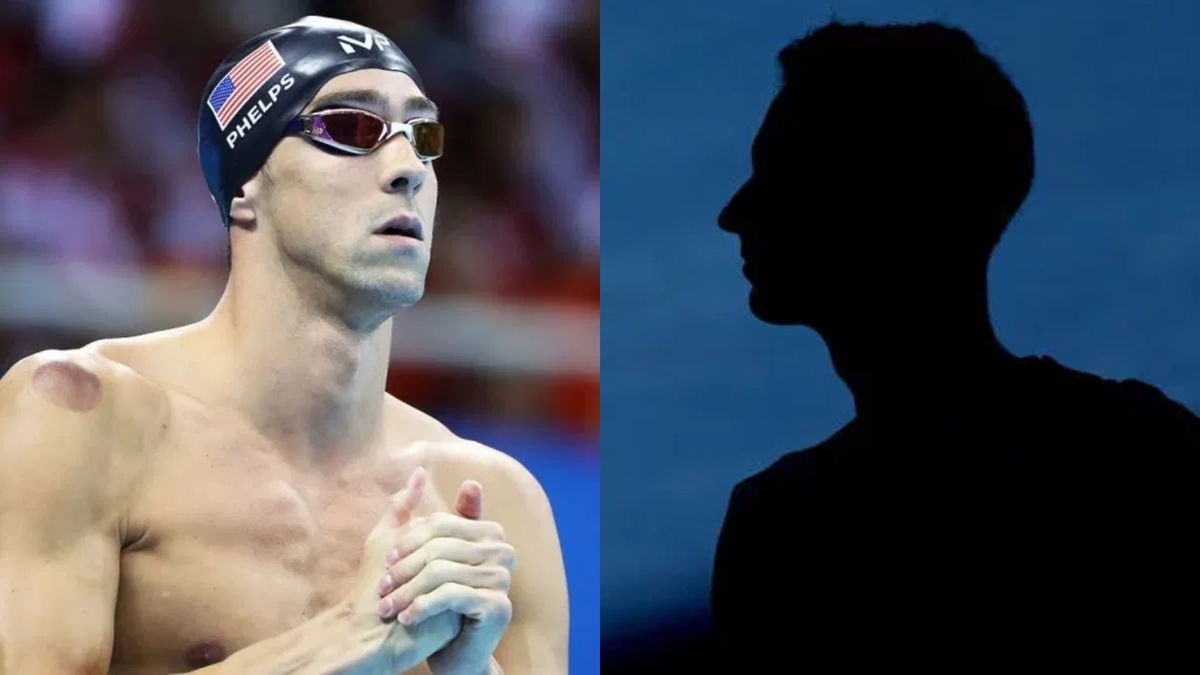
The end of the swimming events at the 2016 Rio Olympics painted a triumphant picture: Ryan Murphy, Cody Miller, Michael Phelps, and Nathan Adrian standing tall atop the podium after winning and setting a world record in the 4x100m medley relay, in what was Michael Phelps’ swansong in the sport. But nearly a decade later, some of that triumph has been dulled with one member’s upcoming foray into the Enhanced Games.

Since then, Murphy has continued to swim competitively, winning golds at the Tokyo and Paris Olympics, while Phelps and Adrian have been enjoying retired life. So had Miller after announcing his retirement last December. Except now, the 33-year-old has announced he’s the latest entrant into next year’s controversial Enhanced Games, making him the first Olympic gold medalist to sign on.
Watch What’s Trending Now!
“I’m very excited to join the field and compete in the Enhanced Games,” wrote Miller in a press release. “Athletes in our sport deserve to be treated like true professionals. That starts with prioritizing safety and well-being, and I’m confident Enhanced’s transparent, medically supported system does exactly that. I believe in their vision: to give athletes the best support in the world.”
The Enhanced Games allow athletes to compete while taking performance-enhancing substances that are banned in traditional sports. But unlike other entrants, Miller’s decision is extra surprising considering it was only in June when he flatly replied “No” when asked on his YouTube channel if he’d ever join the Enhanced Games.

Getty
OMAHA, NEBRASKA – JUNE 16: Cody Miller of the United States reacts after competing in a preliminary heat for the Men’s 200m breaststroke during Day Four of the 2021 U.S. Olympic Team Swimming Trials at CHI Health Center on June 16, 2021 in Omaha, Nebraska. (Photo by Maddie Meyer/Getty Images)
However, Miller added that he felt it was important for people to see both sides of the story. Since then, he has played devil’s advocate, posting videos on his channel discussing the Enhanced Games, even agreeing to some of its core principles.
“I also think that I love the mission,” said Miller in a podcast episode on the Enhanced Games in July. “A part of the mission of the enhanced games is providing the athletes the ability to perform at their absolute fastest.”
But while his earlier videos didn’t express overt support, a more recent video from October titled “5 Reasons Enhanced Games WONT FAIL,” suggested he was warming up more and more to the idea, perhaps hinting at his own involvement to come.
But before his changing stance, Miller was vocal about his support for anti-doping policies in swimming. He was one among many athletes who voiced their frustration at the inclusion of 23 Chinese swimmers at the 2024 Olympics after they tested positive for banned substances.
“I think it’s just frustrating for all the athletes that do go through the process of dealing with USADA (the U.S. Anti-Doping Agency) on a regular basis,” he said. “I mean, they show up to my house when I’m trying to put my kids to bed and try to feed them dinner. And I have to stand in the restroom with a stranger and pee in a cup.”
Moreover, Miller was also part of the International Swimming League with DC Trident, which is strict about anti-doping rules. Now, with this announcement, he becomes the 14th swimmer to join the Enhanced Games, in an about-face that will undoubtedly stir further debate on the ethics and legality of participating in the Las Vegas event.
Why are athletes joining the Enhanced Games, and is everyone on board?
The World Anti-Doping Agency (WADA) has been extremely blunt: it’s risky to allow athletes to take PEDs, even with medical supervision. WADA asserted that the Enhanced Games would put the health and well-being of athletes at risk, as many of the banned substances have caused long-term injuries and death that are severe.
It was likewise condemned by the International Olympic Committee (IOC), which described it as “irresponsible and immoral.” They warn that it undermines the integrity of sport and carries serious, life-threatening health risks. But still, the Enhanced Games keep attracting athletes.
Big names in swimming like Australia’s James Magnussen, Great Britain’s Ben Proud, and Ireland’s Shane Ryan have signed on. The reason? Money. According to Proud, the prize money from a single race would match that from 13 world titles.
The event is indeed offering some massive financial incentives, including a $1 million bonus for anyone who breaks the world record in marquee events like the 50-meter freestyle on top of $250,000 per event. But not everyone is impressed with the whole operation.
Reuters
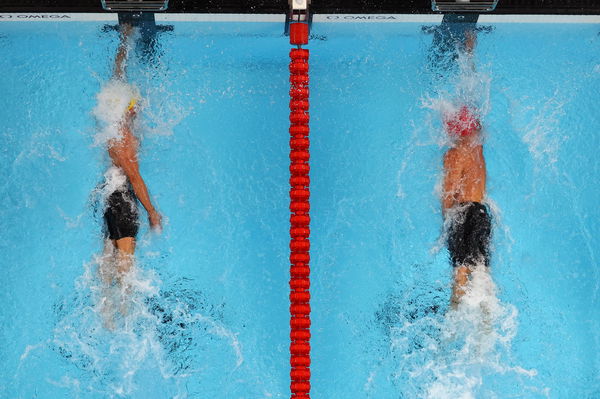
Paris 2024 Olympics – Swimming – Men’s 50m Freestyle Final – Paris La Defense Arena, Nanterre, France – August 02, 2024. Cameron McEvoy of Australia in action as he wins gold alongside silver medallist Benjamin Proud of Britain REUTERS/Marko Djurica
Kieren Perkins, the Australian Olympic legend, did not mince words, saying that “someone will die” if performance-enhancing drugs are normalized in competition. Irish swimmer Daniel Wiffen has been similarly outspoken, stating the Enhanced Games are “not the same sport” as traditional swimming.
He criticized athletes joining the event: “Swimmers are doing it for the money, and you can understand why. There’s just not enough money in our sport.”
Swedish Olympic champion Sarah Sjostrom has also vocally denounced the games, distancing herself from those who are slated to participate. “At least I’ve blocked and unfollowed all those who choose to join. I don’t want to see it on social media or see anything about it,” she said last month.
On one hand, the financial incentives have been too great to ignore for some athletes who argue that the rewards provide a level of financial security that isn’t afforded by traditional competitive swimming. On the other, the health risks and ethical concerns make many experts and competitors deeply uneasy.
The question remains: is this the future of sport or a dangerous experiment? Only time will tell.