Imago
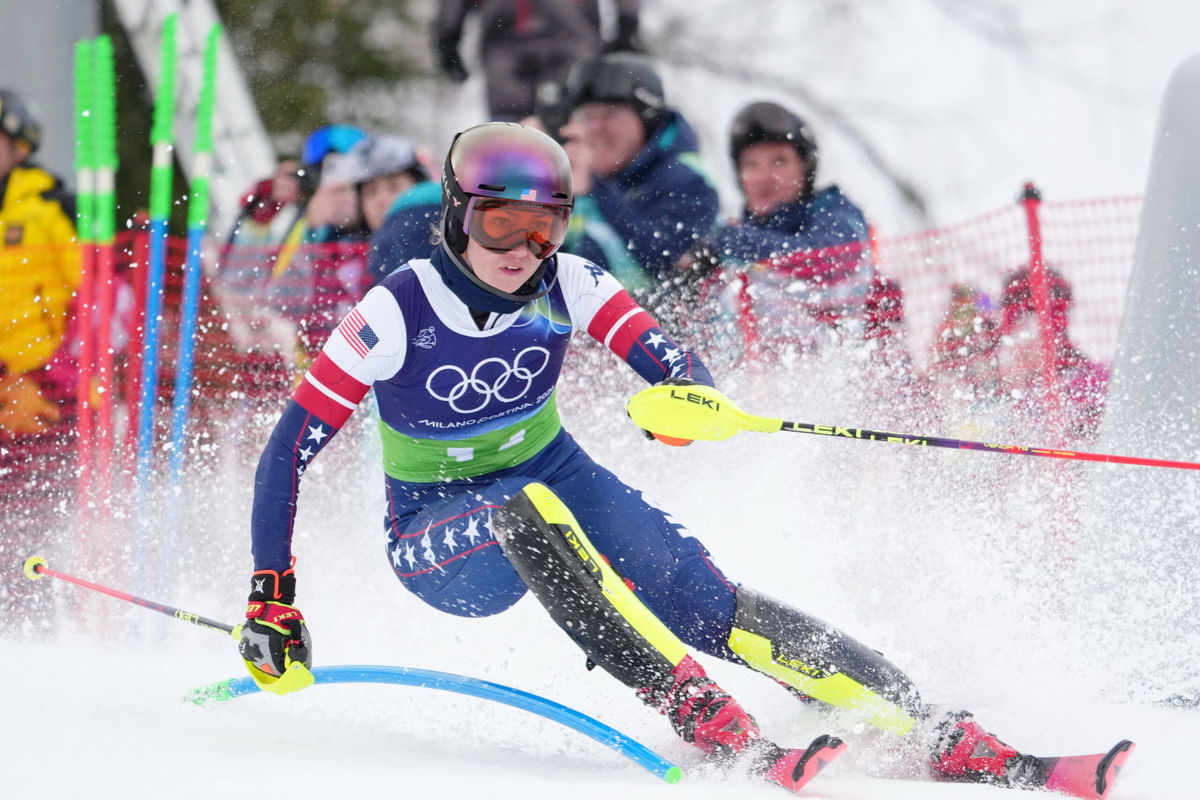
Olympics: Alpine Skiing-Womens Team Combined Feb 10, 2026 Cortina d Ampezzo, Italy Mikaela Shiffrin of the United States during alpine skiing women s team combined during the Milano Cortina 2026 Olympic Winter games, Winterspiele,Spiele, Summer games at Tofane Alpine Skiing Centre. Cortina d Ampezzo Tofane Alpine Skiing Centre Italy, EDITORIAL USE ONLY PUBLICATIONxINxGERxSUIxAUTxONLY Copyright: xEricxBoltex 20260210_jcd_bb5_0164
Imago
Olympics: Alpine Skiing-Womens Team Combined Feb 10, 2026 Cortina d Ampezzo, Italy Mikaela Shiffrin of the United States during alpine skiing women s team combined during the Milano Cortina 2026 Olympic Winter games, Winterspiele,Spiele, Summer games at Tofane Alpine Skiing Centre. Cortina d Ampezzo Tofane Alpine Skiing Centre Italy, EDITORIAL USE ONLY PUBLICATIONxINxGERxSUIxAUTxONLY Copyright: xEricxBoltex 20260210_jcd_bb5_0164
Mikaela Shiffrin’s slalom gold medal isn’t the only thing fans have been discussing. Indeed, there have been whispers of retirement, fueled by candid reflections on mental exhaustion and the weight of two decades at the sport’s summit. But when the greatest alpine skier in history was asked directly about competing in the 2030 Winter Games, her answer was neither a farewell nor a promise.


During an interview with Sports Illustrated, Shiffrin gave a straightforward answer, stating, “Four years feels like a lifetime. So it feels so far away, but also I know, I know how fast that time can go. So I won’t say no, but I’m not going to say yes either.”
Watch What’s Trending Now!
This uncertainty about her future follows a performance that only added to her skiing legacy. At the Milano Cortina Games, her first time proved quite challenging. In the team combined, she finished just off the podium in fourth place, but in the giant slalom, her performance was nowhere near as good, as Shiffrin settled for 11th place.
However, the moment the American entered her signature slalom event, what followed was nothing short of domination. She scorched down the Olimpia delle Tofane ski course with a combined time of 1:39.10, finishing 1.5 seconds ahead of Switzerland’s Camille Rast. And it was no normal feat.
The gap became the most significant winning margin in any Olympic alpine skiing event since 1998. At the age of 30, Mikaela Shiffrin became the oldest American alpine skier to win gold in the Games.
Another Olympics for @MikaelaShiffrin? 👀 pic.twitter.com/N42N7cTMml
— Sports Illustrated (@SInow) February 27, 2026
Mikaela Shiffrin stands at a familiar precipice in alpine skiing history: still dominating at 30, yet wrestling with retirement amid injuries and burnout.
This mirrors Lindsey Vonn’s own crossroads in 2018, when the seven-time world champion, then 33 and battered by knee injuries, chose to retire at her peak rather than chase diminishing returns.
Vonn’s graceful exit after a final podium run elevated her narrative, much as Shiffrin now ponders whether to cement her GOAT status or risk fading into “what ifs.”
For the American skier, the victory was deeply personal, arriving four years after a mental health-riddled campaign in Beijing where she left without a single medal across multiple events. What might compel her to return for a fifth Olympics at age 34?
Well, she already has four Olympic medals and 108 World Cup wins on her athletic resume and nothing to prove to the world. However, apart from just basking in the Olympic glory, Shiffrin opened up about the fears that linger during the competitions.
Mikaela Shiffrin is still human despite all the shiny accolades
Mikaela Shiffrin’s skiing career hasn’t always been a smooth ride. In an interview with EssentiallySports, she revealed a challenge that she has consistently faced throughout her competitive journey.
“I think I have so much fear. I really feel, you know, I’m afraid to get injured. I’m afraid to feel pain. I’m afraid to fail. So all of these things come into my, you know, mentality. And these are all things that I have to sort of digest and understand on a daily basis,” the American skier said.
Well, back in November 2024, at a World Cup race in Killington, Vermont, she was involved in a horrific collision that left her with a five-centimeter puncture hole in her abdomen, just missing her colon by a millimeter.
The damage necessitated surgery, and although the physical wound is gone, the terrifying memories from the crash remain as PTSD.
Such elements make her human, like anyone else. And somewhere in the French Alps, the 2030 Olympics await, with only time being the factor that will reveal Shiffrin’s destination after four years.
Written by

Edited by

Tanay Sahai