

Everyone knows Apolo Ohno for his achievements: 8 Olympic medals across three Winter Games, 21 World Championship medals, and 12 national titles. But what many don’t know is the story behind that success. Staying at a remote cabin in Copalis Beach as punishment, waking up at 3:30, strapping miner’s lights to his helmet to practice at empty parking lots, fighting exercise-induced bronchospasm EIB two months before the 2002 Games, these were the hardships Agno had gone through before climbing the ladder to fame and recognition. Now, 13 years after retiring, Ohno finds himself at the center of a dispute that has escalated into a $385,000 lawsuit involving items from his Olympic career.
Watch What’s Trending Now!
The two-time Olympic gold medallist has filed a case against his former girlfriend, Anna Pham, seeking damages and the return of personal and professional belongings following their breakup in 2023. According to reports from The Blast shared on June 30, she allegedly holds hundreds of items, including studio and audio production equipment, photography and video gear, electronics, apparel, a firearm, and hard drives containing “irreplaceable content.”
Among the disputed items are also Olympic race and training footage, documentary recordings intended for future commercial use, an unpublished manuscript, and personal Olympic photographs.
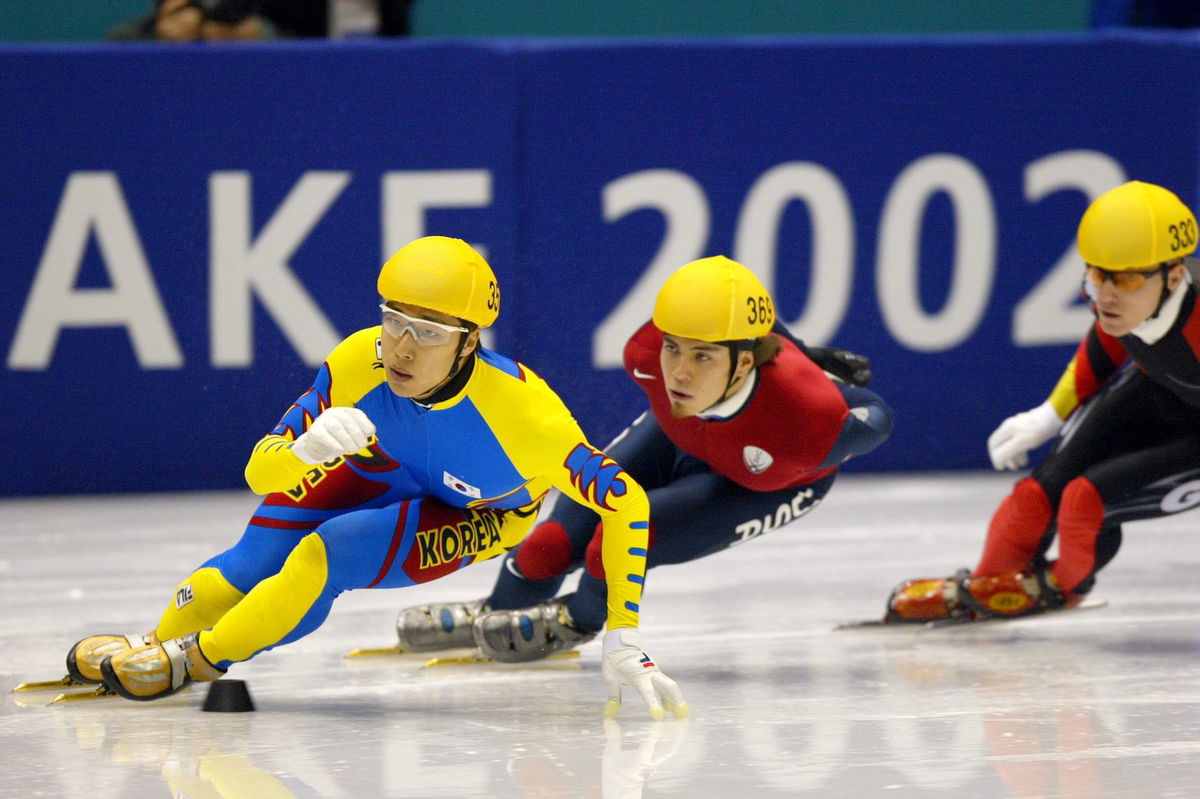
Imago
Bildnummer: 00470928 Datum: 13.02.2002 Copyright: imago/Camera 4
Dong-Sung Kim (Korea, vorn) und Apolo Anton Ohno (USA); Vdig, quer, Kurve Olympische Winterspiele 2002, Olympia, Olympiade, Spiele, Shorttrack, 1000m, 1000 m, Meter Salt Lake City / Utah Ice Center Dynamik, Short Track OS Winter Herren Einzel USA Gruppenbild Aktion Personen
Image number 00470928 date 13 02 2002 Copyright imago Camera 4 Dong Recovery Kim Korea front and Apolo Anton Ohno USA Vdig horizontal Curve Olympic Winter Games 2002 Olympia Olympics Games Short Track 1000m 1000 m Metres Salt Lake City Utah Ice Center Dynamics Short Track OS Winter men Singles USA Group photo Action shot Human Beings
Ohno claimed he contacted Pham via Instagram in October 2025, asking her to return his belongings. However, she only returned his Olympic medals, keeping the rest. However, Pham disputed parts of the claim in comments reported by TMZ. She stated that she was granted time to return the items on her own terms and that arrangements were made regarding their return and costs.
The case is now moving forward as Ohno seeks damages and recovery of the remaining materials linked to his Olympic legacy and personal archive. But the Olympic memorabilia and what he achieved have always been close to his heart.
A harsh childhood that shaped Apolo Ohno’s journey to Olympic greatness
Apolo Ohno grew up in Seattle in a home shaped by absence and responsibility. His parents separated when he was very young. Apolo’s Japanese immigrant father, Yuki, raised him alone. He owned a hair salon and worked long hours to give Apolo a stable life. His mother, Jerrie Lee, was largely absent from his upbringing. That early environment left him independent early, but also exposed him to instability.
Left to his own devices as a pre-teen, Ohno went through a rebellious phase and began spending time with a rough crowd. Concerned about his path, his father stepped in and pushed him toward structured activities, like swimming. Everything changed after watching the 1994 Winter Olympics speed skating. The speed and intensity stayed with him, and his interest in skating grew stronger.
His father supported that shift and placed him in more serious training environments. By 1996, he was training at the U.S. Olympic Training Center in Lake Placid, suddenly part of a system built for much older and more experienced athletes. The transition was tough. He was the youngest in the elite group and struggled to fit in. Older skaters mocked him and nicknamed him “Chunky,” something that added to the pressure of growing up in a demanding environment.
Over time, those challenges shaped him instead of breaking him. He slowly rebuilt his habits, learned to handle pressure, and began turning frustration into focus. That shift helped him rise through the ranks, earning national titles and World Cup results while still a teenager. His progress led him to his Olympic debut at the 2002 Salt Lake City Games, where he won gold and silver.
Apolo then competed in the 2006 Winter Olympics, winning a gold and 2 bronze medals. 4 years later, he competed in the Winter Olympics and won a silver and 2 bronze medals. Despite having retired in 2013, Ohno has spoken about how deeply those Olympic moments stayed with him.
“There really is a kind of riveting embrace of this loss of identity that occurs, which I believe is highly correlated with the longer an athlete stays in a sport… I couldn’t have envisioned a life more filled with these incredible experiences that have occurred, and also the immense challenges of transitioning beyond the world of sport.”
For him, the Olympic medals were never just achievements. They remained tied to everything he went through: the early struggles, the pressure, and the years of rebuilding himself through sport.