
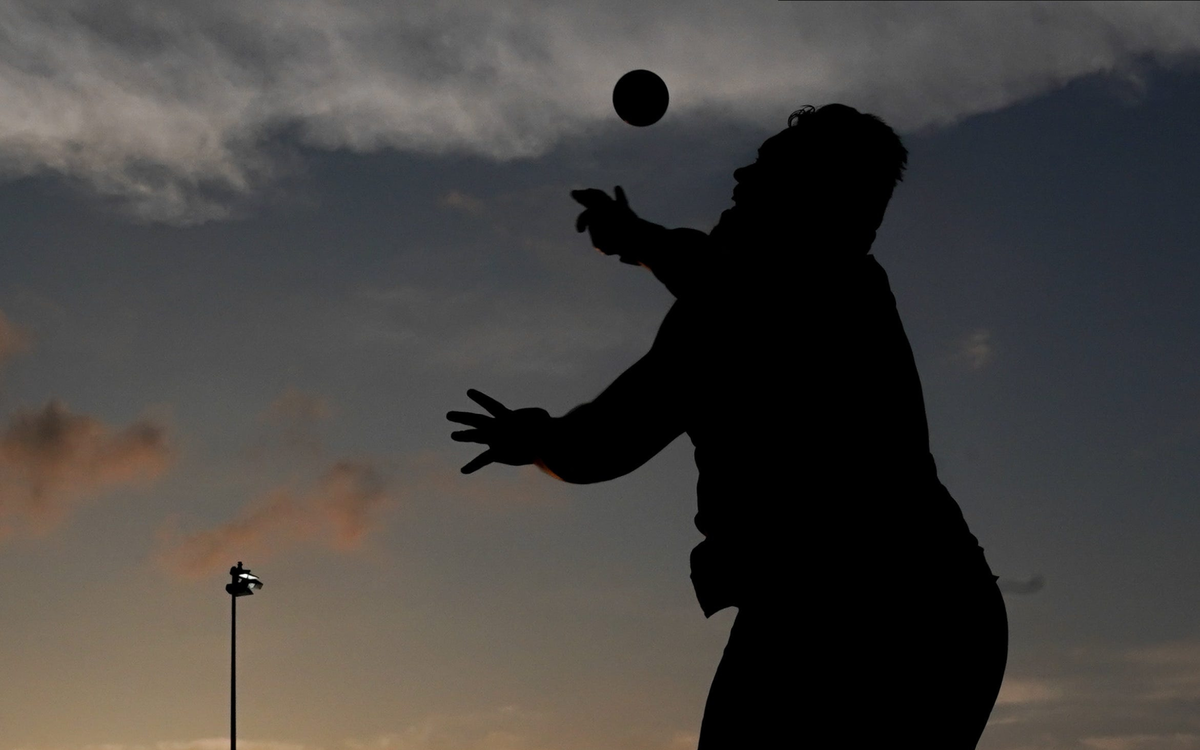
Abdullah Hayayei traveled to London with hopes of representing the UAE at the World Para Athletics Championships. Instead, the 36-year-old Paralympic shot putter never returned home. On 11 July 2017, a 440 lb throwing cage collapsed at Newham Leisure Centre, resulting in fatal injuries during training prior to the championships. Despite the efforts, Hayayei died at the scene. Nearly 9 years later, the case has reached a major turning point as UK Athletics faces potential punishment over the circumstances that led to his death.
Watch What’s Trending Now!
UK Athletics, which reported annual revenue of £13.8 million ($18.5M) in its latest accounts, could face a substantial financial penalty. Under sentencing guidelines, corporate manslaughter convictions can result in fines ranging from £180,000 ($242k) to £20 million ($26.94M). Davies could also face sanctions for his role in the case.
The sentencing hearing began at London’s Old Bailey on June 1, with UK Athletics and its former head of sport, Keith Davies, appearing before Judge Richard Marks KC. The proceedings came months after UK Athletics pleaded guilty to corporate manslaughter and Davies admitted a breach of health and safety law in February 2026. With responsibility already admitted, the hearing will now decide the appropriate penalties. And Judge Marks is expected to deliver his decision on Tuesday.
But why did prosecutors conclude that UK Athletics was responsible? Officers spent over 1500 hours combing through over 1,500 documents and several expert reports to figure out what exactly went wrong and concluded that there were serious safety failures.
Investigators also discovered the throwing cage used in the accident was not built correctly and lacked a metal base plate to stabilize the cage. That part wasn’t there, and the cage could collapse. Prosecutor Tom Price KC told the court the cage was not just a fluke. Instead, he argued there was a long-standing practice of assembling the structure without key components. “It was an accident waiting to happen.”
The prosecutor also challenged statements made by Davies following the incident. Davies, who supervised the cage’s construction, had told investigators that it had been assembled according to instructions. However, prosecutors argued that the claim was not “truthful”. “At the very least,” argued Mr Price, the official “ought to have known that it was incorrect.” He added, “The evidence shows he actually knew it and therefore this was not a truthful statement by him.”
Following Hayayei’s death, the police issued a ban on throwing cages at the stadium. UK Athletics later went back to the court to remove the restriction from the second cage, which was denied, according to prosecutors, who called it a “remarkable feature” of the case.
“Abdullah Hayayei was a father-of-five who should have been able to compete on the world stage and return home safely to his family,” said Colin Gibbs of the CPS. “There can be no doubt that UK Athletics were grossly negligent in their safety management, which caused the death of a talented athlete.”
For his part, Davies expressed remorse in a statement submitted to the court before sentencing. “I have woken every night thinking about his loss, and his poor family,” he said. “These feelings have intensified since I found out about the investigation for manslaughter.”
For Hayayei’s family, however, the case has never been a matter of court hearings, legal arguments, or monetary fines. It’s about the loss of a husband, a father, and a man who had already faced so many struggles in life.
Abdullah Hayayei’s widow recalls the day her world changed forever
Before becoming one of the UAE’s leading Paralympic athletes, Hayayei suffered a life-changing injury during a military training exercise in 2001 when a metal rod fell on his head. The accident left him in a coma for a few months and paralyzed on one side. But still, he rebuilt his life through sport and went on to represent the UAE at the 2015 World Championships and the 2016 Rio Paralympics, and became a respected figure in the country’s Paralympic community.
Away from competition, Hayayei was a loving husband to Badriah and a father of five children. He traveled to London hoping to make his country proud. Instead, his family received the devastating news that he would never return home. On June 1, Badriah attended the sentencing hearing by video link from the UAE and spoke of the pain her family has carried since that day.
She recalled waiting for news of her husband’s performance at the championships, only to learn that he had died. She said: “It was a huge shock to me because I was waiting for news of his victory and success in the championships, and suddenly the news of his death reached me.” She added, “At first, I could not comprehend what happened and refused to believe the news.”
Badriah told the court that she and her children had suffered greatly both emotionally and financially. She said the pain became even greater when she learned that the tragedy could have been prevented. “I hope the court looks at the magnitude of the harm to our family because Abdullah was not just a person who passed away. He was a father, a husband with responsibilities, dreams, and a future,” she said.
The most heartbreaking moment of her statement, she added: “My husband went out to represent his country and raise the name of the UAE, but he returned as a corpse because of this negligence.” As the court prepares to hand down its sentence, nothing can bring Abdullah back. No fine can replace a husband, a father, or the future that was taken from him.