
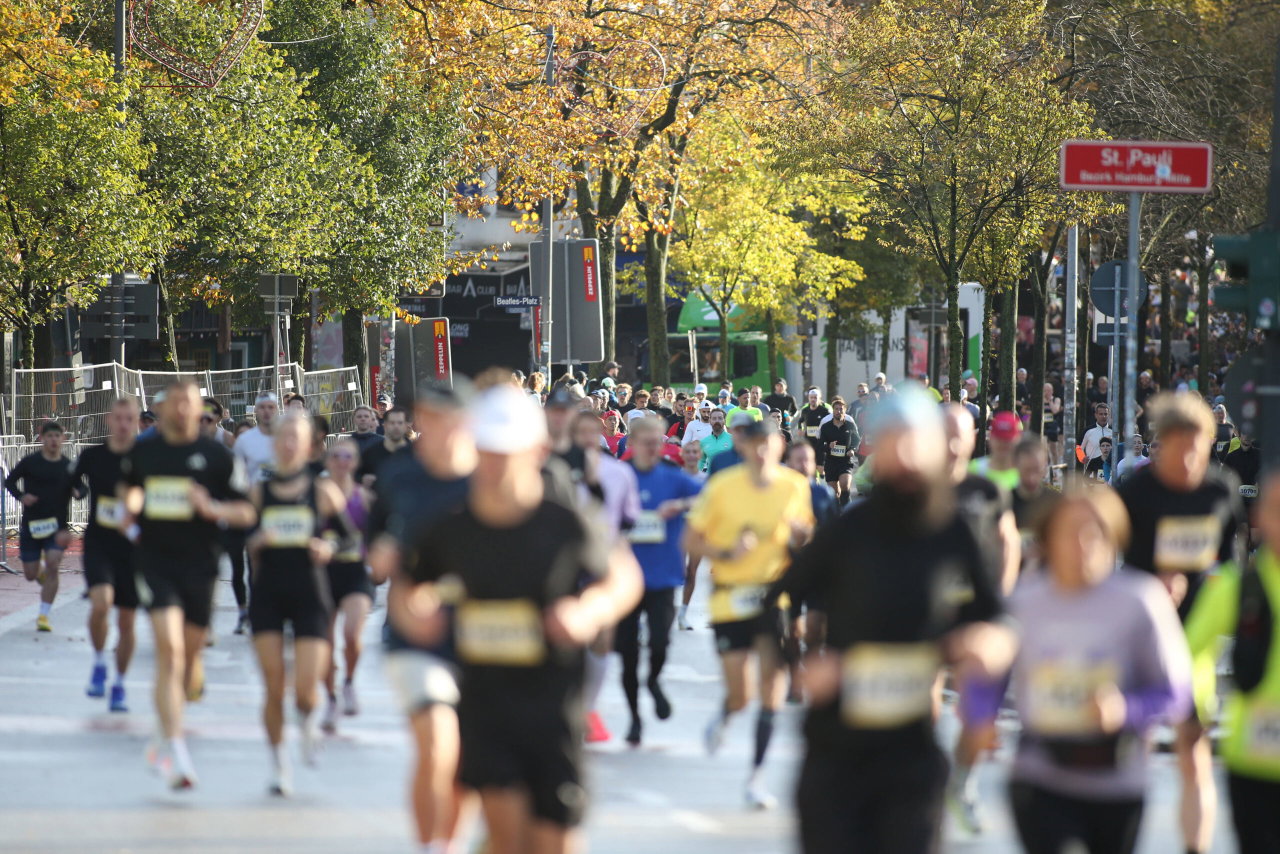
21-year-old Ethiopian runner Hunde Lechisa seemed to be taking his career to a new level. After running a marathon in 2:08:23 in 2025, he produced the best performance of his career at the Hamburg Marathon on April 26, 2026. He finished fourth in 2:05:01, just five seconds behind third place, and improved his personal best by more than three minutes. It was the kind of result that could have marked the beginning of a promising new chapter in his career. But months later, news of a positive doping test changed the story, and his Hamburg performance became the centre of an anti-doping case that has now cost him three years of competition.
Watch What’s Trending Now!
On October 28, the Athletics Integrity Unit confirmed that Lechisa had been banned for three years after his urine sample from the Hamburg Marathon tested positive for testosterone. His suspension was backdated to August 17, when he was provisionally suspended, and the AIU ordered the disqualification of his results from April 26 onward. The decision means his breakthrough performance in Hamburg will no longer stand. But how did the test lead to such a serious sanction?
The sample was collected during the 40th Haspa Marathon Hamburg in Germany on April 26. Lechisa finished behind Morocco’s Othmane El Goumri, who won in 2:04:24, Germany’s Samuel Fitwi in 2:04:45, and Kenya’s Kennedy Kimutai in 2:04:56. On July 20, a World Anti-Doping Agency-accredited laboratory in Cologne reported finding testosterone and several related metabolites in Lechisa’s urine.
The AIU notified Lechisa of the finding on August 17 and informed him of his rights, including the option to request analysis of his B sample. He did not request that analysis by the August 31 deadline, meaning he was deemed to have waived the right under the rules applied in his case.
During an interview with AIU representatives on August 26, Lechisa gave an explanation for how he believed the substance had entered his body. According to the decision, he said he had experienced dizziness about a year earlier and that a family member had diagnosed him with anaemia. He acknowledged that he had not visited a doctor for a formal diagnosis.
Lechisa told the AIU that he went to a pharmacy in Addis Ababa on March 23, 2026, seeking glucose. He said he explained his condition to the pharmacist and made clear that he was an athlete who could be subjected to drug testing. According to his account, the pharmacist recommended a different medication, telling him it would be better for his anaemia and would leave his system within two weeks.
He said he bought the medication and injected himself around March 26 to 28. After receiving the anti-doping notification, he searched online for information about testosterone and said he recognised it as the substance he had injected. In a message sent to the AIU on September 17, he claimed he had been “misled by a doctor” and asked for forgiveness.
His explanation formed an important part of the case, but it did not lead to his clearance. The AIU’s decision records his account without independently establishing that a pharmacist or doctor deliberately deceived him. The organisation also found that he had no Therapeutic Use Exemption allowing him to use testosterone and identified no apparent failure in the testing or laboratory procedures that could reasonably explain the result.
The AIU formally charged Lechisa on October 5 with anti-doping rule violations relating to the presence and use of a prohibited substance. He did not respond to the charge by the October 19 deadline. Under the applicable rules, this meant he was deemed to have waived his right to a hearing, admitted the violations and accepted the proposed consequences. On October 21, the AIU received a signed form in which he admitted the violations and accepted the sanction.
Under the rules cited in the decision, the starting point for his case was a four-year ban. However, the rules allow a one-year reduction when an athlete facing a proposed ban of four years or more admits the violation and accepts the sanction within the required period. Because Lechisa submitted his signed admission within that period, his ban was reduced to three years. His three-year ban is due to run until August 2029, subject to any appeal or further decision.
However, Lechisa is not the only high-profile African distance runner to face an anti-doping case in recent weeks.
Peres Jepchirchir’s provisional suspension adds to doping concerns in Marathon running
Kenyan marathon star Peres Jepchirchir, the 2021 Olympic champion and 2025 world marathon champion, was provisionally suspended by the Athletics Integrity Unit on October 23, 2026, after an out-of-competition sample tested positive for erythropoietin. Unlike Lechisa, who has received a three-year ban, Jepchirchir has not yet been handed a final sanction. Her case has nevertheless placed another prominent marathon career under scrutiny.
The announcement came less than two months after Jepchirchir won the Sydney Marathon on August 30 in 2:18:31, finishing more than three minutes ahead of fellow Kenyan Irine Cheptai. According to reports, the sample that produced the adverse analytical finding was collected in Kenya before the race.
Jepchirchir’s agent, Gianni Demadonna, did express regret when speaking to Reuters, saying: “I can only say that I feel terrible about what happened and I think it’s only right that an athlete who uses the performance enhancing drugs should be disqualified.”
The case has attracted particular attention because of Jepchirchir’s achievements. She won Olympic marathon gold at the Tokyo Games in 2021 and the women’s world marathon title in 2025. She has also won the New York Marathon in 2021, the Boston Marathon in 2022, the London Marathon in 2024, and the Sydney Marathon in 2026. Those victories established her as one of the leading marathon runners of her generation, making the announcement a significant development in international athletics.
For now, Jepchirchir’s case remains unresolved, and her provisional suspension should not be mistaken for a final finding of an anti-doping rule violation. While Lechisa has already received his three-year sanction, the Kenyan champion’s future in competition will depend on the outcome of the proceedings. Together, the two cases have brought renewed attention to doping in elite distance running, with the final outcome of Jepchirchir’s case still to come.