
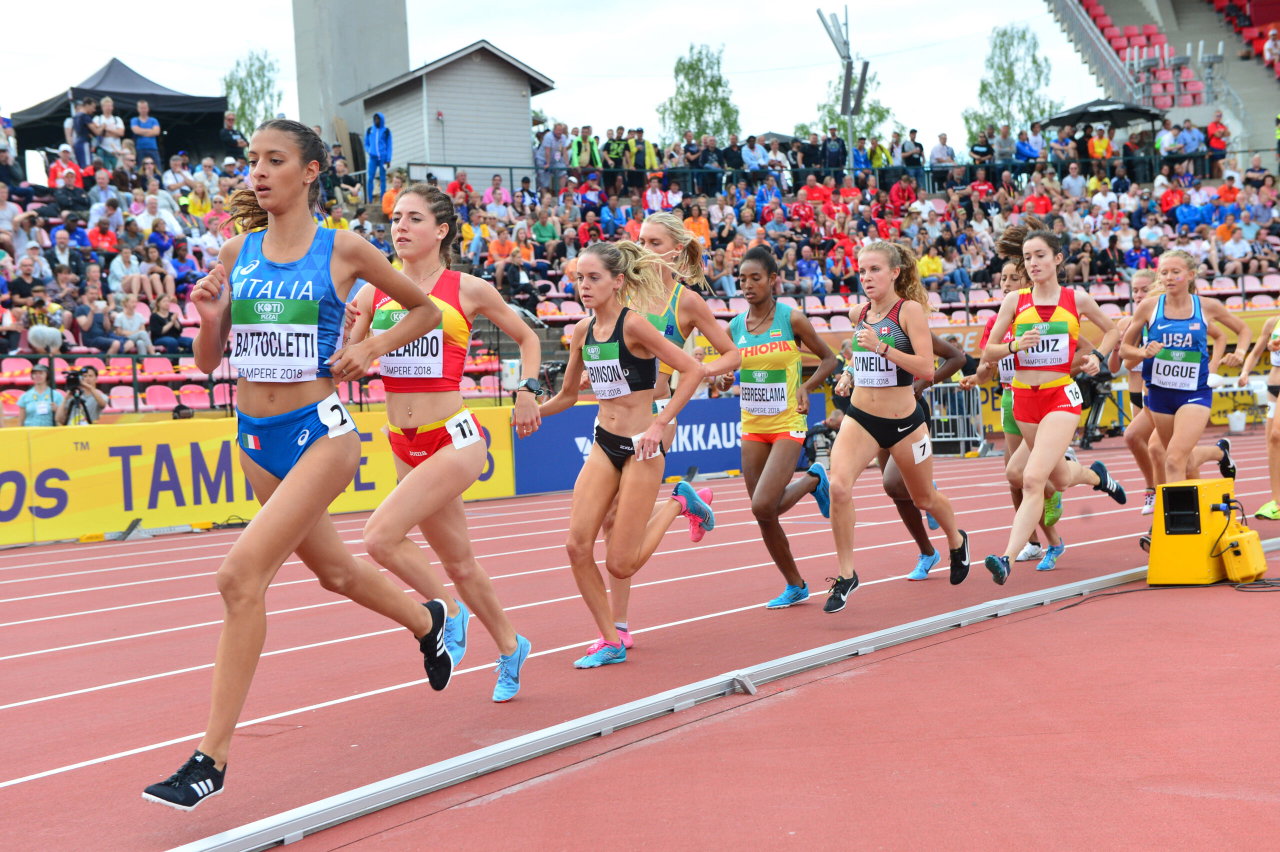
Katrina Robinson moved to the United States at 17 with national titles, records, and ambitious dreams behind her. But what followed at the University of Arkansas left the New Zealand runner questioning her own pain, commitment, and judgment. Years later, she is sharing her story to ensure other young athletes do not face the same doubts alone.
Watch What’s Trending Now!
Robinson recently opened up about her NCAA experience in an Instagram post, explaining why she had initially hesitated to speak publicly. “I never planned on sharing my experience in the NCAA,” she wrote, adding that she hoped her story would help her younger self and encourage other women to share similar experiences.
Her account describes a troubling gap between the promises of American collegiate running and the reality she encountered. Before moving to the US, Robinson had already heard stories about injuries, mistreatment, and inadequate medical care in college programs. However, the appeal of Division I athletics, generous scholarships, and assurances of world-class support made it easy to believe her experience would be different.
That confidence began to crumble when injuries repeatedly interrupted her career.
Robinson had every reason to trust her body. She had won seven national titles, claimed multiple national records, and reached the final at world championships. Yet her first injury during her second semester in the US exposed the limitations of the medical support she had expected.
According to Robinson, athletes could not independently consult doctors or medical professionals outside the team. Access to a team doctor depended on the trainer, and she received no clear plan for cross-training during rehabilitation. Desperate for guidance, she even messaged other athletes on Instagram to learn how they had managed similar injuries.
The return to running proved equally difficult. After spending three months away from the sport, Robinson said she was instructed to cover more than 40 kilometers during her first week back. The workload proved too much, and another injury followed. Instead of gradually rebuilding her fitness, she felt the emphasis remained on getting her back into competition as quickly as possible.
Then came a more alarming setback. Robinson developed severe hip pain, but when she requested a doctor’s appointment, she said the trainer dismissed her concerns and told her to continue training. A month later, she finally received an MRI, which reportedly showed no abnormalities.
With no clear explanation for her pain, Robinson began questioning herself. In Australia, she had never needed to prove her dedication to the sport. In the US, however, she felt that speaking up about pain could be interpreted as weakness.
She recalled seeing other athletes race despite stress fractures and wondered why she could not do the same. As the pain worsened, even walking across campus became difficult. She sometimes relied on Ubers to get around and attempted test runs, hoping mental strength would somehow make the pain disappear. It did not.
After returning to Australia, Robinson consulted an independent sports doctor who ordered another MRI. The results changed everything. She had a high-grade femoral neck stress fracture, and the doctor immediately placed her on crutches, warning that the bone was close to breaking completely. A complete fracture could require major hip surgery and potentially lead to permanent damage.
At just 19, Robinson was confronting the possibility of a devastating injury after months of being unable to understand why her pain persisted. Looking back, she struggled to describe what she had experienced. Calling it trauma or abuse felt extreme, she explained, but dismissing it as merely a difficult sporting experience did not feel honest either.
Conversations with other women who had competed in American college programs helped her make sense of those feelings. Despite attending different universities, they described familiar patterns: pressure to train through injuries, medical concerns being dismissed, and fear of speaking up.
Robinson believes that when athletes repeatedly hear that nothing is wrong, they can begin to distrust their own judgment. That uncertainty, she argues, allows harmful patterns to continue without sufficient scrutiny.
She also highlighted the vulnerability of young international athletes who leave their families at 18, placing enormous trust in the coaches who recruited them. When the program becomes their entire support system, recognizing that something is wrong can be especially difficult.
NCAA Running faces more controversies
Robinson’s account comes amid wider scrutiny of the NCAA, although recent disputes have also highlighted separate questions about eligibility and athletes’ financial rights.
In August 2026, former Iowa State athlete Jenna James sued the NCAA over her eligibility for the 2026-27 indoor track season. She argued that the association’s rules unfairly prevented her from competing for another season following a policy change. Her lawsuit seeks eligibility through the 2027 NCAA Indoor Track and Field Championships.
More recently, three current and former Division III athletes challenged the NCAA’s prohibition on athletic scholarships in a proposed class-action lawsuit filed in California. The plaintiffs argue that the restriction prevents colleges from offering financial support based on athletic ability and limits opportunities for competitors.
The complaint challenges NCAA Division III Bylaw 15.01.3, which prohibits athletic-based financial aid while allowing academic and need-based assistance. It alleges that the association has conspired to keep the value of Division III athletic labor at zero.
These cases concern different issues from Robinson’s allegations about injury management and medical care. Together, however, they illustrate the growing scrutiny facing the governing body and the rules shaping collegiate athletics.
For Robinson, the motivation behind speaking out remains personal. She hopes that sharing her experience will help younger runners recognize when their concerns deserve attention rather than automatically blaming themselves.
Her story is ultimately about more than just an injury. She is a talented young athlete who crossed the world to pursue her ambitions, only to lose confidence in her own judgment when the support she expected failed to meet her needs. By speaking now, Robinson wants other athletes to understand that questioning their treatment does not make them less committed to their sport.