Imago
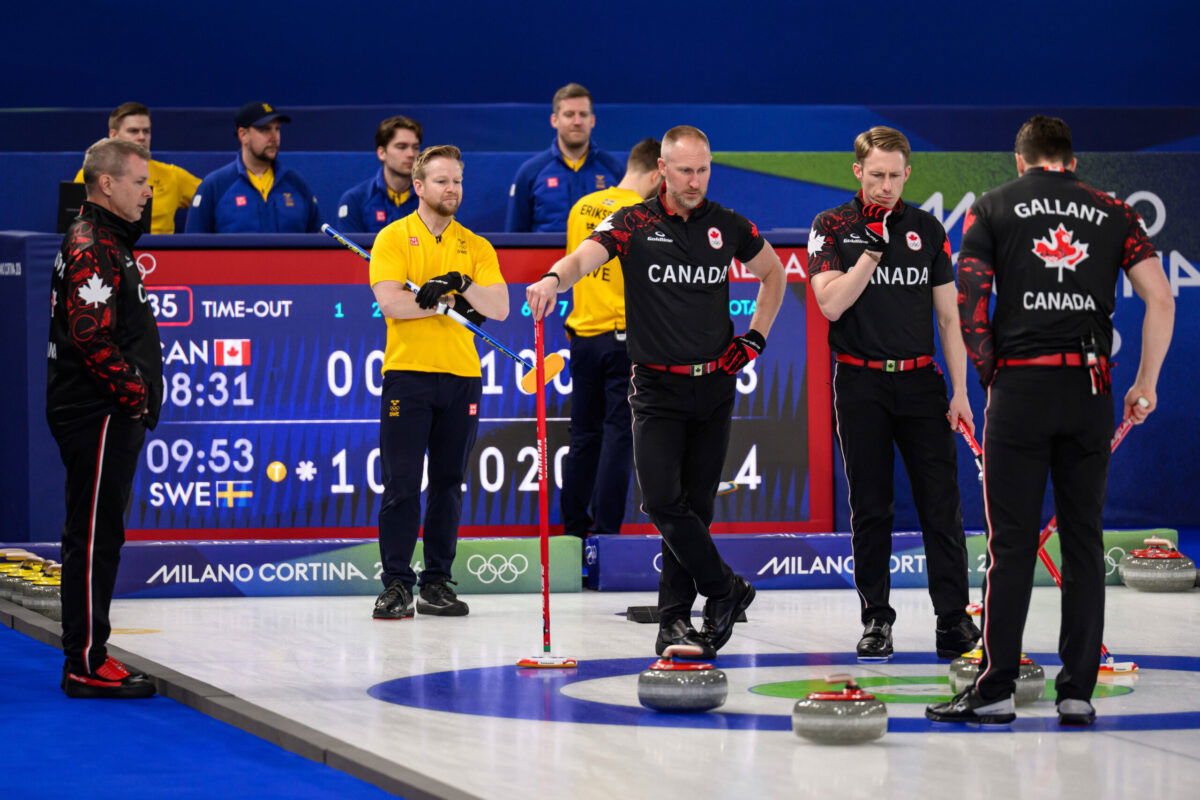
260213 Niklas Edin of Sweden, coach Paul Webster, Brad Jacobs, Marc Kennedy and Brett Gallant of Canada compete in a men s round robin curling match between Canada and Sweden during day 7 of the 2026 Winter Olympics on February 13, 2026 in Cortina. Photo: Joel Marklund / BILDBYRAN / kod JM / JM0792 bbeng curling Olympic Games, Olympische Spiele, Olympia, OS olympics winter olympics os ol olympiska spel vinter-os olympiske leker milano cortina 2026 milan cortina 2026 milano cortina 2026 olympic games milano cortina 2026 winter olympic games milano cortina-os milano cortina-ol vinter-ol sverige sweden *** 260213 Niklas Edin of Sweden, coach Paul Webster, Brad Jacobs, Marc Kennedy and Brett Gallant of Canada compete in a men s round robin curling match between Canada and Sweden during day 7 of the 2026 Winter Olympics on February 13, 2026 in Cortina Photo Joel Marklund BILDBYRAN kod JM JM0792 bbeng curling olympic games olympics winter olympics os ol olympiska spel vinter os olympiske leker milano cortina 2026 milan cortina 2026 milano cortina 2026 olympic games milano cortina 2026 winter olympic games milano cortina os milano cortina ol vinter ol sverige sweden PUBLICATIONxNOTxINxSWExNORxFINxDEN Copyright: JOELxMARKLUND BB260213JM137
Imago
260213 Niklas Edin of Sweden, coach Paul Webster, Brad Jacobs, Marc Kennedy and Brett Gallant of Canada compete in a men s round robin curling match between Canada and Sweden during day 7 of the 2026 Winter Olympics on February 13, 2026 in Cortina. Photo: Joel Marklund / BILDBYRAN / kod JM / JM0792 bbeng curling Olympic Games, Olympische Spiele, Olympia, OS olympics winter olympics os ol olympiska spel vinter-os olympiske leker milano cortina 2026 milan cortina 2026 milano cortina 2026 olympic games milano cortina 2026 winter olympic games milano cortina-os milano cortina-ol vinter-ol sverige sweden *** 260213 Niklas Edin of Sweden, coach Paul Webster, Brad Jacobs, Marc Kennedy and Brett Gallant of Canada compete in a men s round robin curling match between Canada and Sweden during day 7 of the 2026 Winter Olympics on February 13, 2026 in Cortina Photo Joel Marklund BILDBYRAN kod JM JM0792 bbeng curling olympic games olympics winter olympics os ol olympiska spel vinter os olympiske leker milano cortina 2026 milan cortina 2026 milano cortina 2026 olympic games milano cortina 2026 winter olympic games milano cortina os milano cortina ol vinter ol sverige sweden PUBLICATIONxNOTxINxSWExNORxFINxDEN Copyright: JOELxMARKLUND BB260213JM137
Marc Kennedy of Team Canada did not take the cheating allegations kindly. He said, “I haven’t done it once. You can f*** off.” Sweden’s Oskar Eriksson said he’ll show Kennedy “a video after the game,” to which Kennedy replied, “I don’t give a f***.” That allegation has since prompted the World Curling Federation to step in and increase surveillance. Despite still competing under the cloud of that controversy, Team Canada is heading to the gold medal game.


The Canadians made the playoffs as one of the final four men’s curling teams and went up against Norway in their semifinal matchup. And it was a humdinger with overtime needed to decide the game. Ultimately, it was Canada who came out on top with the score reading 5-4 in their favor.
Watch What’s Trending Now!
Canadian skip Brad Jacobs blanked his first end. He then missed a chance to sit two with his first stone of the second end. They were forced to take one. And while Canada got a steal in the third end when Jacobs made an excellent hit-and-roll, Norwegian skip Magnus Ramsfjell wrecked on the guard trying to chase it. After a poorly aimed shot from Norway, Canada went up 2-0 after 3 ends, as no points were scored in the first.
Norway finally got on the board in the fourth when Ramsfjell made a draw against three to make the score 2-1. In a game that rightly resembled the term “Chess on Ice,” Canada seemed to be pulling away until the 10th and final end. When the Canadians led 4-2, Jacobs removed only 1 of the two Norwegian stones, and in reply, Ramsfjell threw a draw to tie the game at 4-4.
MEN’S #CURLING GOLD MEDAL GAME AT MILANO CORTINA 2026
Canada (@TeamBradJacobs) vs. Great Britain (@TeamMouat)
Saturday at 1:05pm ET! pic.twitter.com/rpp2egd94j
— TSN Curling (@TSNCurling) February 19, 2026
In the extra end, Jacobs delivered a nerveless freeze to the button to sit two, and when Ramsfjell’s final thin in-off clipped shot rocked instead of glory, Canada seized a single point and the victory. Canada shot 88 % as a team in the victory, 9% better than the Norwegians.
Fortunately for the Canadian fans, even with the extra scrutiny, there were no calls for a double touch in this game as they head to the gold medal game against Great Britain with a clean record.
Canada eyes historic gold as Britain aims for Olympic double
For a team as dominant as Canada, they have been underwhelming in the past two Olympics. In 2018, under Kevin Koe, they came in 4th after losing the bronze medal game to the United States. In 2022, they improved but were still not up to their standards, winning the bronze medal under Brad Gushue. Their last gold in this competition was 12 years ago, when Brad Jacobs led a different team to victory.
“That was probably the most nervous we’ve been as a group in a long time,” Jacobs told CBC Olympics after booking their final berth. “You could just feel it and sense it out there. That was a tough game, and Norway played great. Good back-and-forth battle, and to now be guaranteed a medal for Canada is pretty special. Everyone was really excited just about that simple fact. But, yeah, one more big win here and we’d love to come home with gold for Canada.”
On the other sheet, Great Britain’s semifinal clash was dramatic in its own right. Initially, they had to wish for Italy to lose against Switzerland for their spot.
Going up against the Swiss, they were playing catch-up. The game flipped in the eighth end when 2 points put Britain ahead for the first time. Another 2-point score in the 10th sealed the win.
“It will be the biggest match of our lives,” Grant Hardie said after the game.
Great Britain is looking to one-up its silver medal from Beijing. With both teams chasing history, the final is expected to be a cracker.
Written by

Edited by

Deepali Verma