
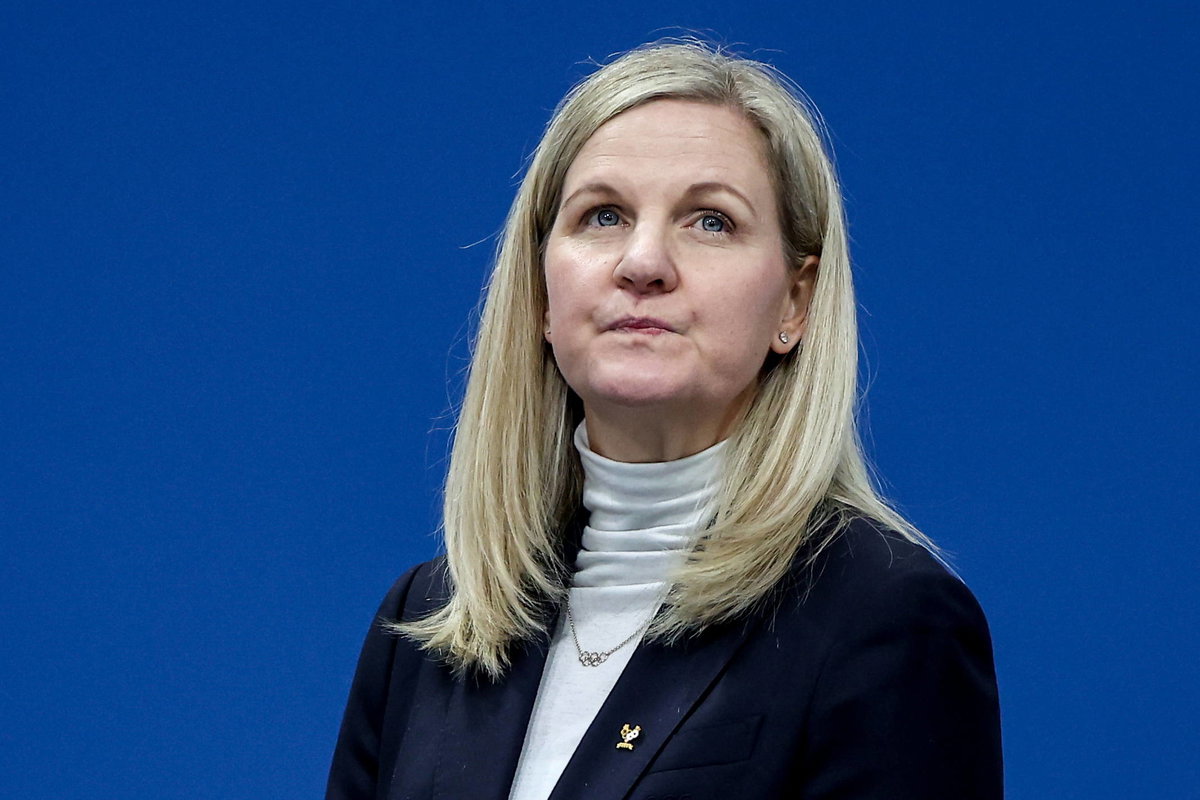
For most people, the Olympics look like a stage where dreams peak in a few seconds. But behind those moments, the path is often long and expensive. For example, Dylan Beard worked around 40 hours a week to support his Olympic dream in track and field. Many athletes live in the same way, believing the Olympics could be the moment that changes their financial future. But IOC President Kirsty Coventry does not support paying athletes for competing or winning medals, and that stance has left many Olympians frustrated.
Watch What’s Trending Now!
Coventry earns around $350,000 a year, along with a housing allowance from the Olympic system, but she has still taken a clear stand against direct athlete payments. In her words, “I don’t believe in paying athletes. I come from a small country, I came from a sport that doesn’t necessarily pay athletes very well, and I still don’t think we should be paying athletes at the Olympic Games.” That comment sparked backlash.
Many athletes argued that the people creating the Olympic product are receiving the least direct financial benefit from it. Reports show that IOC leadership earnings reached around $55 million across senior executives. Seeing all this unfolding, Olympic long jump champion Greg Rutherford didn’t mince words.
Greg Rutherford, a two-time Olympic medalist, called Coventry’s statement “ridiculous” and shared a series of posts breaking down what elite sport really looks like behind the medals. He wrote, “Let me tell you about the night before I became Olympic champion. The night before I competed at the London 2012 Games, I went overdrawn on my bank account. I rang my best friend Andrew to ask if that meant I’d get hit with bank charges.”
His story was the financial reality. Despite being one of the well-funded Olympic sports, money was always an issue, Rutherford said. Prior to his Olympic gold in 2012, he was said to be earning less than £30,000 per year and struggling to afford training, recovery, travel and competition.
View this post on Instagram
After the gold medal in London, everything changed. He was reported to have won about £120,000 in bonuses and rewards and added to that sponsorship and commercial opportunities. But Rutherford said much of that money quickly went straight back into the sport. “A lot of the money I did make went back into the sport to try and win again,” he explained. “In 2015 alone, I had to invest 10s of thousands while aiming for world championship gold.”
That gamble eventually paid off when he won gold at the 2015 World Championships in Beijing with a leap of 8.41 metres, reportedly earning around $60,000 in prize money. But Rutherford said the pressure and financial risk never really disappeared. “Thank f*** I won, or else the financial gap would have been massive. But that was the risk, and I knew if I won, then I’d make it back from the prize money. That’s the reality of being an elite athlete that nobody talks about.”
Moreover, he responded specifically to Coventry’s remarks. Rutherford called it “hard to stomach” when athletes are told the Olympic experience itself is reward enough. He mocked the idea by comparing it to working for fifteen years at a job only to be rewarded with “a lovely office.”
From there, Rutherford broadened the discussion to include athlete compensation and the money dynamics of the Olympic system. He stated that the IOC collects billions, but the host countries face huge expenses in stadiums, infrastructure, security, transport, and Olympics Villages. “Here’s what most people don’t know,” he wrote. “The IOC doesn’t pay to host the Games. The host nation pays them.”
He said that just submitting a bid can cost cities as much as $100 million before even getting the call. Once they select, they are legally accountable for nearly all of the significant costs that come with the Games. Rutherford said that all the Olympics since 1960 have been overspent, with an average increase of about 172 per cent over the original bids. He cited Montreal 1976, when the taxpayers were stuck with debt payments for decades after the Games.
Also, Rutherford spoke about the immense amount of Olympic income, and the IOC was able to raise around $12 billion over the past four years’ Olympic cycle. $7.5 billion more has been secured for the next four years, and $6.9 billion is now already scheduled for the following four years. “If your company was making $12 billion, charging others billions to host its events, and telling the people generating all of that revenue they should be grateful for the experience… You wouldn’t say ‘just get another job, ‘” he wrote.
He also criticized the salaries inside Olympic leadership, pointing out that senior IOC officials earned millions while many athletes struggle financially even after reaching the top of their sport. “The people running the organization get millions,” Rutherford wrote. “The people who ARE the organization get told to enjoy the view.”
Another major point in Rutherford’s criticism involved Rule 40, which restricts athletes from promoting personal sponsors during the Olympics. He argued that athletes are blocked from fully benefiting from the one moment when the entire world is finally watching them. “The IOC doesn’t just refuse to pay athletes,” he wrote. “They actively stop athletes from earning anything at all.”
Rutherford pointed to Elaine Thompson-Herah’s experience during the Tokyo Olympics in 2021. After winning gold medals in both the 100m and 200m, Thompson-Herah posted clips from her Olympic races on Instagram. But shortly after, her account was temporarily blocked because the footage belonged to official Olympic broadcasters. She later explained on X, “I was blocked on Instagram for posting the races of the Olympic because I did not own the right to do so.”
The videos included official Olympic broadcast footage, which is controlled by media rights holders that pay billions for access to the Games. Rutherford used the incident to argue that athletes often do not even fully control the biggest moments of their own careers. “Your moment. Your face. Your achievement. Not yours, apparently,” he added.
He then went back to the unseen world behind the scenes, stating that the people only witness the champions and hundreds of behind-the-scenes lesser-known athletes struggle. “For every one of us you see winning big titles, there are hundreds of athletes you’ve never heard of,” he wrote.
Rutherford said athletes are working part-time jobs around full-time training, running up debts for camps, physio bills, then retire injured with no financial safety net. “These athletes are what makes the Games the Games,” he wrote. “The IOC sells their stories and their faces and their moments. Then sends them home.”
He commended World Athletics for implementing $50,000 prize money for Olympic gold medalists in Paris, calling it a sign that organizations can choose to do right by athletes. “A governing body stepping in to do the right thing for athletes at someone else’s event. Because the organisation running that event wouldn’t. Seb Coe saw the injustice and did something about it…”
In his final message, he summed it up clearly, “No athletes. No Games. No billions. I’m not saying every athlete should become a millionaire. I’m asking for an organisation that makes $12 billion, charges nations billions to host it, pays its executives millions, blocks athletes from earning, and owns footage of their greatest moments… to have a long, hard look at itself. Because right now, the people at the top are doing very nicely. The people making it all possible? Not so much.”
And Rutherford’s message did not stay isolated. Many Olympians quickly showed support in the comments, with several athletes from different sports agreeing with his frustration over how the Olympic system treats competitors financially.
Olympians rally behind Greg Rutherford as IOC pay debate explodes
Australian Olympic swimming champion Cameron McEvoy commented, “Awesome post.”
British shot put Olympic medallist Emily Campbell also backed Rutherford’s argument, writing, “Coming from someone who truly comes from a small sport, We appreciate you Greg 🙏🏽” Their reactions reflected a larger feeling shared by many athletes across Olympic sports, especially those outside the biggest commercial events. While Olympic athletes spend years training, travelling, recovering from injuries, and often working second jobs to survive, IOC leadership salaries continue reaching multi-million dollar levels.
Reports show the IOC leadership’s earnings total around $55 million across senior executives. Senior officials reportedly include Christophe De Kepper, earning around $6.2 million, Christophe Dubi, about $4.3 million, Lana Haddad, roughly $4.1 million, and Kit McConnell, close to $3.1 million, while several other directors reportedly earn between $2.2 million and $2.4 million each.
At the centre of the criticism is a simple argument from athletes: they are the ones who build the Olympic product. Yet athletes themselves do not receive a direct share of Olympic broadcasting or sponsorship revenue, even though the IOC generates billions every Olympic cycle. From 2021 to 2024, the IOC distributed around $40 million to major federations including World Athletics, World Aquatics, and the International Ski Federation.
Most athletes, however, rely on the support or funding from their national federations, their sponsors, the help of family members or the assistance of the government; the amount of support or funding also differs widely by country and by sport. For instance, in Canada, funding for athletics is limited solely to a small number of athletes and is mainly based on ongoing improvement and success. Even top players in the nation can be losing their sponsorship if their play falters in a couple of years.
Imago
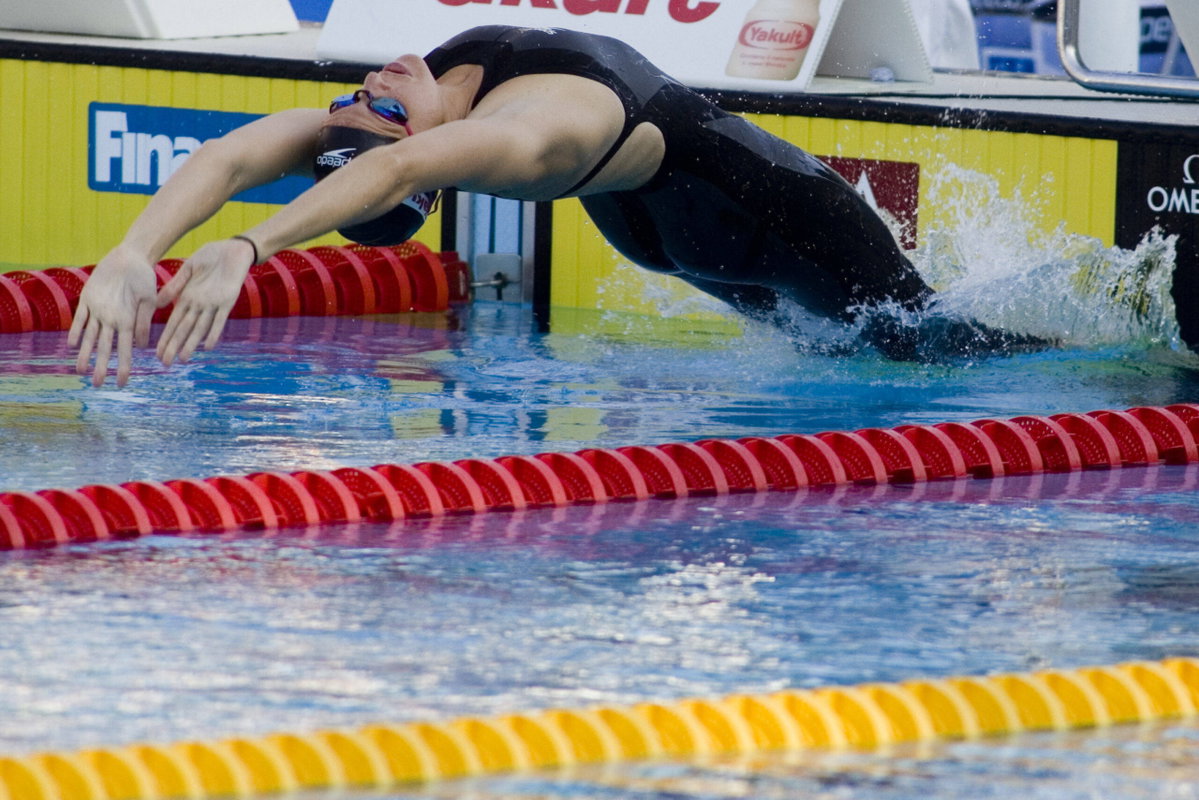
ARCHIVFOTO: Die Schwimm-Legende Kirsty COVENTRY als neue IOC-Praesidentin gewaehlt, Sie tritt die Nachfolge von Thomas Bach an. Kirsty COVENTRY ZIM, Finale ueber 200m Ruecken Schwimmen, Weltmeisterschaft in Rom am 01.08.2009 *** ARCHIVE PHOTO Swimming legend Kirsty COVENTRY elected as new IOC President, succeeding Thomas Bach Kirsty COVENTRY ZIM , 200m backstroke final, World Championships in Rome on 01 08 2009
Sponsorship opportunities are also far from guaranteed. The majority of Team Canada athletes reportedly do not receive major sponsorships on their shoes or apparel. There are also big variations in prize money systems across the globe. The Canadian Olympic Committee pays approximately C$20,000 for Olympic gold. By comparison, the Team USA athletes are paid about $37,500 for winning gold medals and some countries offer hundreds of thousands of dollars for wins at the Olympics, and in some instances, nearly $1 million.
In addition, there are cases of sport federations intervening where the IOC hasn’t. World Athletics announced $50,000 prize payments for Olympic champions, becoming one of the first major federations to explicitly reward athletes. That contrast is what has led to the debate over Coventry’s comments being so heated.
Olympian American decathlete Harrison Williams wrote, “She was paid $100,000 by her authoritarian government for her 2008 Olympic performance. So she’s ok being paid, but doesn’t think we should be.”
Olympic medalist Andrew Steele added, “P.s she took $100k from Mugabe for her Olympic medal. You actually can’t make this up!”
The remarks alluded to a long-anticipated incident in Coventry’s own Olympic history. Zimbabwean Kirsty Coventry is the most decorated Olympian in Africa history having competed in five Olympic Games, and collected seven Olympic medals in swimming. In 2025, she once again came into the limelight as the first woman and first African to be elected president of the International Olympic Committee.
But many athletes now pointing at her comments argue that Coventry herself understands how financially difficult Olympic sport can be. Earlier in her career, Coventry revealed she had to move to the United States on a full scholarship because “there was no other option.”
Reports around her rise in swimming described how her parents struggled financially to support her career, even selling cakes and hamburgers on weekends to help cover training expenses. She also benefited from Olympic Solidarity Scholarship support during her development years, while Zimbabwean officials themselves acknowledged she competed through difficult financial circumstances and limited support. That history is part of why some athletes found her recent comments surprising.
The criticism further gained momentum due to the events after the Beijing Olympics in 2008. Coventry won gold in the 200m backstroke and set the world record to become a national hero in Zimbabwe. Immediately thereafter, she was rewarded with $100,000 cash from then-President Robert Mugabe at a televised event, when Zimbabwe was experiencing extreme hyperinflation and economic problems.
That moment has now come to the forefront of the debate for critics. They are not just about Coventry earning money for herself, but the contradiction they see in it, taking money as an athlete and then opposing direct Olympic payments for future competitors.