Imago
Credits via Facebook, @Ukraine Breaking News
Imago
Credits via Facebook, @Ukraine Breaking News
“It’s a great honour, for me, but also for Ukraine in these times,” said 27-year-old Vladyslav Heraskevych after qualifying for his third Winter Olympics, following PyeongChang 2018 and Beijing 2022. The Ukrainian skeleton racer arrived in Milan with pride and purpose for the 2026 Milano Cortina Games. But moments before his first run, the International Olympic Committee disqualified him halting his campaign before it began.


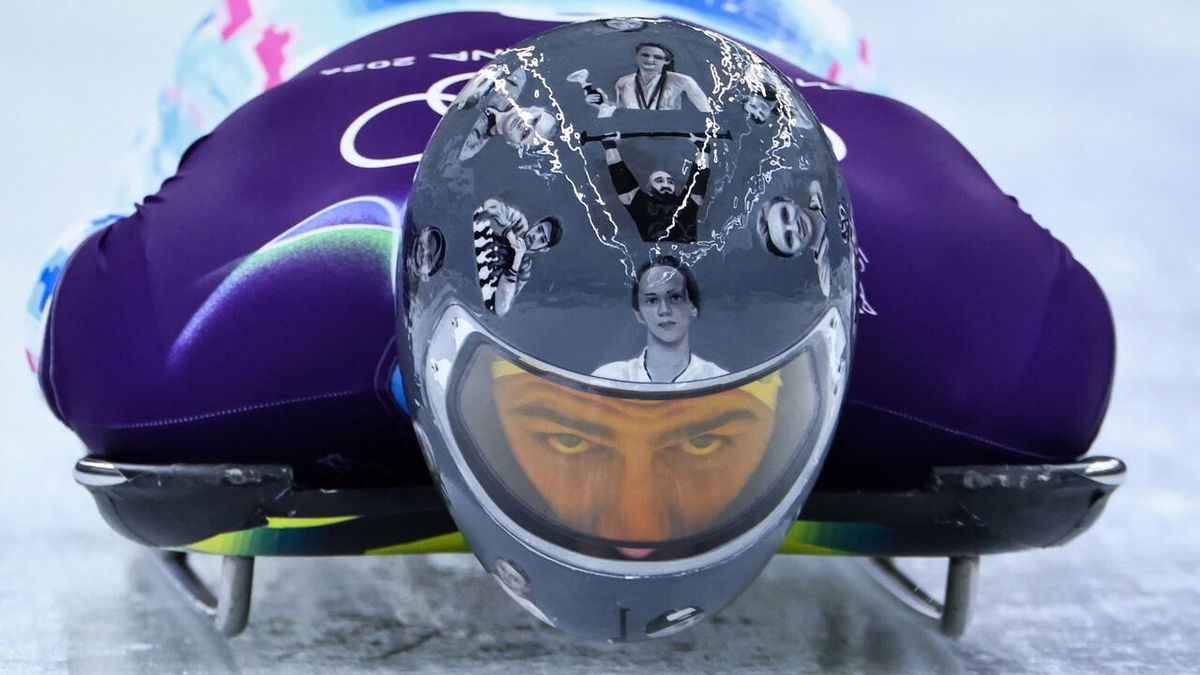
The disqualification stemmed from his custom helmet featuring over 20 portraits of deceased Ukrainian athletes and coaches. Though free of slogans or overt political messaging, officials ruled it violated IOC regulations on athlete expression barring its use in competition.
Watch What’s Trending Now!
In its statement, the IOC said it stands “in solidarity with all athletes who have lost loved ones in conflicts across our increasingly divided world.” At the same time, it stressed that the Olympic field of play must remain neutral. “It is not about the message that Vladyslav is trying to convey,” the statement read, “it is about the place.”
The IOC confirmed holding several conversations with Heraskevych in the hours before the event. Officials offered alternatives such as carrying or displaying the helmet in the mixed zone after his runs. IOC President Kirsty Coventry even traveled to the Cortina venue to meet personally with him and his father seeking a solution that would let him compete.
IOC AC Statement on the disqualification of Vladyslav Heraskevych. pic.twitter.com/NcUKQUdnMC
— Athlete365 (@Athlete365) February 12, 2026
No agreement was reached, and his name was removed from the start list. Though his Olympic accreditation was later restored, he will not compete. Moments later, cameras captured his father and coach. Mykhailo Heraskevych was visibly shocked by the decision, and this only added to the outrage.
Vladyslav Heraskevych sparked fury across Ukraine
The move by the IOC to disqualify the Ukrainian skeleton racer led to disapproval by many. Shortly after the ruling, Heraskevych took to Instagram, writing: “This is the price of our dignity.”
In an earlier post, he explained: “For me, the sacrifice of the people depicted on the helmet means more than any medal ever could — because they gave the most precious thing they had. And simple respect toward them is exactly what I want to give.”
Speaking exclusively to ITV News before the final decision, the 27-year-old said he had been “treated unequally compared to other athletes.” He added: “This is truly unfair – especially toward the memory of the athletes depicted on the helmet.”
Even Ukraine’s Foreign Minister, Andrii Sybiha, criticized the IOC, saying, “The IOC has banned not the Ukrainian athlete, but its own reputation. Future generations will recall this as a moment of shame.”
He stressed that Heraskevych intended to pay tribute to the fallen athletes. Reiterating that “There is nothing wrong with that under any rules or ethics.” Sybiha also alleged that the IOC intimidated them and claimed that it had “disrespected and even lectured our athlete and other Ukrainians on how they should keep quiet.”
President Volodymyr Zelenskyy also criticized the decision on X: “Sport shouldn’t mean amnesia, and the Olympic movement should help stop wars, not play into the hands of aggressors. Unfortunately, the decision of the International Olympic Committee to disqualify Ukrainian skeleton racer Vladyslav Heraskevych says otherwise.”
Helmet banned or not, Vladyslav Heraskevych lit up the Olympic stage with pure grit. Nearly snagging a medal counts as a massive win in skeleton’s brutal world. He rolled into 2026, rubbing shoulders with the elite, fresh off a 4th-place World Championship stunner and steady top-10 World Cup fireworks.
This time wasn’t in his favor, but what are the chances he’ll come back stronger? We’d love to hear your thoughts on this in the comments below.