Olympic Team Disqualified Over ‘Lying’ Accusations by Milan Officials

ADD US ON GOOGLE
Feb 22, 2026 | 12:29 PM EST
Imago
Credits: Instagram/@AJ Edelman
Imago
Credits: Instagram/@AJ Edelman
Imago
Credits: Instagram/@AJ Edelman
Imago
Credits: Instagram/@AJ Edelman

For the first time in history, Israel had a four man bobsleigh team at the Winter Olympics, and fans were dreaming big, maybe even imagining a medal. But just when hope was at its peak. the team’s Olympic debut came to a halt.
Watch What’s Trending Now!
One Israeli athlete falsely claimed illness to allow a substitute, which resulted in the team being disqualified before they could take the ice again.
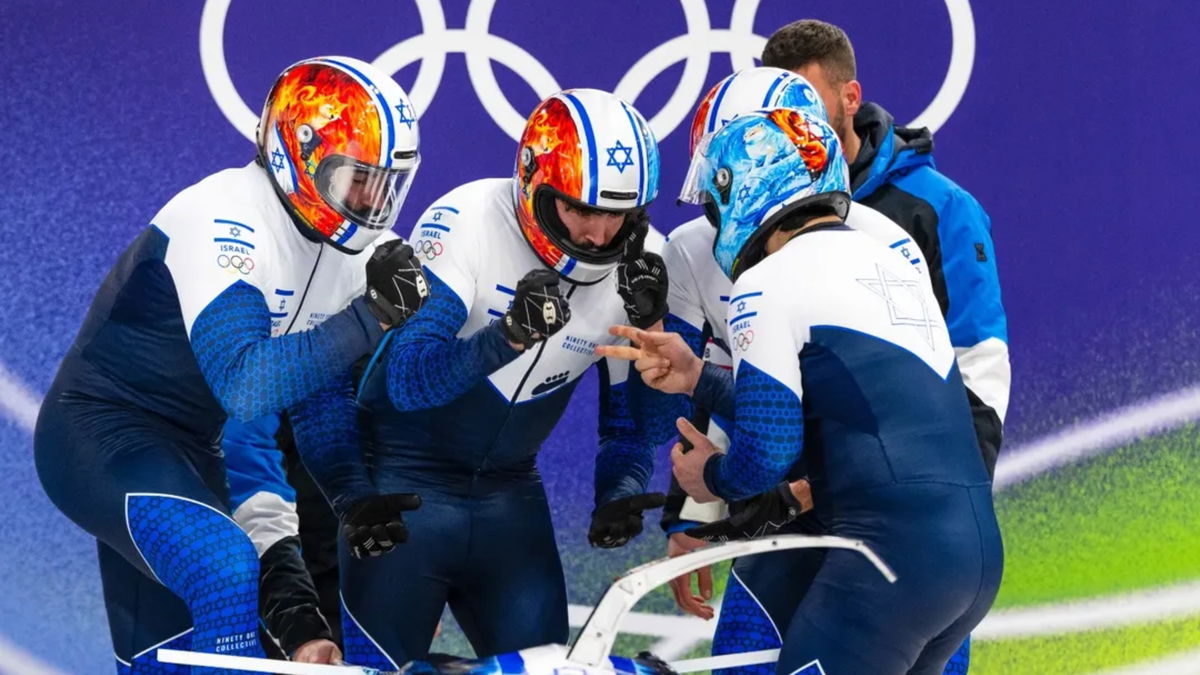
On 22 February, Israel’s four‑man bobsleigh team of Adam Edelman, Menachem Chen, Uri Zisman, and Omer Katz competed in two heats during the four‑man bobsleigh event. They were ranked near the bottom of the field. After those runs, the team tried to change their lineup by replacing Uri Zisman with the reserve, Ward Fawarseh who would have been the first Druze athlete to compete for Israel at the Olympic Games.
The reason given was that Zisman was reportedly unwell. Under Olympic rules, substitutions are only allowed if a team member is genuinely injured or sick. And to support this, Zisman was examined by a doctor and signed a medical affidavit saying he couldn’t compete. But before the substitution request was sent to the IOC, Zisman admitted to the head of the Israeli delegation that he was not actually ill and had submitted the claim to allow Fawarseh to compete.
Reports said the move was planned “in order to enable Puarsa [Fawarseh] to participate.” But once this came to light, the Israeli Olympic Committee acted quickly.


BREAKING: The Israeli bobsled team was DISQUALIFIED after "lying" to judges.
"One athlete falsely claimed to be ill in order to justify the inclusion of a substitute," cited official sources. pic.twitter.com/PVoBper8fk
— 🚨 Shattering Hegemony (@Viral_Headlines) February 22, 2026
The Israeli Olympic Committee withdrew the substitution request and suspended the entire bobsleigh team from further competition that day. In an official statement, the committee said it had received information that team members had attempted to replace one athlete “in a manner that does not meet the standards expected of Olympic athletes and is not consistent with Olympic values.”
The statement added: “As a result, a decision was made not to allow the bobsleigh team to compete tomorrow. A report on the matter has been forwarded to the International Olympic Committee.”
The Milan committee also confirmed that a full review will be conducted after the team’s return and noted that the decision to impose the immediate suspension was made with the agreement of the athletes themselves. “The Olympic Committee of Israel views any deviation from the principles of fair play with severity,” the statement said. “We cannot accept conduct that is inappropriate and we unequivocally condemn such behavior.”
Because of this decision, the team will no longer compete in the remaining heats of the four-man bobsleigh event. But it wasn’t just a rule...it felt like a lifelong dream of the 34 year-old athletes had been abruptly shut down.
Adam Edelman reveals the reason behind the Olympics substitution controversy
Adam Edelman came into the 2026 Winter Olympics with high hopes. A two time Winter Olympian, Edelman first competed for Israel in skeleton at the 2018 Games becoming Israel’s first sliding sport Olympian in that discipline. After his skeleton career, he transitioned to bobsleigh.
He personally recruited athletes, managed training and even worked with limited resources to create a team capable of competing on the world stage. And surely, Edelman’s long term efforts culminated in a historic achievement for 2026: helping Israel qualify a fourman bobsleigh team for the first time ever at the Winter Olympics. But the dream of competing fully at the Olympics ended abruptly due to the substitution controversy.
After the disqualification, Edelman shared his thoughts on social media. He explained that since the team was not in medal contention, their priority shifted to giving the reserve athlete a chance to compete.
He wrote that the team felt it was important for alternate Ward Fawarseh to have the opportunity to race at the Olympics. “The circumstances under which we made the substitution did not meet the high bar that allows a team to make a lineup change, and we withdrew from our final run,” Edelman said.
Looking on the experience, he added that the team was, “sorry that this will not end for us in the way we had hoped,” but that he remained “proud of the history we made representing Israel.”
Even though the team’s Olympic journey ended sooner than planned, Edelman emphasized his pride in what they accomplished for Israeli winter sports.