
The door to international biathlon remains closed for Russian and Belarusian athletes. Even after the International Olympic Committee changed its position on participation, the International Biathlon Union has decided to keep its own suspension in place.
Watch What’s Trending Now!
The latest development came on August 18, when Sergei Averianov, head of the press service of the Russian Biathlon Union, said the IBU had declined a request to review the sanctions. Russia had reportedly asked for the matter to be discussed at the IBU Congress in Berchtesgaden, Germany, on September 17.
Instead, the request will not make it onto the agenda…
Averianov said the Russian side had asked for its athletes to return to international competition and for the Russian Biathlon Union to regain full membership in the IBU.
“However, just as two years ago, there are no plans to discuss these matters at the Congress… The IBU’s position is that the conditions which formed the basis for the suspension of Russian athletes in 2022 have still not been resolved, and therefore they will not be reconsidering their previous decision,” he wrote.
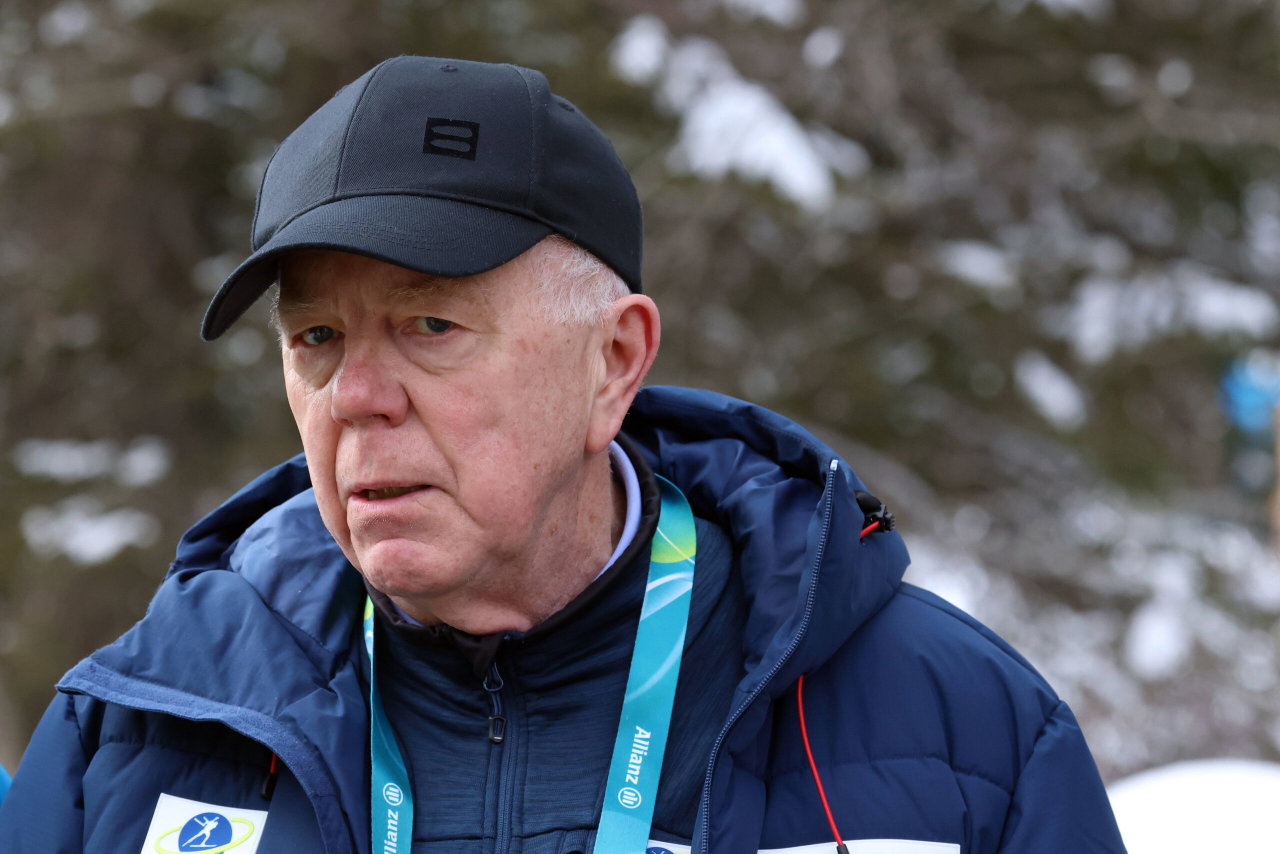
In December last year, the RBU had even filed a lawsuit with the CAS, demanding the lifting of the suspension of the Russian athletes. But despite all this, IBU President Olle Dahlin remains firm on the stance regarding the suspension of Russian athletes, despite updated recommendations issued by the IOC.
What did the IOC say while lifting the suspension of the ROC earlier this year?
The IOC’s approach has evolved since the restrictions were first introduced in 2022. Following Russia’s invasion of Ukraine, the IOC Executive Board recommended that international federations and event organisers prevent Russian and Belarusian athletes and officials from participating in international competitions.
In March 2023, the IOC later issued recommendations allowing eligible athletes with Russian or Belarusian passports to return as Individual Neutral Athletes under specific conditions. Those recommendations were subsequently implemented across several international sports, with neutral athletes competing at events including the Paris 2024 Olympics and Milano Cortina 2026 Winter Olympics.
The IOC’s more recent decisions have moved further toward broader access. In July, it provisionally lifted the suspension of the Russian Olympic Committee, while also removing its previous recommended participation conditions concerning Russian athletes and teams.
The change, however, did not automatically force every international federation to reopen its competitions.
The IOC has acknowledged that individual federations have interpreted its recommendations differently, depending on their own rules and circumstances. Some have allowed athletes to return, while others have maintained restrictions.
That distinction is now particularly relevant to biathlon.
The IBU’s rules also create another hurdle. Unlike some other sports, its statutes do not provide a mechanism for athletes from the suspended federations to compete under neutral status. As a result, there is no straightforward middle ground that would allow a limited return while the wider suspension remains in place.
That makes the IBU’s latest decision more definitive than simply declining to lift a ban. For now, there is no neutral pathway available within its existing framework.
The development also places the IBU among a smaller group of international federations that have resisted changing their policies despite the IOC’s shift. Sports including handball, volleyball, modern pentathlon, table tennis, boxing and motorsport have moved toward allowing Russian and Belarusian participation under varying conditions.
The contrasting approaches have also drawn attention in Europe, where several governments have questioned whether sporting bodies that ease restrictions should continue receiving public funding.
For biathlon, though, the immediate picture is clear. The September IBU Congress will not reconsider the Russian and Belarusian suspensions, leaving the existing restrictions intact.
For athletes hoping to return to the international circuit, the wait therefore continues.