
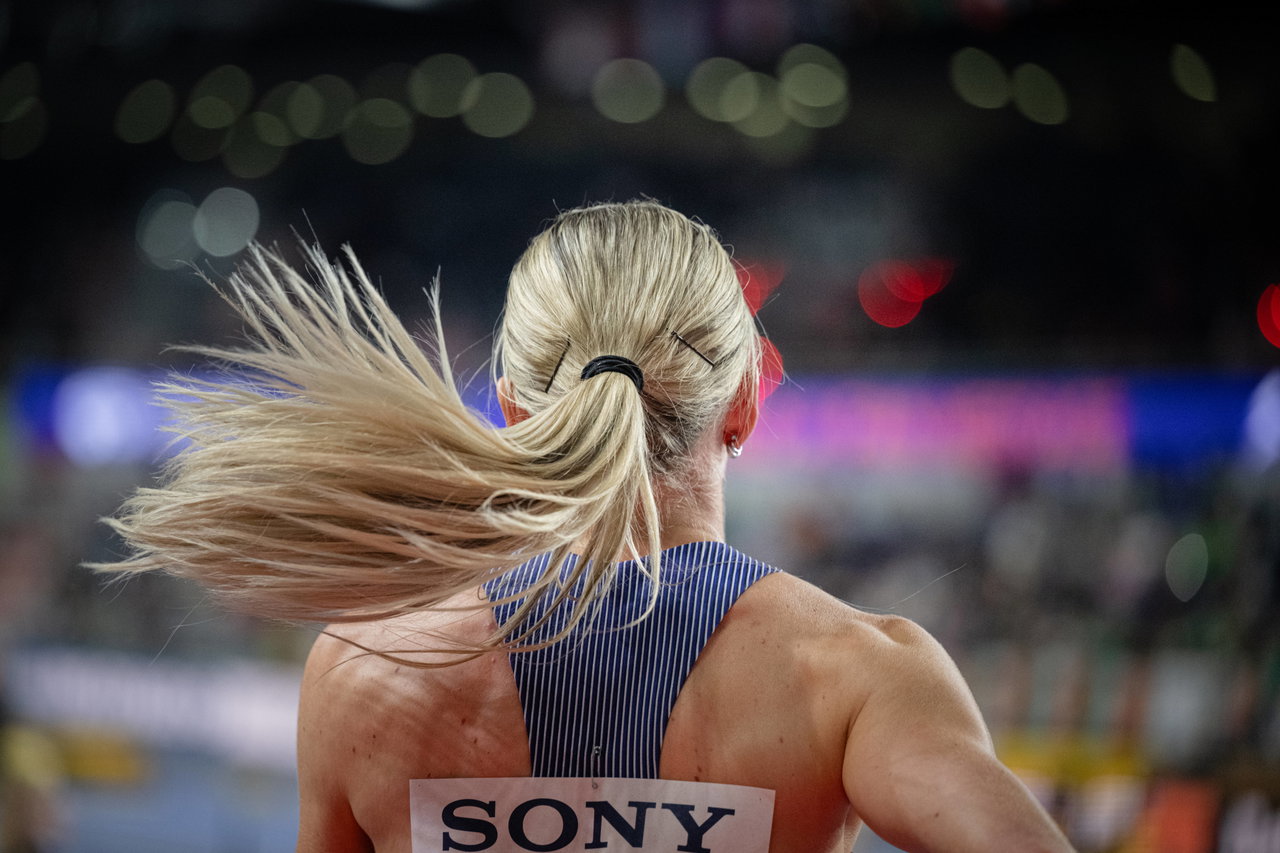
Broadcasting guidelines don’t often make headlines in track and field. But when European Athletics and the European Broadcasting Union (EBU) released a 23-page document on how women’s events should be filmed, it sparked the kind of debate the sport rarely has out loud. The guidance is simple: focus on the performance, not the angle. Olympic champion Keely Hodgkinson has now weighed in with a measured but clear message.
Watch What’s Trending Now!
Reporters questioned the 800m star about changes to broadcasting laws following the publication of the guidelines. And she had nothing but positive things to say about them.
“Yeah, I see it as a positive thing that’s being done,” Hodgkinson told reporters (via Instagram). “Me personally, I haven’t really ever felt uncomfortable in that sense, so I’m not gonna speak on anybody else’s experience.
“But yeah, I think any step toward making women feel more comfortable as athletes and things like that is a good step forward.”
The EBU, alongside pole vaulter Holly Bradshaw, long jumper Ivana Španović, and high jumper Blanka Vlašić, developed and released new guidelines for broadcasters to follow regarding women’s athletics. All three Olympians have spoken out about how the intrusive angles often affect an athlete’s performance.
While Hodgkinson, as a distance runner, doesn’t face those problems too often, pole vaulters, long jumpers and even high jumpers do. It has forced action, and the 23-page rulebook is the result. It essentially points towards fewer tight shots from behind, low camera angles and slow-motion replays that don’t add to the broadcast.
Amy Hunt, a fellow sprinter, also added to the conversation and believes that the conversation around social media has been key. There has been backlash and talk from fans and others across social media, with many confused about the rules. Some even misunderstood the changes, though things will likely be clarified once they’re officially implemented.
Imago
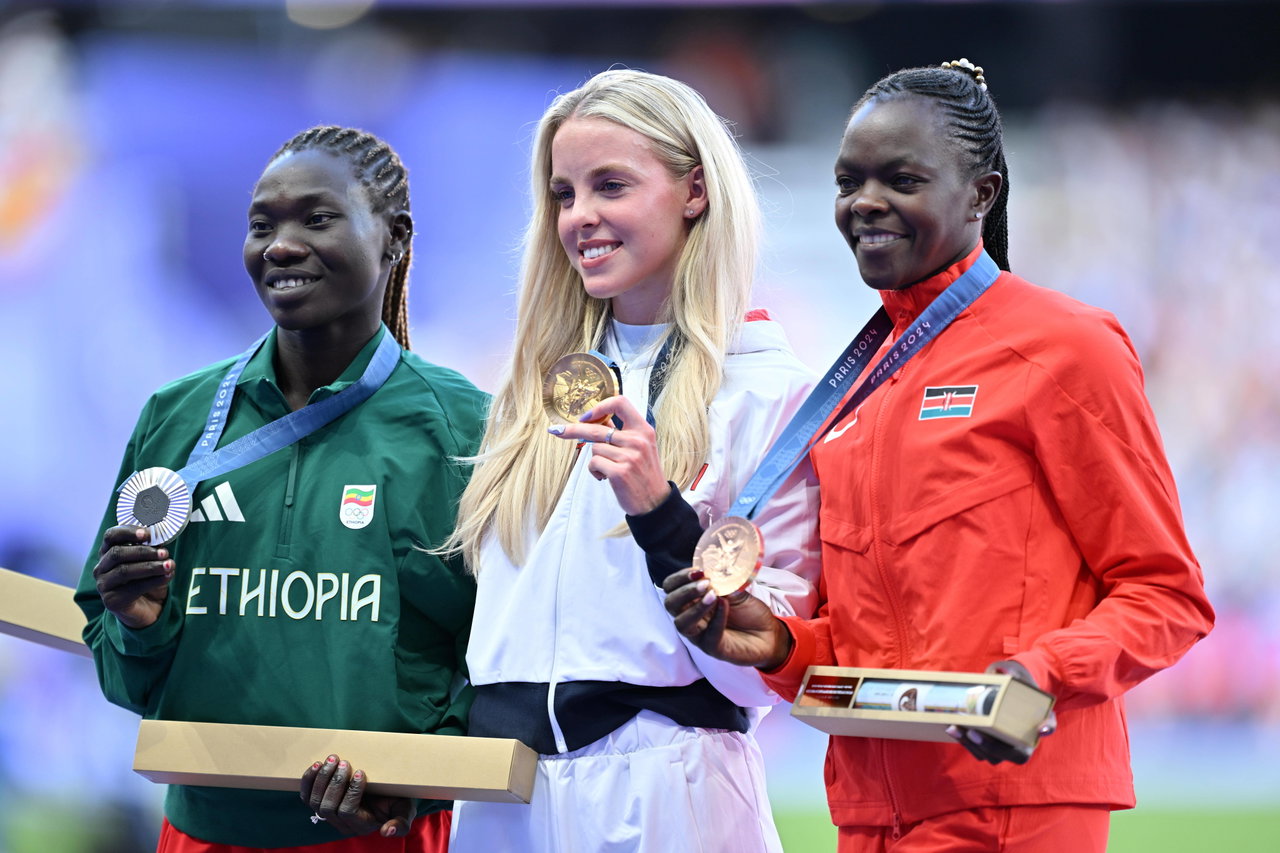
Olympic Games, Olympische Spiele, Olympia, OS Paris 2024 PARIS, FRANCE – AUGUST 06: Gold medalist Gold medalist Keely Hodgkinson of Team Great Britain C, Silver medalist Tsige Duguma of Team Ethiopia L and Bronze medalist Mary Moraa of Team Kenya R celebrate on the podium during the Women s 800m medal ceremony on day eleven of the Olympic Games Paris 2024 at Stade de France on August 06, 2024 in Paris, France. France World. Editorial use only. Please get in touch for any other usage. PUBLICATIONxNOTxINxTURxUSAxCANxUKxJPNxITAxFRAxAUSxESPxBELxKORxRSAxHKGxNZL Copyright: x2025xAnadoluxMustafaxYalcÄnx
“I think having women as part of the process the whole time is enabling us to have better conversations and kind of flag things when maybe people wouldn’t realize,” Hunt told reporters. “So it’s definitely a really welcome change to be able to just focus on the sport.
“We shouldn’t have to change what we’re wearing in order to feel comfortable. I wanna feel fast and powerful. I don’t wanna feel like I’m being limited by my clothing. So I think it’s definitely a really positive step forward.”
While athletes have largely welcomed the changes, the people responsible for producing the broadcasts see them as an evolution rather than a restriction. That is exactly how the Executive Director of the European Broadcasting Union (EBU), Glen Killane, views the new guidelines.
Glen Killane reflects on the broadcasting changes
This isn’t the first time that changes have been made to the way a broadcast is captured. During the 2024 Olympics, the Olympic Broadcasting Services specifically told camera operators how they should and shouldn’t film. While there wasn’t a specific guide, they essentially told camera operators to avoid any “stereotypes and sexism” in their filming.
It paid off, and now the EBU has followed their direction with this guide. However, even then, a margin of error is in play because of how fast the athletes move. Thus, the EBU has instead focused on filming every athlete fairly and accurately, albeit with respect. That’s something Glen Killane touched upon and emphasised in his interview about the new guidelines.
“Our coverage should reflect the skill, dedication, and excellence that define athletics, and uphold the trust placed in us by audiences and competitors alike,” Killane says (via Runners World). “The sexualization of women athletes through selective camera angles and editing choices continues to be a significant concern across many sports broadcasts.
“Lingering shots on bodies, low-angle cameras that capture revealing views, and excessive slow-motion replays that serve no technical or storytelling purpose are among the issues observed in the media coverage of women’s athletics competitions today.”
The new guidelines now give broadcasters a framework to avoid those issues. Whether they change what viewers actually see will become clear over the coming months. Because for the EBU, the document is only the first step. The real test begins when those cameras start rolling at major championships.