
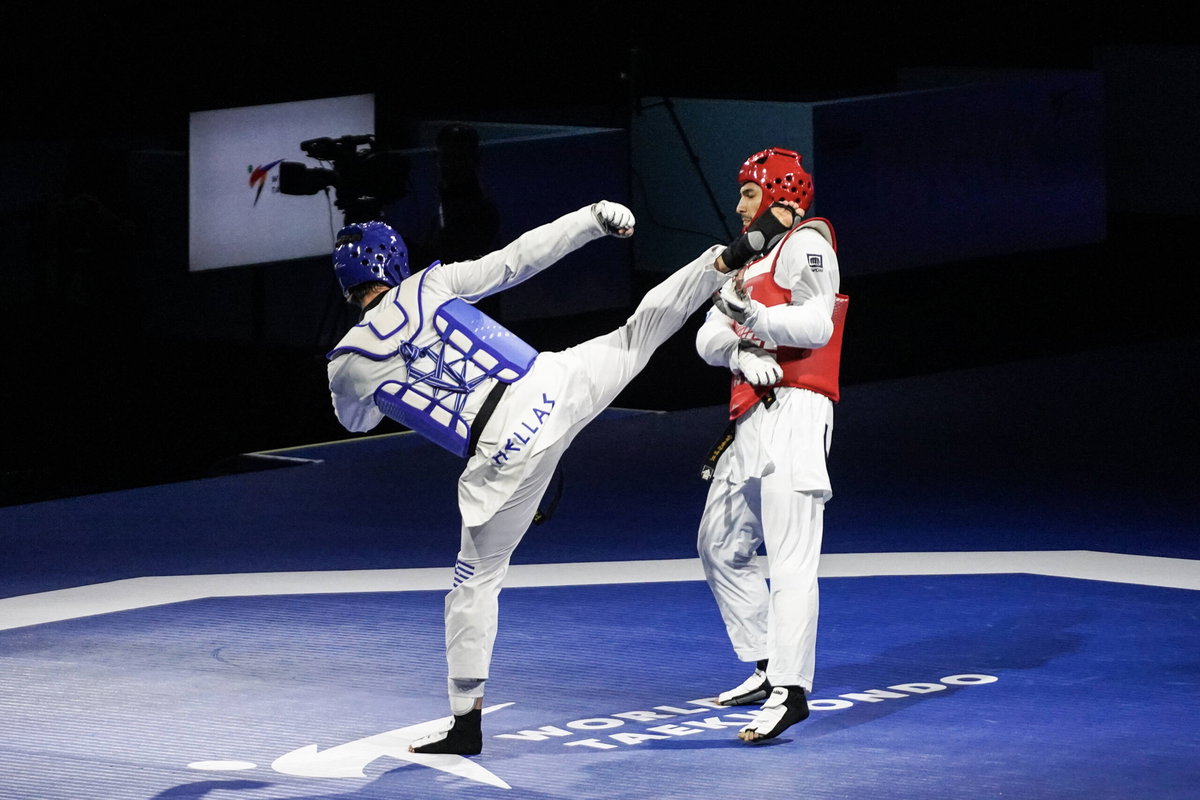
When the then 23-year-old Brazilian taekwondo athlete Maicol Siqueira won bronze in the men’s +80kg at the Rio 2016 Olympics, it was an emotional home-soil moment. “It’s a unique situation, it’s a dream, there’s no way to explain what it’s like to be here,” he said at the time. After all, that medal came after years of struggle while working two jobs to support his family and chasing his sport. Fast forward to 2026, and that same athlete is now facing a very different headline.
Watch What’s Trending Now!
On May 8, Siqueira was handed a two-year suspension after repeated failures to meet anti-doping testing requirements. The International Testing Agency confirmed that he committed three “whereabouts failures” within a 12-month period, which under World Anti-Doping rules is treated as a violation even without a positive drug test.
According to the ITA, “Maicol de Andrade Siqueira has been sanctioned with 2 years of ineligibility for an ADRV under Article 2.4 of the WT Anti-Doping Rules (WT ADR)….” However, Siqueira’s suspension runs from January 19, 2026, to January 18, 2028.
The ITA also confirmed that his individual results from July 2025 onwards will be disqualified. For now, Siqueira did not challenge the ruling, though it can be appealed to CAS. It remains unclear whether he was actively competing when tests were missed.
Beyond Rio 2016, Siqueira’s career was not limited to one moment. He went on to win bronze at the 2019 World Championships. He even earned medals at the Pan American Games in 2019 and later secured team gold in 2023. Each result kept him active in international taekwondo until a two-year suspension derailed his career.
Siqueira is not alone in getting a whereabouts failure ban. Recently, Canadian pole vaulter Alysha Newman was hit with a 20-month ban due to three violations in 2025. Similarly, USA sprinter Fred Kerley was on the receiving end of a 2-year suspension in March 2026.
As of now, Siqueira has not spoken publicly about the suspension. The silence around this setback feels heavy, especially after everything he went through to get there.
Maicol Siqueira’s hard-fought journey to reach Olympic Bronze at Rio 2016
Before the Rio 2016 Olympics, Maicol Siqueira’s life was far from easy. He was the youngest of eight siblings, growing up in a home where money was always a struggle. To help his family, he worked as a bricklayer’s assistant and also took small jobs as a waiter at children’s parties. Even with all this, he still trained in taekwondo on weekends.
Things began to change in 2013 when he moved to São Caetano do Sul to train at the Two Brothers Team academy. That move helped him improve quickly. By 2015, he made it to Brazil’s national team, and soon after, he qualified for the Rio Olympics. But even then, life wasn’t simple. He often had to depend on raffles and local fundraising to pay for training and travel.
He once said, “I managed to qualify without any investment from the Brazilian Taekwondo Confederation… We had parties here, we held raffles… We raffled off a lot of things here so that I could move up in the world rankings, so I could compete and show that I was doing well...”
The pressure, though, was indeed heavy when the Rio Olympics finally arrived. Before the Rio Olympics, he struggled with insomnia and mental stress. “My head was already full, and I didn’t sleep well. But I still believed,” he said. Despite everything, he won bronze at the 2016 Olympics. But now, Maicol Siqueira’s career hangs in the balance of hope and glory.