
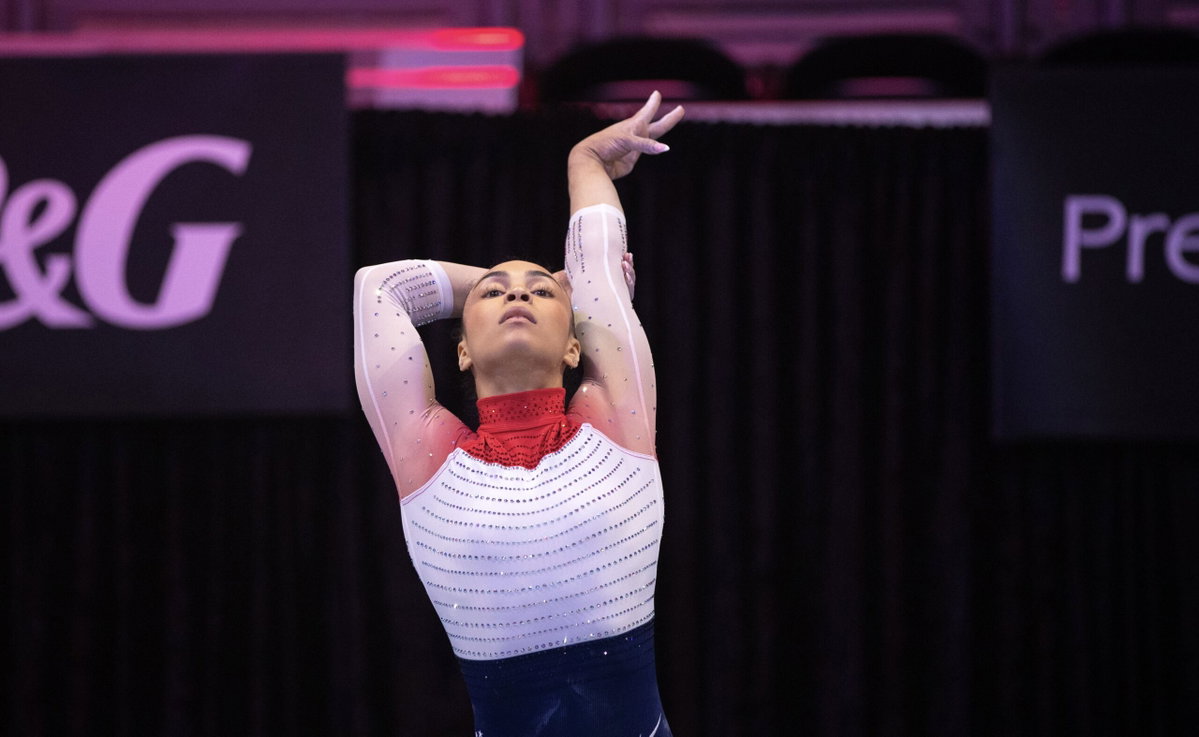
For years, elite student-athletes balanced their NCAA and Olympic schedules with long breaks. Jordan Chiles had taken a break from UCLA gymnastics in 2024 to achieve her Olympic dream in Paris. She put her NCAA career on hold to help Team USA win gold, then returned to Pauley Pavilion and dominated the 2025 and 2026 collegiate years. But future student-athletes will not have this luxury.
Watch What’s Trending Now!
The NCAA Division I Cabinet has adopted a new “five-for-five” age-based eligibility model that will change how athletes use their college careers. The proposal, approved unanimously on June 23, would phase in five seasons of competition over five years, removing redshirt and most eligibility waivers.
Under the old system, athletes could redshirt if injured, hold on to their eligibility on medical hardship waivers, or leave collegiate competition to prepare for the Olympics. But no more. Under the new model, an athlete’s eligibility clock starts once they enroll in college or the academic year after turning 19. After that, this ticking clock will not stop, no matter what!
The proposal was introduced following a growing trend of NCAA officials approving waiver requests and extensions of eligibility for some players to play well into their mid-20s. Medical redshirts and hardship waivers have become common in the last few years, and some athletes have even received 6th and even 7th years of eligibility.


The NCAA has also stated that eligibility extensions would no longer be available except in limited circumstances involving pregnancy, active military service, and official religious missions, provided the athlete does not participate in organized competition during that period. The new model applies to student-athletes with eligibility remaining after the 2025-26 academic year.
Current athletes have the option to compete under either the existing system or the age-based model, depending on which is more favorable. Athletes who completed their fourth season of competition by spring 2026 would not receive additional eligibility.
With over 11,000 athletes set to participate in the 2028 Los Angeles Olympics, here are a few names who could be most affected by the new rule.
New NCAA eligibility rules could stand in the way of dreams and ambitions
2024 Olympic gold medalist Hezly Rivera, who missed the 2025 Gymnastics World Championships due to an injury, has her sights set on the 2028 Los Angeles Olympics and could remain a major figure in elite gymnastics over the next few years. However, Rivera verbally committed to LSU in 2024, but College Gym News reported that she plans to defer her enrollment and focus on training for LA 2028 before joining the Tigers as part of the Class of 2028. The new model comes in the way of her plans.
2024 Olympic alternate and former U.S. national team member Tiana Sumanasekera committed to UCLA before the 2026 NCAA season, when the Bruins signed her in 2023. She has also officially changed her FIG nationality to Sri Lanka, meaning she could compete for Sri Lanka in Los Angeles 2028. Unlike Chiles, balancing both NCAA and international ambitions under the new rules could be challenging.
Finally, 2023 World Championships gold medal winner and 2024 Olympic Games replacement athlete Joscelyn Roberson will kick off her NCAA career at the University of Georgia in 2027. Despite her college plans, she prioritizes her dream of elite gymnastics. When asked about her future goals, she said, “27 is the big goal, make that worlds team, and then obviously 2028.” With the Los Angeles 2028 Olympics approaching, the timing of the rule change could not have been worse.
The proposal could become official after the Division I Cabinet meets this week. Will it do more good than harm? Only time will tell.