
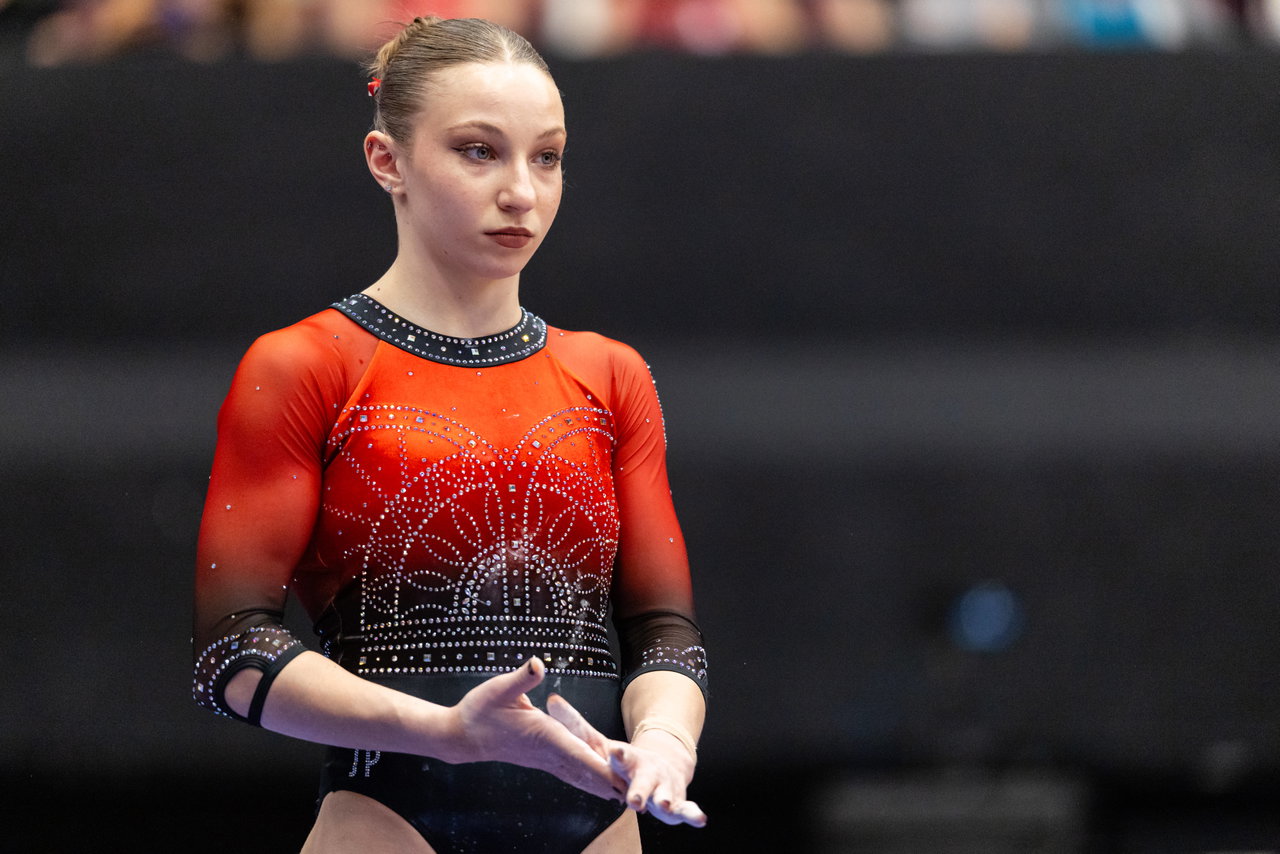
Romania fought hard to secure the Olympic bronze for Ana Bărbosu after the Paris 2024 women’s floor final, where Jordan Chiles was initially placed third. That effort was successful as CAS ruled in favor of Romania. But the dispute did not end there. Earlier this year, the U.S. brought new video evidence that reopened the case. Now Romania is on the verge of possibly losing it because of legal procedures and unpaid arbitration costs.
Watch What’s Trending Now!
According to GOLAZO.ro, the Romanian side has not yet paid the required arbitration fee of around 90,000 Swiss francs, roughly 98,000 euros, which is needed for the CAS hearing to formally move forward. Without this payment, the process cannot properly restart and risks being delayed, with a short window of around ten days reportedly set to complete it.
A CAS source told the outlet, “It’s a very sensitive situation. The problem is that the Romanians do not have the financial guarantees to be able to start this process.”
The case goes back to the original CAS ruling, which said the coach’s inquiry was filed after 1 minute and 4 seconds. However, the United States later submitted video evidence suggesting the inquiry may have been made around 47 to 53 seconds after the score was posted, which could make it valid under FIG rules. This new audio-visual evidence was sufficiently compelling for the Swiss Federal Court to order a fresh review of the case, which is currently before CAS. But now Romania is unable to pay the fees.
Internally, the delay is connected to who should cover the CAS cost – is it the National Agency for Sports, the Romanian Olympic and Sports Committee, or the Romanian Gymnastics Federation? As FRG president Ioan Suciu said, “Defending an Olympic result cannot be the responsibility of a single institution.”
View this post on Instagram
There is also a disparity in financial resources between the two sides. It would take about 60,000 to 65,000 euros to adequately start the process, including legal fees, expert opinions, and travel. The same source noted that the United States side is much better resourced, having several law firms and a legal budget of around 2-2.5 million euros.
The total value of the case is considerably greater than that, with the cost of creating the CAS panel being about 90,000 Swiss francs, and the rest of the proceedings, including legal, expert, translation and other expenses, adding up to 250,000 Swiss francs or more. Sources also state that if Romania takes further legal steps against Omega for official timing records, it will cost another 150,000 Swiss francs.
The other controversial aspect of the inquiry decision is the official timing system. Romania had previously asked for detailed timing records from Omega two years ago, but the company reportedly declined to hand them over, stating that it does not wish to become a “scapegoat” in the dispute.
At present, Ana Bărbosu is still holding the bronze after the first CAS ruling, but the case will be brought back for review based on new evidence. Jordan Chiles might regain the bronze medal if the Romanian side fails to pay. Yet, even in the face of all the legal wrangling, neither of the athletes has come out with any public animosity toward the other.
Jordan Chiles and Bărbosu take a stand on the Olympic medal debate
The controversy started at the Paris 2024 women’s floor final, where Jordan Chiles started with 13.666, but was outscored by Ana Bărbosu, who posted a 13.700.
Chiles’ coach inquired, and her total came out to 13.766, placing her for the bronze medal.
Later, Romania protested the result, claiming the inquiry was made beyond the one-minute time frame set by the rules of the FIG.
Eventually, CAS decided that the inquiry was not submitted within time and that Bărbosu earned the bronze, while Chiles’ initial score was restored. Since then, the case has gained international spotlight, but neither gymnast has ever blamed the other for the incident.
Chiles made that clear when discussing Bărbosu, saying, “Ana is a remarkable gymnast… At the end of the day, we support each other. Sportsmanship is the biggest thing in the sport, and showing that is what I wanted.”
Bărbosu has taken a similarly measured approach. Earlier this year, when asked whether the ongoing legal proceedings were weighing on her mind, she said, “I’m just trying to be the best I can…Everything else is out of my control, so I don’t see why I should put too much energy into it.”
As the case heads back to CAS for another review, the legal teams, federations, and courts continue to battle over the result.