
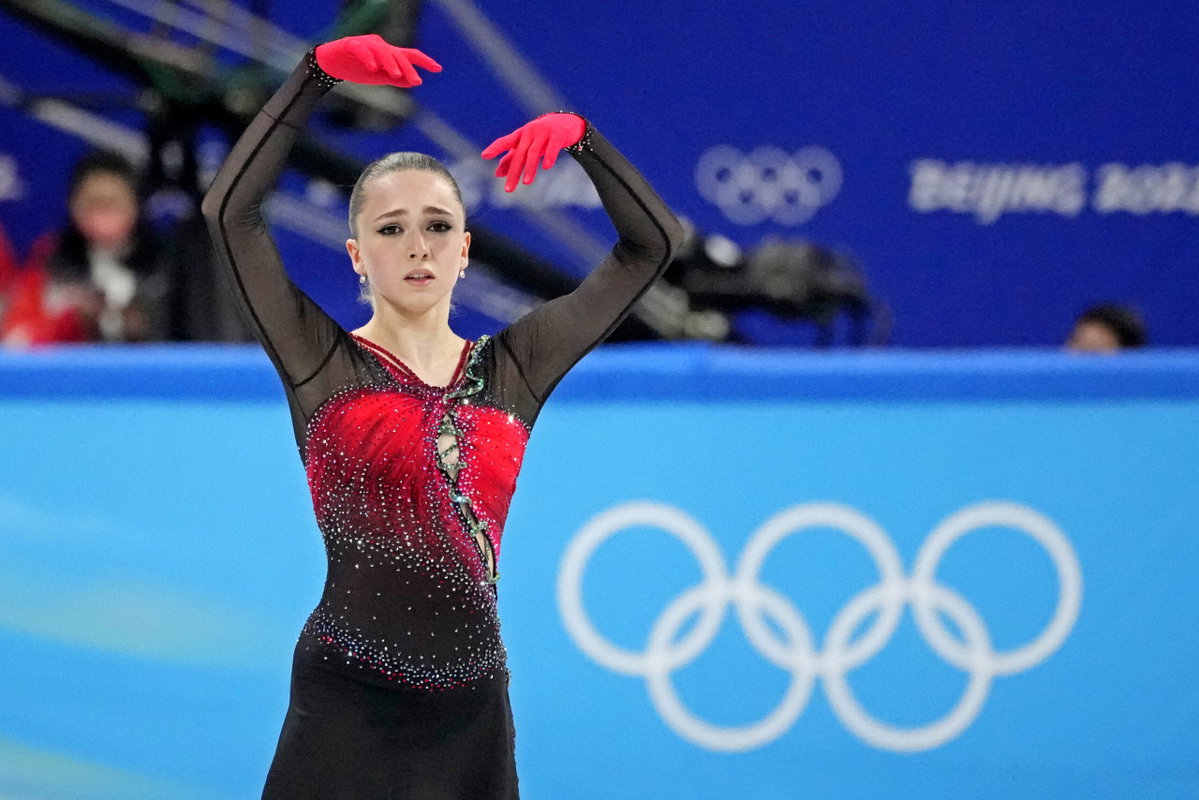
Russian athletes have been restricted in international sport ever since the invasion of Ukraine in February 2022, with some allowed to return only as Individual Neutral Athletes. However, in July 2026, the IOC temporarily lifted the ban on the ROC, albeit with a set of rules for individual sports for Russian athletes. In this light, Russian sports icon Tatiana Tarasova has spoken about what she believes remains an unfair situation for Russian athletes.
Watch What’s Trending Now!
According to a report published by Russian outlet Irbis on August 12, Tarasova believes Russian athletes continue to face opposition when it comes to returning to international competition. Her comments came after Russia’s Foreign Intelligence Service claimed that European leaders were concerned about the IOC’s decision to lift sanctions against Russia and the possibility of Russian athletes making a full return at the 2028 Los Angeles Olympics.
Tarasova said: “Nobody wants us there, especially the European Union – no one is hiding it. I think we’ll return; they won’t mess with us. It’s a big country, and the results are amazing. Any other path would be unfair…”
The comments follow as Russian figure skaters have already started preparing for their return to international competitions. On June 30, the International Skating Union announced that eligible Russian and Belarusian skaters could return to ISU events and international competitions from the 2026/27 season as Individual Neutral Athletes.
In recent weeks, the return of Russian figure skaters has progressed, with several receiving permission to skate as neutrals for the 2026/27 season, such as Kamila Valieva and Alexandra Trusova. This is all the difference between the Olympic decision and the figure-skating decision.
The suspension of the Russian Olympics Committee was revoked by the IOC Executive Board on 7 July 2026, and the previous recommendations of the Executive Board to the international federations on the issue of restrictions for Russian athletes were rescinded. The ruling paved the way for more Russian athletes to compete at the Los Angeles 2028 Games.
For figure skating, the door has now reopened, but Russian skaters have not returned as a Russian national team. They remain neutral athletes without national symbols, and their eligibility is subject to the ISU’s screening requirements. One of the most closely watched athletes to receive that status is Kamila Valieva.
Kamila Valieva faces fresh criticism over her new Neutral Athlete Status
Kamila Valieva has been allowed to return to international figure skating, but the decision has drawn criticism from Norwegian NRK journalist Jan Petter Saltvedt. While he does not blame Valieva personally, Saltvedt questioned whether she should be considered a neutral athlete because of her public and political associations.
Saltvedt said he views Valieva as “a victim of a system” and believes officials around her used her success for their own benefit. He also pointed to her age when the doping case emerged, arguing that she was a child. “She was punished fairly, but those who truly should have been punished escaped responsibility,” he said.
The Norwegian journalist also acknowledged that Valieva has already served her punishment and should have the opportunity to compete again. However, he does not believe that competing as a neutral athlete is appropriate in her case.
His main concern is Valieva’s political and public associations. Saltvedt pointed to her appearances alongside Russian President Vladimir Putin and at Russian state events, saying these factors influence his view of her neutral status. “It is the political and propaganda aspect that is the main reason for my skepticism,” he said. “Under the criteria for neutral status, she is not a neutral athlete.”
Saltvedt was particularly critical of the ISU’s decision to recognize Valieva as neutral, calling it “a joke.” He argued that her case is different because it combines her previous doping violation with what he considers her political associations. At the same time, he stressed that his criticism should not be interpreted as a call to punish Valieva again for her doping case.
“The political aspect would not be a problem if the war had ended. But it has definitely not ended,” Saltvedt said, explaining why he remains opposed to her neutral status.