Imago
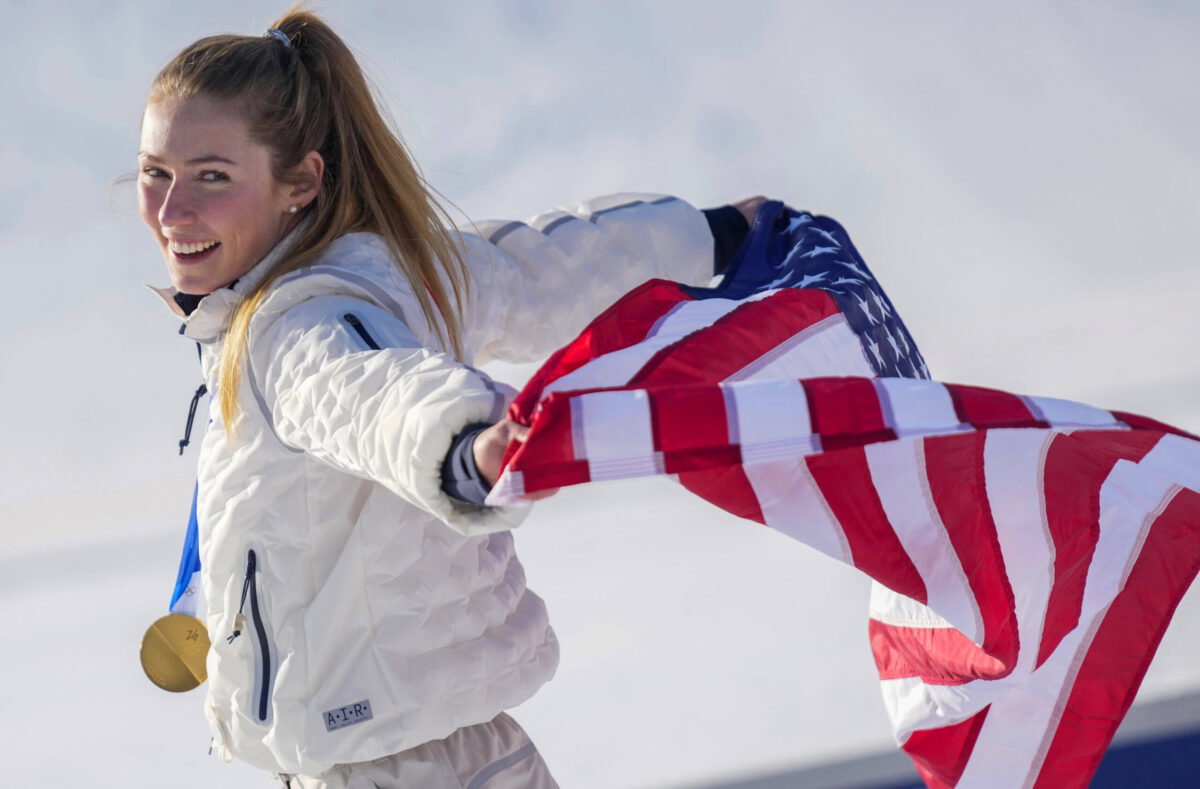
Foto IPP/Gio Auletta/Pentaphoto Cortina D Ampezzo 18/02/2026 Olimpiadi Invernali Olimpiade Giochi Olimpici Milano-Cortina 2026 Sci Alpino Slalom Speciale Femminile nella foto Mikaela Shiffrin vincitrice della medaglia d oro e del titolo di campionessa olimpica mentre sventola la bandiera degli stati uniti italy ITALY PUBLICATIONxNOTxINxITAxFRAxJPN Copyright: xR4924_italyphotopressx
Imago
Foto IPP/Gio Auletta/Pentaphoto Cortina D Ampezzo 18/02/2026 Olimpiadi Invernali Olimpiade Giochi Olimpici Milano-Cortina 2026 Sci Alpino Slalom Speciale Femminile nella foto Mikaela Shiffrin vincitrice della medaglia d oro e del titolo di campionessa olimpica mentre sventola la bandiera degli stati uniti italy ITALY PUBLICATIONxNOTxINxITAxFRAxJPN Copyright: xR4924_italyphotopressx
Mikaela Shiffrin was flying. After crushing disappointment in the team and giant slalom events, she came out with a mission in the event she owns. Shiffrin had squandered the first-place lead given by her teammate Breezy Johnson in the team event, finishing 15th. In giant slalom, she was better, crossing the finish line in 11th place. After ramping up, Shiffrin finally came into her own in slalom.


“This is not Shiffrin during the team event, where she just looked frozen out of the gate,” the broadcaster said on air.
Watch What’s Trending Now!
With a time of 47.13 in her first run, Shiffrin took a giant lead of 0.82 seconds. To add context, it was the largest first-run lead in an Olympic women’s slalom since 1960.
No competitor touched her in the second run. Gold medalist Shiffrin finished with a combined time of 1:39.1, 1.5 seconds ahead of Camille Rast of Switzerland, and 1.71 seconds ahead of bronze medalist Anna Swenn-Larsson of Sweden. That is the largest winning margin in any Olympic alpine skiing event since 1998. With this medal, Shiffrin quashed the 8-year Olympic medal drought.
Imago
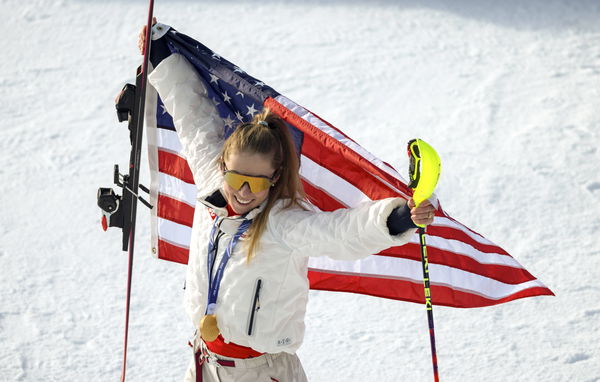
260218 — CORTINA D AMPEZZO, Feb. 18, 2026 — Mikaela Shiffrin of the United States poses for photos during the awarding ceremony of the alpine skiing women s slalom at the Milan-Cortina 2026 Olympic Winter games, Winterspiele,Spiele, Summer games in Cortina, Italy, Feb. 18, 2026. MICO2026ITALY-CORTINA D AMPEZZO-OLYMPIC WINTER GAMES-ALPINE SKIING-WOMEN S SLALOM FeixMaohua PUBLICATIONxNOTxINxCHN MICO2026ITALY-CORTINA D AMPEZZO-OLYMPIC WINTER GAMES-ALPINE SKIING-WOMEN S SLALOM IMAGO/FeixMaohua PUBLICATIONxNOTxINxCHN imago images 0847986561
“It’s been so long that I’ve felt tired of questions that don’t feel like they line up with the reality of our sport. And in order to do this today, I kind of needed to accept the possibility that those questions would keep coming,” Shiffrin said. “It was like, just don’t resist it. Just live in my own moment.”
Sure enough, Shiffrin has turned doubters into fans, as social media has exploded with positive reactions to her gold medal win.
Fans hail Mikaela Shiffrin as the greatest skier of all time after gold medal win
“Congratulations, Mikaela! Go USA,” wrote a fan. Earlier, Breezy Johnson took gold in the downhill event. After Mikaela joined her in the gold medal club, Johnson wrote, “So proud of this lady!!! 2x slalom champ!!!!”
The USA currently stands at No. 3 in the Winter Olympics table with 7 gold, 11 silver, and 6 bronze medals. Personally, for Shiffrin, it felt like breaking a curse.
“Got that Olympic monkey off her back… good for her 👍,” wrote a fan.
The Beijing Olympics are something Shiffrin would like to forget. In the six events she participated in, Shiffrin failed to make the podium in every one. However, there was a reason behind this underperformance. In 2020, she unexpectedly lost her father and even wondered if she wanted to continue skiing at one point. It has taken a while for Shiffrin to recover from that heavy loss.
“Maybe today was the first time I could actually accept this reality. And instead of thinking I would be going into this moment without him, to take the moment to be silent with him,” she said after the win.
greatest american skier of all time. not even a debate anymore.
— sportscal (@getsportscal) February 18, 2026
Shiffrin now has four medals (three gold, one silver) through four total Olympic appearances. Her first gold medal came in 2014 when she became the youngest skier ever to win the slalom event. After this win in 2026, she is also the oldest skier ever at 30 years old. In PyeongChang, Shiffrin earned gold in the giant slalom and was key in America’s silver in the combined event.
“That kind of dominance over twelve years is legendary stuff,” praised a fan. “Absolute dominance. Quietly legendary,” pitched in another.
Shiffrin has more World Cup wins (108) and podiums (166) than any other skier, regardless of gender. She’s been in the top three in more than 55% of her starts. Shiffrin is the only skier in history to win a World Cup in each of skiing’s six disciplines: downhill, super-G, giant slalom, slalom, combined, and parallel, and she has the single-season record for wins with 17.
Now, that is absolute dominance from Mikaela Shiffrin.
Written by

Edited by

Deepali Verma