
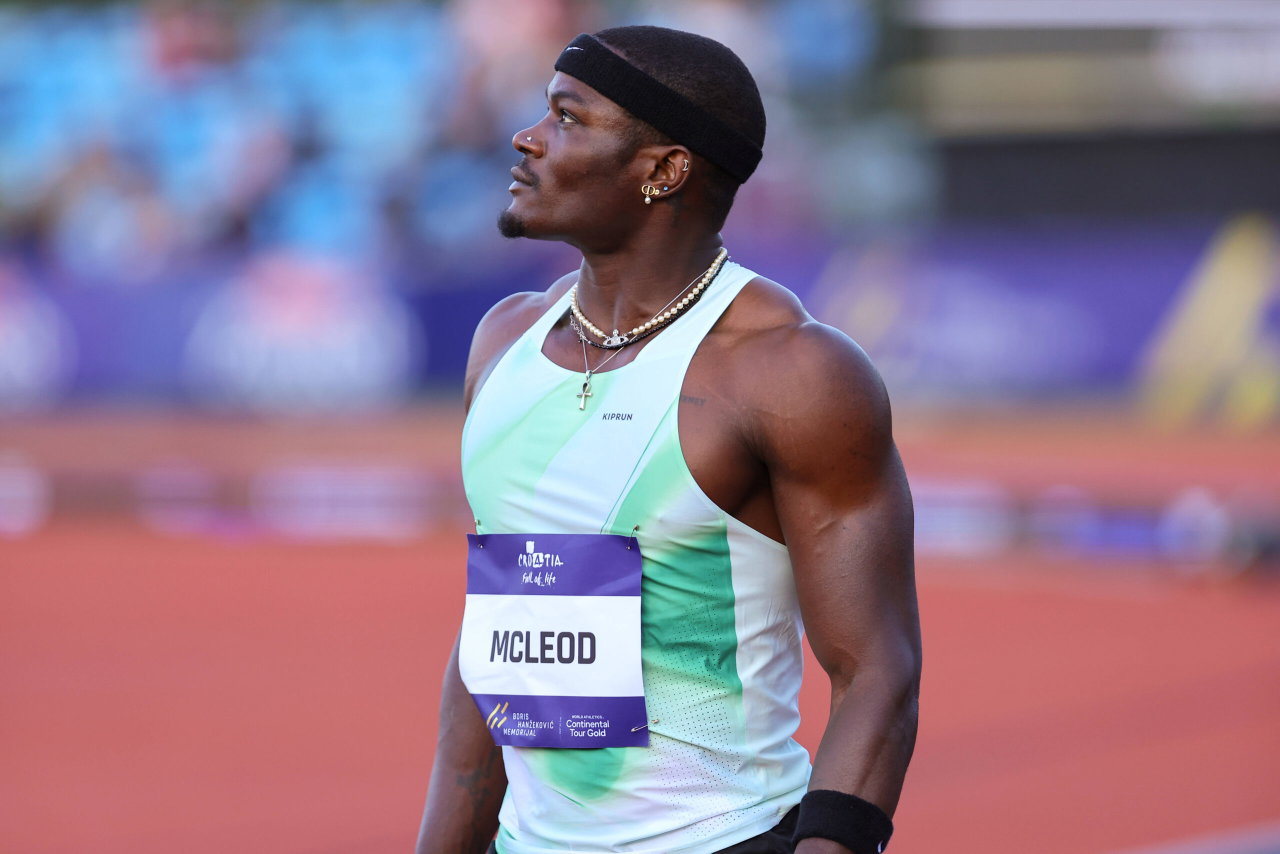
Jamaica’s Omar McLeod has spent years building a legacy on the track. Now, a missed doping test could put a blotch on everything he’s achieved so far.
Watch What’s Trending Now!
The 32-year-old Olympic and World Championship 110m hurdles champion is facing the possibility of a two-year ban following a whereabouts-related anti-doping rule violation, according to Jamaican journalist Kayon Raynor, citing TVJ’s confidential but reliable sources. McLeod, who has not competed this season, reportedly missed one test and recorded two filing failures during a 12-month period spanning 2025 and 2026.
McLeod reportedly missed the test in Europe, where he had been training. He has reportedly been notified of the alleged violation but has yet to indicate whether he will challenge the finding. For now, the case remains a potential sanction rather than a confirmed two-year suspension.
That distinction matters. A whereabouts violation does not mean an athlete tested positive for a banned substance. Under World Anti-Doping Agency rules, athletes in a Registered Testing Pool must regularly provide information about where they live, train, stay, and compete, along with a daily one-hour window when they must be available for out-of-competition testing.
Three whereabouts failures – typically a combination of missed tests and filing failures – within a 12-month period can constitute an Anti-Doping Rule Violation. That is the threshold McLeod is now reported to have reached.
For a hurdler who once looked destined to become Jamaica’s next great male track star, the development is an unexpected turn. McLeod won Olympic gold in the 110m hurdles at Rio 2016 and followed it with the world title in 2017. His 12.90-second personal best still places him among the fastest hurdlers in history.
At the height of his rise, McLeod embraced the intensity that came with competing at the top. “It’s an individual sport, and I’m aware of the competition. I see what they’re doing, and I applaud them, but I thrive off competition,” he said in 2017.
Now, his latest competition may come away from the track.
Omar McLeod isn’t the only track star caught in the whereabouts storm this year
McLeod’s situation also arrives during a year in which whereabouts cases have repeatedly pushed anti-doping obligations into the spotlight.
On March 30, the Athletics Integrity Unit announced that French heptathlete Auriana Lazraq Khlass had failed to comply with doping whereabouts requirements and was provisionally suspended.
Then came the case of another Jamaican, long jumper Carey McLeod. Once riding high after collecting major medals and victories, the two-time national champion accepted a two-year ban for whereabouts failures in May 2026. The AIU said McLeod’s sanction followed three whereabouts failures within 12 months, with his latest violation occurring in May.
The cases show just how little room elite athletes have for administrative mistakes. A missed test, inaccurate information, or failure to update a location can have consequences even when there is no allegation that the athlete used a prohibited substance.
Paris Olympic silver medalist Cyrena Samba-Mayela has also faced questions over alleged whereabouts failures. According to L’Équipe, the French hurdler was flagged over three alleged breaches, although she had not been suspended and was given an opportunity to explain the circumstances. Depending on the outcome, a sanction could range from one to two years.
But not every anti-doping case follows the same path.
German sprinter Owen Ansah is fighting a proposed four-year ban after NADA Germany accused him of refusing or failing to provide a sample in July. Ansah disputes that characterization and requested a hearing before the German Court of Arbitration for Sport after rejecting the proposed sanction in August.
Ansah says a doping-control officer arrived at his home while he was preparing to leave for Monaco and that he was already running late. He also claims he was not warned that leaving without providing the sample could constitute a serious violation. He subsequently underwent testing in Monaco and again in Germany days later, which has become part of his defense.
NADA, however, is focusing on the alleged failure to complete the original test. Under anti-doping rules, refusing or failing to provide a required sample can itself constitute a violation, regardless of whether an athlete later provides samples.
That is why McLeod’s next decision could be crucial. If he challenges the alleged whereabouts violation, the circumstances surrounding his missed test and filing failures will come under scrutiny. If he does not, the potential consequences could be severe.
For now, the Olympic champion remains caught between two worlds: the celebrated career he built with every hurdle cleared on the track, and an anti-doping case that could leave one of his toughest obstacles waiting far beyond the finish line.