Imago
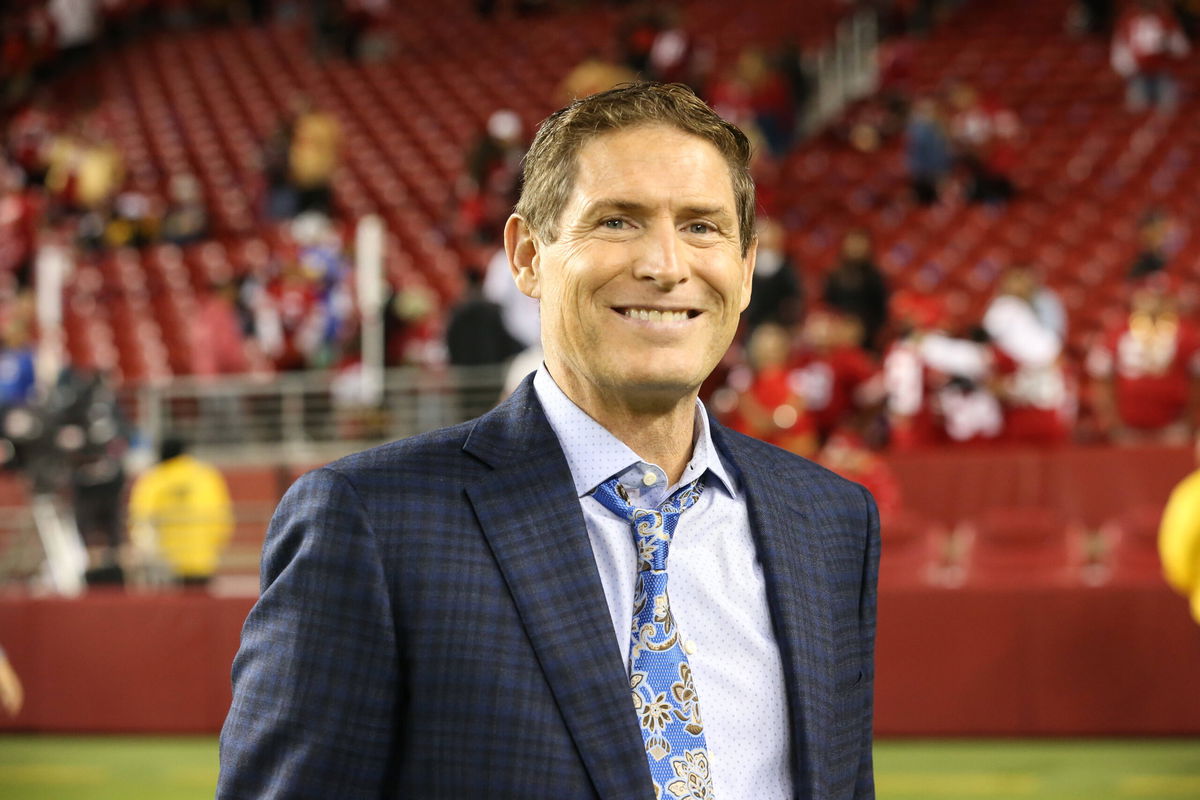
SANTA CLARA, CA – OCTOBER 03: Former San Francisco 49ers Steve Young during the NFL, American Football Herren, USA game between the Los Angeles Rams and the San Francisco 49ers on October 03, 2022, at Levi s Stadium in Santa Clara, CA. Photo by Jevone Moore/Icon Sportswire NFL: OCT 03 Rams at 49ers Icon20221003110
Imago
SANTA CLARA, CA – OCTOBER 03: Former San Francisco 49ers Steve Young during the NFL, American Football Herren, USA game between the Los Angeles Rams and the San Francisco 49ers on October 03, 2022, at Levi s Stadium in Santa Clara, CA. Photo by Jevone Moore/Icon Sportswire NFL: OCT 03 Rams at 49ers Icon20221003110
Essentials Inside The Story
- A visit to Sand Hill Road is what got Steve Young into investing.
- His 49ers teammates ended up becoming long-term business partners.
- He built his second career with the same discipline he had in football.
There is something in San Francisco that seems to set up former 49ers players for success long after their NFL careers end. Just look at Hall of Fame quarterback Joe Montana. While he earned under $26 million during his playing days with the 49ers, Montana’s San Francisco-based venture firm Liquid 2 has raised over $239 million since launching in 2015. Following in his footsteps was QB Steve Young, who joined the 49ers in 1987, and he thrived in the 49ers system.
Watch What’s Trending Now!
Young served as the primary backup to Montana for four seasons before taking over the starting QB job. But at the same time that he was thriving on the field, Young began investing in tech companies around San Francisco. Then, after retiring from the NFL in 1999, he went all in on building his private equity empire, which currently has over $10 billion in assets. Recently, Young revealed that this success came because he did not play for one of the 49ers’ rivals, such as the Minnesota Vikings.
“If I played for the Vikings, I don’t think this goes the same way,” Steve Young said recently in an interview with Front Office Sports.
ADVERTISEMENT
According to Steve Young, staying in California was a game-changer during his playing days. The 49ers’ proximity to Sand Hill Road, which is considered the heart of Silicon Valley, gave Young access to opportunities few athletes experience. So, Young and Montana weren’t the only former 49ers players who leaned into the culture of investing in the Bay Area’s tech ecosystem.
Former 49ers offensive tackle Harris Barton currently manages venture capital funds through his San Francisco-based firm H. Barton Asset Management. Meanwhile, Brent Jones, who won Super Bowls with both Young and Montana, manages private-equity and venture-capital investing through Northgate Capital, a San Francisco-based firm. Jones, in particular, helped Young start his career as an investor while he was still playing for the 49ers.
Steve Young, whose investment firm recently closed a $3.2 billion fund, says playing for the 49ers near Silicon Valley is an advantage for breaking into private equity:
“If I played for the Vikings, I don’t think this goes the same way,” Young tells FOS.
— Front Office Sports (@FOS) March 16, 2026
ADVERTISEMENT
“He [Jones] said we should go up to Sand Hill Road and see if people will give us deal flow access,” Steve Young said. “We were best friends when we played. We wanted to get in on the Silicon Valley explosion in the mid-90s.”
That simple idea sparked something bigger, and Young used his proximity to Silicon Valley to connect with top venture capitalists like Doug Leone of Sequoia Capital. Soon, former 49ers safety Ronnie Lott also joined Barton, Montana, Jones, and Young in building a portfolio of investments. Much like how Chiefs’ veteran TE Travis Kelce has invested in his venture, 1587 Prime, at the heart of Kansas City, the former 49ers players welcomed the transition from years of competition on the football field to the relative peace of managing business ventures in San Francisco.
ADVERTISEMENT
In 2007, Young co-founded HGGC, a Palo Alto-based private equity firm with investments spanning business services, financial sectors, and technology. The portfolio of Young’s firm currently includes companies like Buildertrend and Grand Fitness Partners. Interestingly, Young initially stayed away from sports investments.
“I actually avoided sports at first,” Young said. “I wanted to put in the work and develop expertise.”
Instead of relying on his football fame, Young chose to build his credibility in the business world from the ground up. But now, HGGC has started exploring opportunities in areas like youth sports, suggesting a full-circle moment for Young.
ADVERTISEMENT
Was San Francisco the only factor behind Young’s successful PE empire?
During his 15-season NFL career, Steve Young had already won three Super Bowl rings, multiple MVP awards, and set many NFL records. But from 1985 to 1999, Young earned just over $49 million in NFL career earnings. And today, his financial success off the field arguably overshadows his playing earnings. Just last month, Young’s firm closed its fifth fund, raising $3.2 billion. But it was his dedication to work in finance that earned Young recognition beyond his ties to San Francisco.
Young’s preparation for the business world began long before his final snap. But Steve Young prepared for that transition. In 1994, while he was still playing for the 49ers, Young earned a law degree from BYU. While it wasn’t necessary to balance NFL pressure with law school, Young revealed that it was part of a much bigger plan for him.
ADVERTISEMENT
Imago
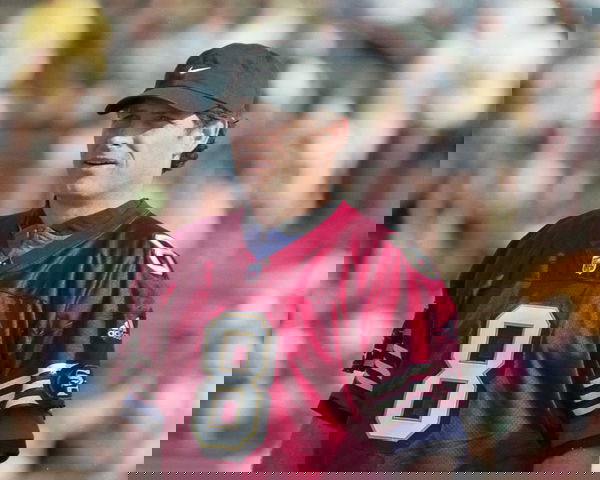
Steve Young at the 2001 NFL QB Challenge, 49ers legend QB Steve Young is introduced at the 2001 NFL QB Challenge. Image taken from color slide.
“My dad always said, ‘Everyone needs a dream and a plan,’” Young said in an interview with Equity Methods. “The NFL was my dream; my plan was law school. So, during the off-season, I went to law school. Seven winter semesters. The year I graduated was the year we won Super Bowl XXIX. Was it insane? Probably. But it gave me a sense of preparation for life after football and helped me build an ability to juggle multiple priorities.”
Top Stories
President Donald Trump Fires NFL Veteran QB’s Wife From White House Post

Patrick Mahomes Loses Key Piece of Chiefs Offense as Eagles Make $6.5 Million Decision

2026 Pro Day: Dolphins & Bills Eye Washington WR; South Carolina DE Draws Interest From Patriots

Tony Romo CBS’s NFL Broadcasting Future in Question Amid Roger Goodell’s $3B Demand
After retiring from the NFL, Young leaned on those hard-learned lessons from the football field to manage his private equity firms. He also revealed that having the right people around him, whether on the field or in the business world, has been a major factor behind his success.
ADVERTISEMENT
“When you work with people who care about your success, who are nice to work with, and bring positive energy, that chemistry leads to real abundance,” Young said. “That’s what my coach, Bill Walsh, taught us. He said the key to winning wasn’t play-calling. It was about love and shared experience. He built a culture where people built bonds across positions and hierarchies. That’s what makes teams great.”
While playing in the heart of Silicon Valley provided the opportunity, it was Young’s relentless preparation, from law school to his early investment days, that truly built his $10 billion empire, proving his championship mindset extended far beyond the football field.
ADVERTISEMENT
ADVERTISEMENT
ADVERTISEMENT
Related Newsletters