
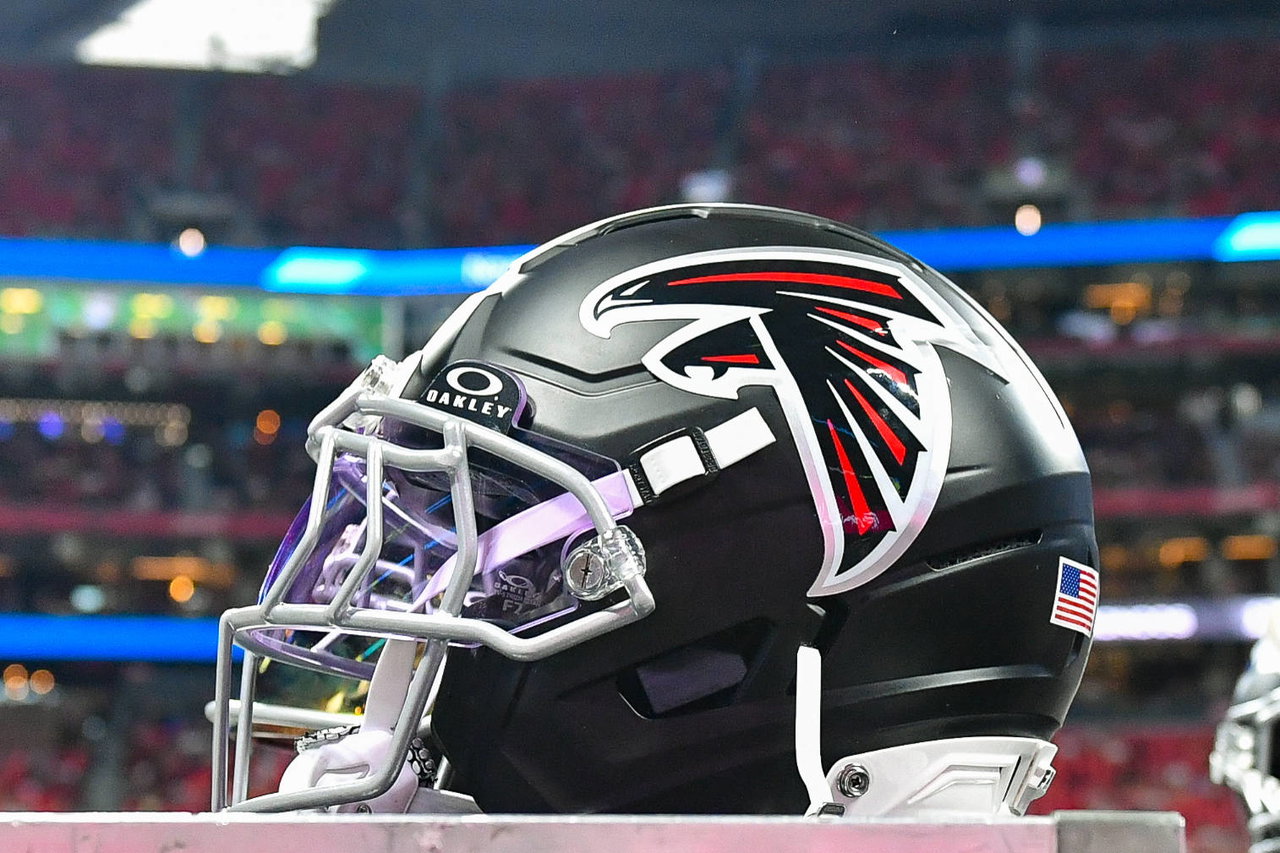
Back in 1989, the Atlanta Falcons operated like an offensive wasteland, limping to a 3–13 record while drowning near the league’s statistical basement. Desperate for a spark, head coach Jerry Glanville handed the playbook to 37-year-old former player June Jones. Jones didn’t just tweak the scheme; he unleashed the pure run-and-shoot offense, a revolutionary aerial philosophy that permanently altered how football would be played from Sundays to Saturdays.
Watch What’s Trending Now!
That daring system peaked in the 1991 Wild Card game, where a stunning 61-yard touchdown shocked New Orleans’ legendary “Dome Patrol” and delivered Atlanta its first playoff win in over a decade. Years later, Jones proudly noted how the entire NFL adopted his blueprint. Today, the gridiron weeps for that very visionary, as 73-year-old June Jones has tragically taken his final breath on October 29, 2026.
The franchise’s history with Jones urged the Falcons to write a few words and mourn the former head coach’s passing.
“We mourn the passing of former head coach June Jones,” the Falcons wrote in the statement on social media. “A visionary in the passing game, Coach Jones will be remembered with gratitude for his contributions to our organization and the lasting impact he made on those he coached and mentored. We extend our deepest condolences to his family, friends, and all who knew and loved him.”
Jones had been suffering from back pain this year. According to his close friend and former Kentucky coach Hal Mumme, it was because of a tumor in his back. Jones received treatment for the tumor and entered hospice care earlier this October. Unfortunately, things didn’t seem to work out, and he passed away in hospice care.
His passing leaves a quiet void in the sports world, yet June Jones’ journey was defined by rare, cyclical loyalty, none deeper than his relationship with the city of Atlanta. It is a rare privilege in professional football for a player to return to the very franchise that first took a chance on him, let alone rise to lead it from the sidelines. Jones was one of those fortunate few who experienced both sides of that bond with the Falcons.
That journey began humbly in 1977, when Jones joined Atlanta as an undrafted quarterback, spending five seasons in red and black through 1981. Mostly working from the shadows as a backup, he appeared in just 17 games, throwing for 923 yards and three touchdowns. Statistically modest, those early years were merely the opening act of a lifelong connection. A decade later, after transitioning into the coaching ranks, Jones returned to Atlanta in 1991 as offensive coordinator under Jerry Glanville, bringing with him a philosophy that would forever change the team’s identity.
He unveiled a pass-heavy blueprint featuring four-receiver sets, rapid pre-snap motion to disorient defenses, and route options that empowered receivers to read coverage in real-time. Though the run-and-shoot captivated the 1990s NFL, its roots stretched back to high school coach Glenn Ellison in the 1960s and were later refined by Mouse Davis at Portland State, the very coach Jones had played for in the mid-1970s.
When Jones brought that scheme to Georgia, the results were instantaneous. In 1991, quarterback Chris Miller threw a career-high 26 touchdowns, while wideouts Andre Rison and Michael Haynes combined for nearly 2,100 yards and 23 touchdowns. That explosive breakthrough set the stage for Jones to be named Atlanta’s head coach in 1994.
His crowning moment as head coach arrived in 1995, leading the Falcons to a 9–7 record and their first playoff berth in four years behind Jeff George’s 4,143 passing yards, supported by playmakers Terance Mathis, Eric Metcalf, and Craig “Ironhead” Heyward. Though his head coaching tenure in Atlanta eventually closed with a 19–29 mark over three seasons, Jones’ imprint on football stretched far beyond win-loss records.
Apart from the Falcons, Jones was a football nomad driven by a passion for the game:
- University of Hawai’i: Graduate Assistant (1983)
- Houston Gamblers (USFL): Wide Receivers Coach (1984)
- Denver Gold (USFL): Offensive Coordinator (1985)
- Ottawa Rough Riders (CFL): Offensive Coordinator (1986)
- Houston Oilers (NFL): Quarterbacks Coach (1987–1988)
- Detroit Lions (NFL): Quarterbacks & Wide Receivers Coach (1989–1990)
- San Diego Chargers (NFL): Quarterbacks Coach & Interim Head Coach (1998)
- University of Hawai’i: Head Coach (1999–2007)
- Southern Methodist University (SMU): Head Coach (2008–2014)
- Kapolei High School (HI): Offensive Coordinator (2016)
- Hamilton Tiger-Cats (CFL): Assistant Head Coach & Offensive Coordinator (2017)
- Houston Roughnecks (XFL): Head Coach & General Manager (2020)
- TSL Conquerors (The Spring League): Offensive Coordinator (2020)
- Seattle Sea Dragons (XFL): Offensive Coordinator (2023)
Apart from the Falcons, Jones also got a head coaching offer from the Chargers. But he made the heartfelt choice to return to where his head coaching heart truly belonged, taking the reins at the University of Hawai’i.
University of Hawai’i Athletics mourns the passing of June Jones
June Jones spent nine years at Hawaii as the head coach. The Hawaii program was winless in the 1998 season, but that changed when Jones took charge; he became the school’s all-time winningest coach with a 76-41 record. They went 9-4 in the first season with Jones as their head coach. That was when he developed multiple star quarterbacks, including Timmy Chang and Heisman Trophy finalist Colt Brennan.
“Words can’t express the sorrow I feel today,” Chang stated. “Coach Jones was a father figure, a mentor, and a visionary who revolutionized the game. He believed in a young kid from Hawaiʻi and gave me the opportunity of a lifetime to run his offense. And his impact didn’t stop when my playing days ended. He guided me every step of the way as I transitioned into coaching, always making time to share his wisdom and support me when I took over this program. He put Hawaiʻi football on the map and showed us all what was possible. We lost a true legend today, but I will spend the rest of my career trying to honor his legacy, his passion for this university, and the Aloha he shared with everyone he touched. My deepest condolences go out to his ʻohana and all those who he impacted.”
“The University of Hawaiʻi Athletics ʻohana is deeply saddened by the passing of former head football coach June Jones,” UH Athletics stated. “Coach Jones was a true visionary who elevated the Rainbow Warrior football program to unprecedented heights while serving as an incredible ambassador for the university.”
UH Athletics further claimed that Jones’ arrival “restored the community’s pride in Rainbow Warrior football.” After all, the team had a 76-41 record over nine years under his leadership. Later in 2008, Jones decided to join Southern Methodist University, Dallas. There he also developed former NFL wide receiver Emmanuel Sanders.
During his four seasons at SMU, Sanders played 47 games and received 285 passes for 3,791 yards to score 34 touchdowns. He was able to take that into the NFL, where he caught 704 passes for 9,245 yards and scored 51 touchdowns over 12 years. But it wouldn’t have been possible without Jones.
“If it wasn’t for June Jones, I can honestly say I probably wouldn’t have made it to the NFL or become the player I was,” Sanders confessed in an Instagram post. “I still remember sitting in a hotel room praying he would become my college coach after watching Colt Brennan, Ryan Grice-Mullen, and Davone Bess ball out at Hawaii. THE RUN & SHOOT.
“God answered my prayers, and under June at SMU, I flourished. June was never a yeller. He was always calm, cool, and collected. He taught me so much about offense and the game of football. Hearing the news of his passing truly saddens me because he was not only a great coach but an even better person. Thank you for everything, June. Your impact on my life will never be forgotten. May God rest the soul of one of the greatest offensive minds the game of football has ever seen.”
While June Jones revolutionized football with his high-flying run-and-shoot offense, the heartfelt tributes from the Falcons, Timmy Chang, and Emmanuel Sanders prove his true greatness lay in mentorship. He has left behind a timeless legacy that reshaped the modern passing game forever.