Imago
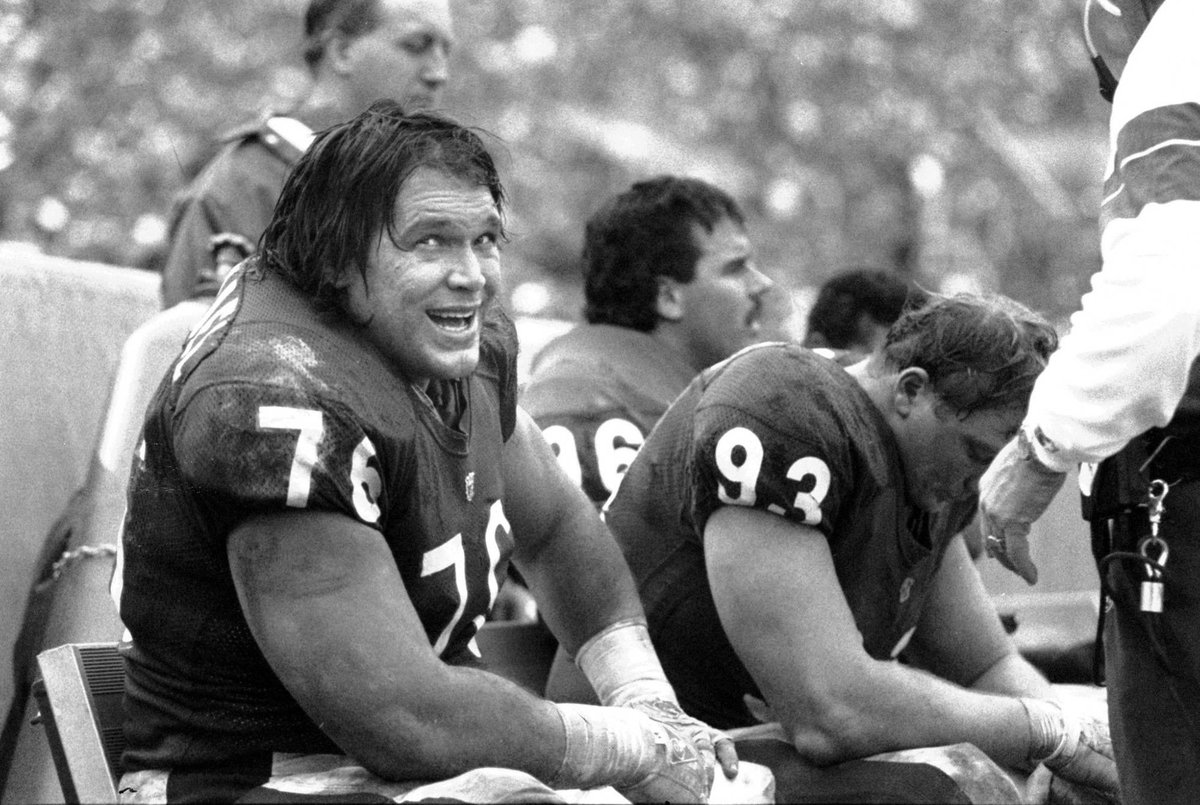
August 23, 2023: Steve McMichael enjoys a respite on the Chicago Bears bench, circa 1991. – ZUMAm67_ 20230823_zaf_m67_057 Copyright: xBobxFilax
Imago
August 23, 2023: Steve McMichael enjoys a respite on the Chicago Bears bench, circa 1991. – ZUMAm67_ 20230823_zaf_m67_057 Copyright: xBobxFilax
Essentials Inside The Story
- Researchers at the Boston University CTE Center shared their findings.
- Steve McMichael has been diagnosed with CTE after death.
- His wife had donated his brain to inspire new research.
On a quiet Saturday night in January 1986, the Chicago Bears’ players gathered at a downtown hotel. It was an emotional meeting as Buddy Ryan, the defensive coordinator, who led Chicago’s defense to become the best in the NFL, was in tears. They were about to play Super Bowl XX, but for Buddy, regardless of a win or a loss, his players were his heroes. His team gave his speech a standing ovation, and when he walked out, Steve McMichael, their fierce defensive tackle, picked up a chair and smashed the board. He was ready to wreak havoc!
Watch What’s Trending Now!
Across a 15-year career, he anchored the Bears’ defense, dominated the trenches, and helped the franchise win multiple division titles. But years after football, in April 2021, McMichael was diagnosed with Amyotrophic Lateral Sclerosis (ALS), a neurodegenerative neuromuscular disease that leads to the progressive loss of motor neurons. Sadly, he passed away last year at age 67, and now, one year later, he has been diagnosed with CTE, as mentioned by the Concussion & CTE Foundation.
Researchers at the Boston University CTE Center determined that McMichael had reached stage 3 of 4 in the progression of CTE, with the findings announced on April 7, just shy of a year after his death. The former NFL player had passed away on April 23, 2025.
Top Stories




Widget1
Widget2
Widget3
Widget4
CTE is a degenerative brain disease that has affected football players for a long time. It is the same for athletes in contact sports, including combat, who are more prone to suffering concussions, which have been linked to CTE. The disease can only be diagnosed after death. However, in McMichael’s case, he couldn’t remember ever being diagnosed with a concussion.
A 2021 study from Harvard Medical School and the Boston University CTE Center found that football players face a risk of developing ALS that is four times higher than that of the general population. Adding to that, Dr. Ann McKee, Boston University CTE Center, noted that roughly 6% of the brains studied in the center’s CTE bank also showed signs of ALS.
“Steve McMichael had severe CTE as well as ALS with TDP-43 inclusions typical for ALS in his brainstem and spinal cord,” said Dr. Ann McKee. “There is strong evidence linking repetitive brain trauma and ALS; in our CTE brain bank, about 6% of individuals with CTE also have ALS.”
Breaking: Chicago Bears legend Steve “Mongo” McMichael was diagnosed with stage 3 CTE by researchers at @bu_cte. He was a key member of the Bears’ 1985 Super Bowl championship team and a Pro Football Hall of Famer. Mongo died in April 2025 after a nearly 5-year public battle with… pic.twitter.com/hbLhHtOyOf
— Concussion & CTE Foundation (@ConcussionCTEfn) April 7, 2026
With that, the league has lost another icon to ALS and CTE. Back in 2016, the former RB Kevin Turner passed away after battling ALS. Upon his death, it was revealed that the illness was triggered by CTE. That broader pattern is exactly why McMichael’s wife, Misty McMichael, chose to share his diagnosis publicly.
It’s also important to note that this was something McMichael himself supported. While he was alive and aware of his condition, he made the decision to donate his brain for research.
Now, a year after his passing, that decision is doing exactly what it was meant to do. Not just providing answers about his condition, but adding to a larger conversation about the long-term impact of the game and the link between ALS and CTE.
Steve McMichael left behind a legacy
Steve McMichael began his NFL journey with the New England Patriots. But it was with the Bears where he truly built his legacy as one of the league’s premier defensive tackles. And following his passing at 67 last year, Bears chairman George H. McCaskey reflected on his impact and extended condolences to his family.
“It’s a cruel irony that the Bears’ Ironman succumbed to this dreaded disease,” McCaskey said in a statement. “Yet Steve showed us throughout his struggle that his real strength was internal, and he demonstrated on a daily basis his class, his dignity and his humanity. He is at peace now. We offer our condolences to Misty, Macy, the rest of Steve’s family, his teammates, and countless friends and fans of a great Bear.”
McMichael spent 13 seasons in Chicago from 1981 to 1993 and consistently disrupted opposing quarterbacks throughout his tenure. He appeared in a franchise-record 191 consecutive games and ranks second in team history with 92.5 sacks.
In that stretch, he helped the Bears secure six division titles. He also played a key role in the dominant 1985 defense that won Super Bowl XX, beating the Patriots 46-10.
In 2019, Hall of Fame writers Don Pierson and Dan Pompei named him the 19th greatest player in the franchise history in the Bears Centennial Scrapbook. Then, in 2024, he received the ultimate recognition with his induction into the Pro Football Hall of Fame.
In the end, McMichael’s legacy goes beyond numbers and accolades. He was the definition of durability, toughness, and presence on the field. And even after his passing, his story continues to shape conversations around the game and its lasting impact.
