Imago
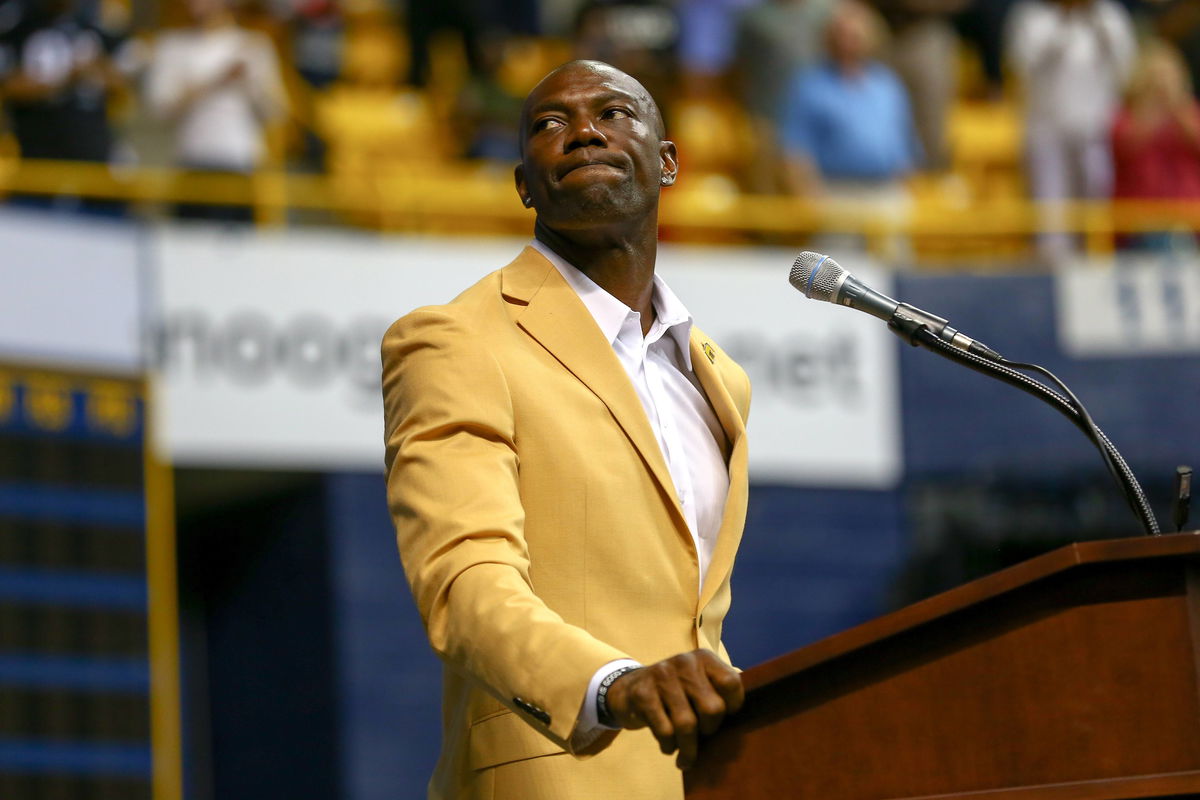
CHATTANOOGA, TN – AUGUST 04: Terrell Owens delivers his induction speech at the University of Tennessee at Chattanooga, his alma mater on Aug. 4, 2018 at McKenzie Arena in Chattanooga, Tennessee (Photo by Frank Mattia/Icon Sportswire) NFL American Football Herren USA AUG 04 Terrell Owens Hall of Fame PUBLICATIONxINxGERxSUIxAUTxHUNxRUSxSWExNORxDENxONLY Icon180804021
Imago
CHATTANOOGA, TN – AUGUST 04: Terrell Owens delivers his induction speech at the University of Tennessee at Chattanooga, his alma mater on Aug. 4, 2018 at McKenzie Arena in Chattanooga, Tennessee (Photo by Frank Mattia/Icon Sportswire) NFL American Football Herren USA AUG 04 Terrell Owens Hall of Fame PUBLICATIONxINxGERxSUIxAUTxHUNxRUSxSWExNORxDENxONLY Icon180804021
Essentials Inside The Story
- Tribute by Terrell Owens honors a legacy in Black communities
- Jackson helped lead civil-rights campaigns, ran for president, and supported Obama
- Jackson battled serious health issues while inspiring generations to fight inequality
On Tuesday, America lost a legendary civil rights activist who helped open doors for generations in the Black community. News of his passing at 84 spread from city halls to NFL locker rooms. To both honor and grieve the trailblazer, Terrell Owens turned to his social media, letting one powerful clip speak for him.
Watch What’s Trending Now!
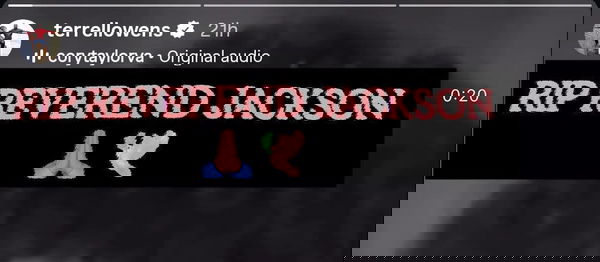
Owens posted a reel on his Instagram story featuring Reverend Jesse Jackson’s “I Am Somebody” litany, spotlighting the moment Jackson declares, “I am Black. Beautiful. Proud.” Above that historic cadence, Owens added a simple caption: “RIP reverend jackson 🙏🏽🕊️”
Imago
Image Credits: via social media @instagram
For Terrell Owens, this tribute didn’t come out of nowhere. The 49ers legend has repeatedly stepped up on issues that affect Black lives, which makes his salute to Jackson feel deeply personal.
.png)
.png)
.png)
In 2020, Owens joined and helped lead Black Lives Matter protests in West Hollywood. He has also spoken publicly about the importance of circulating money within Black communities, in conversations with Tanya Sam.
The man he was honoring spent his life on the front lines of that fight. Reverend Jesse Jackson, who worked alongside Dr. Martin Luther King Jr., died at 84. His family confirmed that he passed away “peacefully” and did not share a cause of death, focusing instead on the legacy he leaves behind.


“Our father was a servant leader – not only to our family, but to the oppressed, the voiceless, and the overlooked around the world,” the Jackson family said in a statement. “We shared him with the world, and in return, the world became part of our extended family. His unwavering belief in justice, equality, and love uplifted millions, and we ask you to honor his memory by continuing the fight for the values he lived by.”
In recent years, Jackson had been battling serious health challenges. He revealed that he had been living with progressive supranuclear palsy (PSP). A rare neurodegenerative brain disorder that affects balance, walking, swallowing, and eye movements.
He was originally diagnosed with Parkinson’s disease in 2015, a condition that can cause tremors, stiffness, and slower movement.
“Recognition of the effects of this disease on me has been painful, and I have been slow to grasp the gravity of it,” Jackson wrote in a 2017 letter announcing his Parkinson’s diagnosis. “For me, a Parkinson’s diagnosis is not a stop sign but rather a signal that I must make lifestyle changes and dedicate myself to physical therapy in hopes of slowing the disease’s progression.”
For Jackson, the journey to that point was never easy. He helped pave the way for many, including former President Barack Obama. But that demanded years of sacrifice, criticism, and doubt. That’s what resonated with people.
“I was a trailblazer, I was a pathfinder. I had to deal with doubt and cynicism and fears about a Black person running. There were Black scholars writing papers about why I was wasting my time. Even Blacks said a Black couldn’t win,” Jackson told The Guardian in 2020, reflecting on his presidential runs.
That’s exactly what Jackson did from the moment his journey began on the South Side and in the segregated streets of his youth.
Jesse Jackson: From QB to trailblazer
Jackson was born on October 8, 1941, in Greenville, South Carolina, to Helen Burns and Noah Louis Robinson. His parents never married. His mother later wed Charles Henry Jackson, whose last name Jesse eventually took as his own. Growing up in the segregated South as the child of a teenage mother, he saw firsthand how racism and poverty shaped daily life.
From a young age, Jackson pushed against those limits. He set out to challenge racism, inequality and economic injustice, deciding he wouldn’t accept the roles the world tried to assign him.
He played quarterback at Sterling High School in Greenville, then earned a football scholarship to the University of Illinois. Instead, he transferred to North Carolina A&T State University in Greensboro. An HBCU where he became the first‑string quarterback and studied sociology and economics. In 1984, the school inducted him into its Sports Hall of Fame, honoring the quarterback who would later become famous for a very different kind of leadership.
After college, Jackson’s life turned almost completely toward civil‑rights work. In the 1960s, he met MLK and was drawn into King’s nonviolent campaigns, including the marches in Selma. Jackson became active in Operation Breadbasket, an SCLC economic justice program.
Then tragedy struck. Jackson was at the Lorraine Motel in Memphis, Tennessee. On April 4, 1968, King was a*****inated at an event that seared itself into his memory and reshaped his mission.
In the years after King’s death, Jackson stepped out on his own, founding organizations that bore his stamp. He launched Operation PUSH in 1971 and later merged it with the National Rainbow Coalition to create the Rainbow/PUSH Coalition.
Then he ran for president in 1984 and 1988. He became the first major Black candidate to seriously contend for a major party nomination. And built multiracial coalitions that many historians say helped make Obama’s eventual victory possible.
When Obama finally won the presidency in 2008, Jackson understood what that moment meant to people who had grown up hearing it was impossible. He later described it as a “big moment in history.” Also mentioned that he “cried,” thinking about those who had marched but couldn’t witness the historic moment.
Now, as tributes pour in and clips of “I am Black. Beautiful. Proud… I am somebody” circle social media, Jackson’s impact is being measured in faces as much as facts. It lives in people who are choosing to honor him and in everyday people who internalized his message that they matter. No matter what the world told them.
Related Newsletters