
In February 2018, when asked how to make football safer, Brett Favre gave a blunt answer: “You don’t play.” The former Green Bay Packers quarterback acknowledged that the NFL was unlikely to disappear but warned about the long-term consequences of head injuries. Dr. Bennet Omalu, who joined Favre for the interview, had been making a similar argument about the risks of repeated blows to the head.
Watch What’s Trending Now!
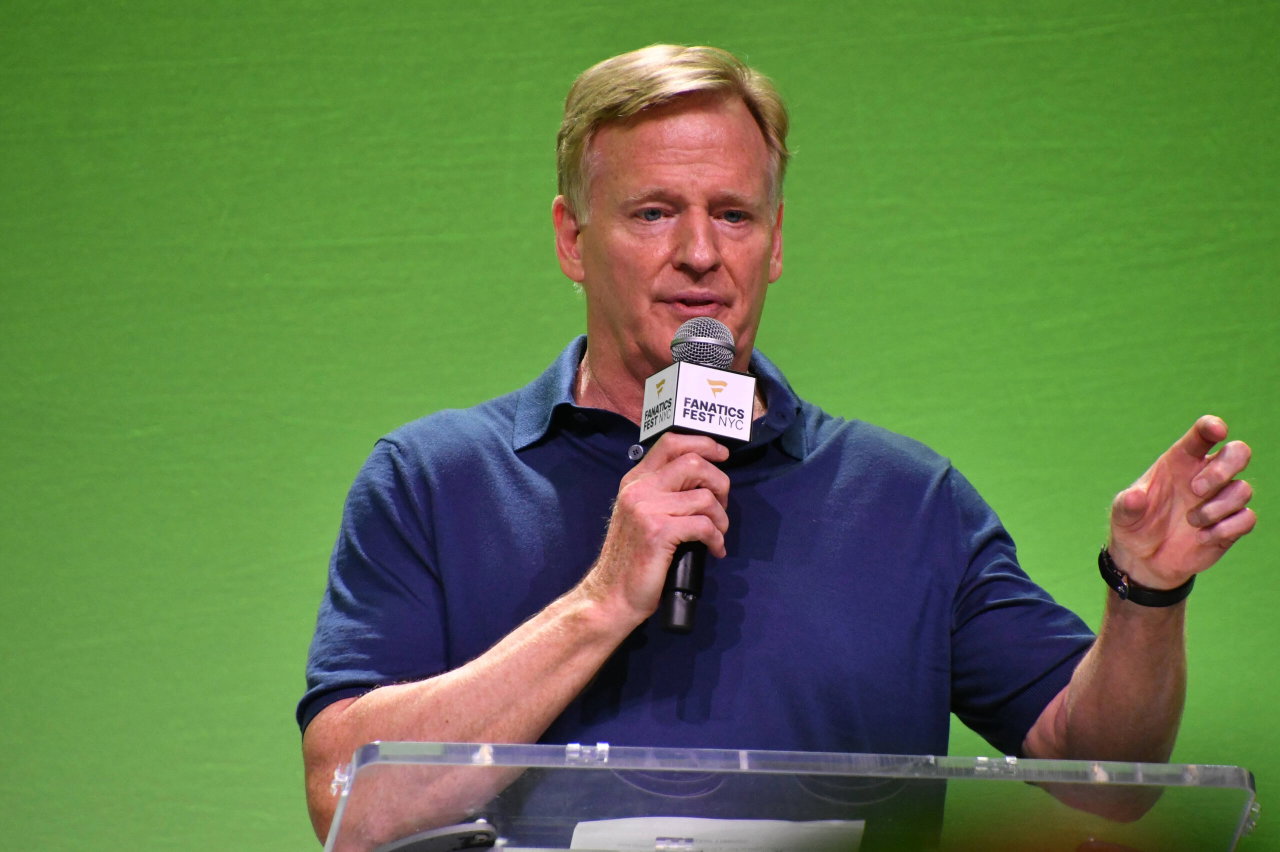
Recently, NFL commissioner Roger Goodell faced questions at a pregame press conference about Favre’s comments and what the league planned to do to make football safer, from the youth level to the NFL. Goodell responded that player safety was a major focus for the league, adding that the game was much safer than it was when he played.
For Omalu, however, the exchange left a different impression. Recounting the episode on The Growth Time Machine with Daniel Curtis, the physician alleged that Goodell deliberately avoided mentioning him when responding to questions about Favre’s comments on football safety.
“The commissioner of the NFL, out of the hate in his heart, refused to say my name. Even the journalist kept on pressing him, ‘Do you mean Dr. Malo?’ He didn’t pronounce my name,” he said before turning to ask, “And I wondered why so much hate? What have I done?”
Omalu said he believes his contribution was deliberately overlooked. The frustration comes from a much longer history between Omalu and the NFL. In 2002, while working as a forensic pathologist in Pittsburgh, he examined the brain of former Pittsburgh Steelers offensive lineman Mike Webster.
Webster had experienced severe cognitive and behavioral problems after retiring, and Omalu’s examination revealed abnormalities that led him to identify chronic traumatic encephalopathy (CTE). It led to the identification of CTE, making Webster’s the first confirmed case in an NFL player.
Omalu’s discovery was published in the medical journal Neurosurgery in 2005, bringing the disease into the discussion surrounding professional football.
Omalu’s findings were not immediately accepted. He faced significant resistance to his research, with the American Medical Association (AMA) later describing the efforts to discredit him and his findings. The physician has also spoken about the personal and professional hostility he experienced during that period. In the podcast, he alleged that the NFL had referred to him as a “voodoo doctor from Africa,” a claim the NFL has not been shown to have made.
The league publicly acknowledged the link between football-related concussions and CTE in 2009, even years after Omalu examined Webster’s brain, according to the AMA. But that acknowledgment has not satisfied the physician, who believes his individual contribution remains insufficiently recognized.
Omalu also pointed to the controversy surrounding race-norming in the NFL’s concussion settlement. The practice allowed clinicians to consider race when assessing retired players’ neuropsychological test results for dementia-related claims. Critics argued that the adjustments could make it harder for Black former players to demonstrate cognitive decline and qualify for compensation. The NFL and players’ lawyers subsequently agreed to eliminate race as a consideration, with a revised settlement approved in March 2022.
For Omalu, the controversy forms part of a wider concern about how the league treated those who challenged its approach to player safety. He believes the NFL should acknowledge the mistakes made during the early years of the CTE debate and recognise the work that helped force football to confront the consequences of repeated head impacts.
Omalu argued that his research compelled the sport to evolve rather than risk being left behind by changing public attitudes. He also made his expectations of the league clear.
“The NFL, I’m waiting for them to call me, recognize me, thank me for my work, and give me a financial award,” he said. “I’m not begging, but I’m saying it as something I believe in. I have saved football. I’m speaking it as a matter of fact.”
That request is not simply about professional recognition, Omalu explained. He described the emotional toll that the years of criticism had taken on his family, recalling how his daughter became upset when the family discussed watching the film Concussion, which portrayed his experiences. He said he hoped that, even if recognition came after his death, his children would be able to look back and understand the contribution their father had made.
Omalu’s work helped change the conversation around brain injuries in football. The AMA honored him with its Distinguished Service Award in 2016, while the NFL has since acknowledged the connection between concussions and CTE. Yet the physician is still waiting for the personal acknowledgment he believes is overdue.
For now, his message to Goodell and the league remains direct: acknowledge the mistakes of the past and recognise the work that helped change the sport.