
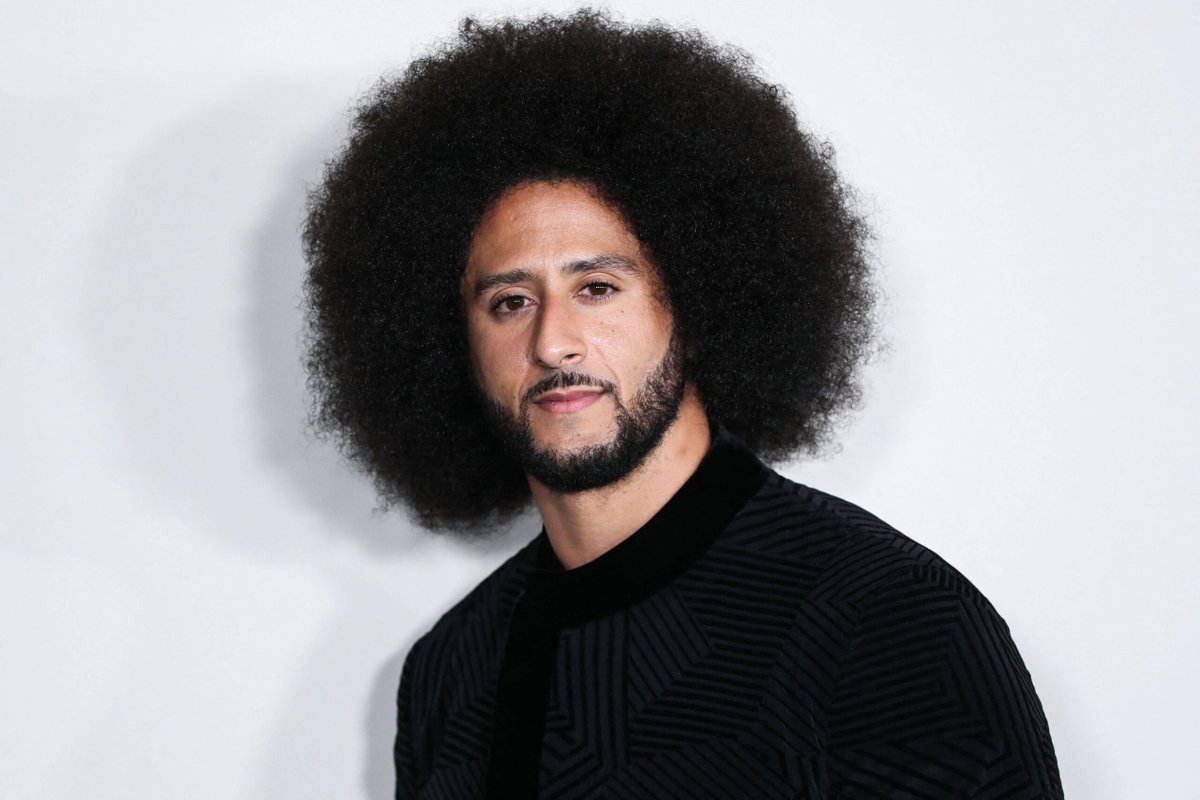
When Colin Kaepernick took a knee back in 2016, it wasn’t just a turning point for the NFL. It was a defining moment for athletes across the country. Everyone from local youth teams to the biggest leagues in the country felt the ripple effect. But a decade later, there’s one thing that still puzzles the former quarterback.
Watch What’s Trending Now!
On Tuesday, Kaepernick was at an author talk for his memoir and manifesto, “The Perilous Fight,” presented by The Dock Bookshop at The Black Academy of Arts and Letters in Dallas. The setting was perfect to fire up the Dallas audience, years after Jones threatened to bench players who kneel during the anthem.
“It’s the same thing that I’ve said in the past, which is, why are you so comfortable working against black folks trying to live?” he said, via insider Clarence Hill Jr., replying to what he would tell Jones and the others who didn’t agree with his protest. “I mean, for me, people that worked, and I think this was one of the unique insights that I got in this process. People revealed who they were.”
In the aftermath of Kaepernick kneeling, multiple players followed suit, despite backlash all across the league. Jerry Jones was one of the people who made their perspective on the matter clear. His comments didn’t speak about players kneeling, but its impact on the business.
“There is no question the league is suffering negative effects from these protests,” Jones said in 2017. “Our ability to be substantive is based on having a strong NFL, a league that people are really interested in and want to watch and want to watch the games.
And he wasn’t alone. Late Houston Texans owner Bob McNair did not mince words, urging players to tell their teammates to stop kneeling during the anthem.
“You fellas need to ask your compadres, fellas, stop that other business, let’s go out and do something that really produces positive results, and we’ll help you,” he said.
“And just stepping back for a moment. We were fighting specifically against police killing black folks. It’s amazing to me that there’s anybody that’s like, ‘I’m against that.’ And I think the people who came out and fought against it revealed who they were revealed their intentions. And my question would be, why are you so comfortable with it? And the question for us, collectively. Why are we supporting it?” Kaepernick added.
Kaepernick felt the consequences firsthand. In the years that followed, he became a free agent, having exited from the 49ers roster. When the NFL arranged a tryout, Jones and the Cowboys did not attend, citing that they didn’t need a quarterback. But the reason Kaepernick is calling Jones out might have to do with the Cowboys owner’s stance on letting his players make a stand during the national anthem.
You see, by 2018, NFL owners unanimously approved a policy that required players to stand if they are on the field during the performance but gave them the option to remain in the locker room if they preferred. Jones, however, wasn’t a fan of the idea.
In his words, “Our policy is that you stand at the anthem, toe on the line. I obviously wouldn’t dare speak for any of the other owners, much less in general about 31 other owners. As far as the Dallas Cowboys are concerned, you know where I stand. Our team knows where I stand on the issue.”
Interestingly, at the time, Jones made it clear it wasn’t about the stand Kaepernick or other players were trying to make. “This is a case where we need to in my mind check that and be real clear that it is, the priority is about the flag, and be real clear about that.”
To his credit, Jones and the rest of the Cowboys did kneel, but it was not during the national anthem. Before the Monday Night Football game against the Arizona Cardinals in 2017, the team kneeled before the national anthem, then stood together during the anthem.
By 2020, Jones stance had softened, as he made it clear he wanted to open a dialogue with his players in the aftermath of George Floyd’s death.
“I have nothing to prove regarding my players and my support of our players. What I do want to show and want us all to be a part of is a word called ‘grace’. Not only grace in our actions, but grace in our understanding, where they’re coming from. I want our players to understand the perception and where they’re coming from regarding the flag and the sensitivity there and the many memories there.”
Nevertheless, Kaepernick has not taken an NFL snap since that season. But the mission he started, for which he had to risk his playing career, is still on.
“I’ve gotten so many questions about why did I protest, what happened, what led up to it, the details behind the scenes of all of the moments,” Kaepernick told TIME Magazine about his memoir.
“Not just the protest, but owners in the NFL, the conversations that were happening there, the workout in 2019 and all the things that transpired around that. Then also just the work that we’re doing directly in the communities. It felt like it was a great time to be able to go out, answer some of those questions, and also be able to give insight into how we build, how we move forward together. I think it’s especially critical in a moment like this.”