
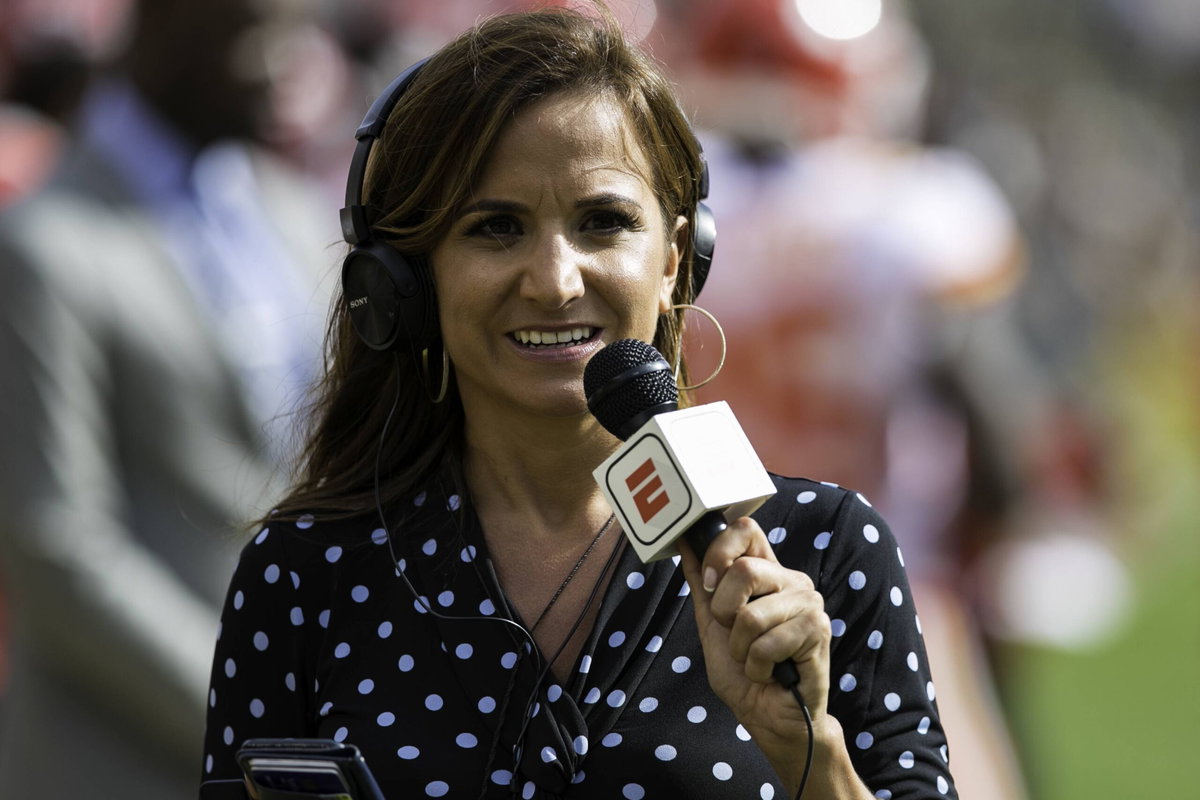
Dianna Russini was already getting in trouble long before the controversy with New England Patriots head coach Mike Vrabel became public. After months of scrutiny due to the Vrabel controversy, another incident has come to light from a New York Times report. In January, Russini was texting and driving with her two kids. She got pulled over (the second time that month) for doing that, and tried to use her football access to talk her way out of a ticket. That story would have turned heads on its own when she told it on Stugotz and Company, but it only got worse from there.
Watch What’s Trending Now!
On the podcast, Russini revealed that she’d told the officer she’d connect him with a coach he liked, and then FaceTimed the head coach from the roadside. The coach told the officer, “You should let her go, she’s a good citizen,” and the officer obliged. While this sounds like a fun anecdote, when it reaches a newsroom, the meaning changes.
The New York Times’ long-form article dedicated to Russini unpacked everything that happened around the former Athletic reporter. The article, written by Katherine Rosman and Ken Belson, added new details about the company’s view of Russini’s conduct. Per the report, Danielle Rhoades, the SVP of Communications for The Times, called Russini’s driving incident “unacceptable conduct,” and noted that the editors weren’t aware of the podcast appearance “because Ms. Russini neither sought nor received permission to appear on the podcast, as required by company guidelines.”
The report also revealed that the coach who got the call from Russini wasn’t Mike Vrabel. However, the fact that Russini used her connections to get out of a situation that ordinary people would not be able to avoid was not right. Kelly McBride of the Poynter Institute also called Russini’s conduct “an abuse of professional access for personal gain.”
And then there were the photos. The New York Post published images of Russini and Vrabel at an Arizona resort, including shots in a hot tub and on a rooftop. The post had reached out to Russini before making the story public, but she had not notified The Times. When the news broke, The Athletic stood by her at first, but eventually launched an investigation into Russini that’s still ongoing.
Shortly after the investigation began, she resigned from her post. In a statement that followed her exit, Russini stood by her journalism, but wanted no part in a public query that had already caused enough damage.
Now, the money aspect of this makes the scrutiny even sharper. The Times report notes that the Athletic paid Russini close to $800,000 a year, making her one of the highest-paid journalists at the company. Her contract was set to expire this June, and renewal talks were underway when the photos dropped and changed everything.
That is the part worth watching now. Pro Football Talk’s Mike Florio believes the Times may have moved first because the investigating on Russini is about to be done soon.
“It’s possible (if not probable) that the Times decided to get ahead of the looming announcement by The Athletic regarding the investigation by doing something that neither the Times not The Athletic had done regarding the biggest NFL story of the offseason: engage in journalism about it.”
Dianna Russini’s case is bigger than one check, sets of leaked photos, or one podcast clip. Right now, it’s all about the league finding out what happens when a reporter’s access becomes personal leverage, and then the company has to decide whether the brand or the reporter comes first.