
Day two of the 2026 NFL Draft delivered its own brand of drama. It wasn’t quite as crazy as Thursday night, but there were still some picks that stood out, and some shocking tumbles by guys we thought of as potential first-round prospects. Our NFL Draft Expert, Tony Pauline, gave his winners and losers from day one. But tonight, it’s my turn.
Watch What’s Trending Now!
Winner: Indianapolis Colts
The Indianapolis Colts didn’t make a pick on day one of the draft, but they’re easily my biggest winners of day two. That mattered more than usual in a class where depth thinned quickly after the first round, yet Indianapolis still walked away with two defenders who project as immediate structural upgrades in the middle of their defense.
Imago
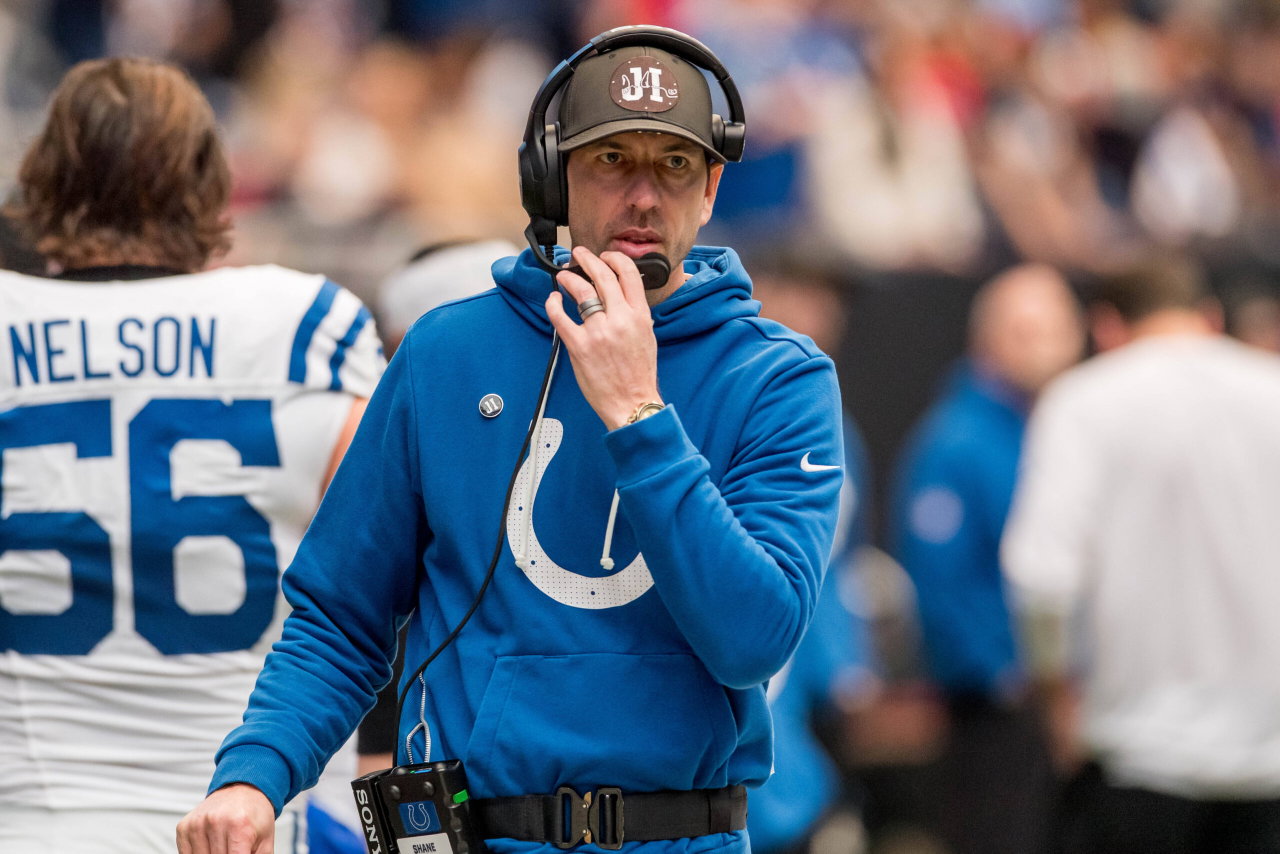
January 4, 2026: Indianapolis Colts head coach Shane Steichen prior to a game between the Indianapolis Colts and the Houston Texans in Houston, TX. .. /CSM – ZUMAc04_ 20260104_zma_c04_162 Copyright: xTraskxSmithx
CJ Allen was my third-highest-ranked linebacker in this draft behind only Arvell Reese and Sonny Styles. And landing him early on Day 2 gave Indianapolis rare value at a position they clearly entered the draft needing to stabilize. He put some of his speed concerns to rest, running in the 4.4s, and is one of the best run defenders in this draft class. Allen also finished his final season at Georgia with 88 tackles and showed the communication traits of a true “green-dot” linebacker, which makes him a natural fit to take ownership of the defensive front quickly at the next level. He’s a guy that can develop into an every-down linebacker, and the Colts really needed to improve the center of their defense.
A.J. Haulcy was my third-highest-ranked safety in this class, above Emmanuel McNeil-Warren, who went nearly 20 picks before him. So getting Haulcy at No. 78 overall was more than just a need-based selection. It was clear board value late on Day 2. Haulcy isn’t the greatest athlete, but his instincts are so good, which helped him pick off eight passes over the last two seasons. He also profiles as one of the more physical downhill safeties in this class, something Indianapolis’ secondary lacked consistency with last season. He’s also one of the best run-defending safeties in this draft. I can’t say enough good things about Indy’s draft class, and they didn’t even have a first-rounder.
Loser: Arizona Cardinals
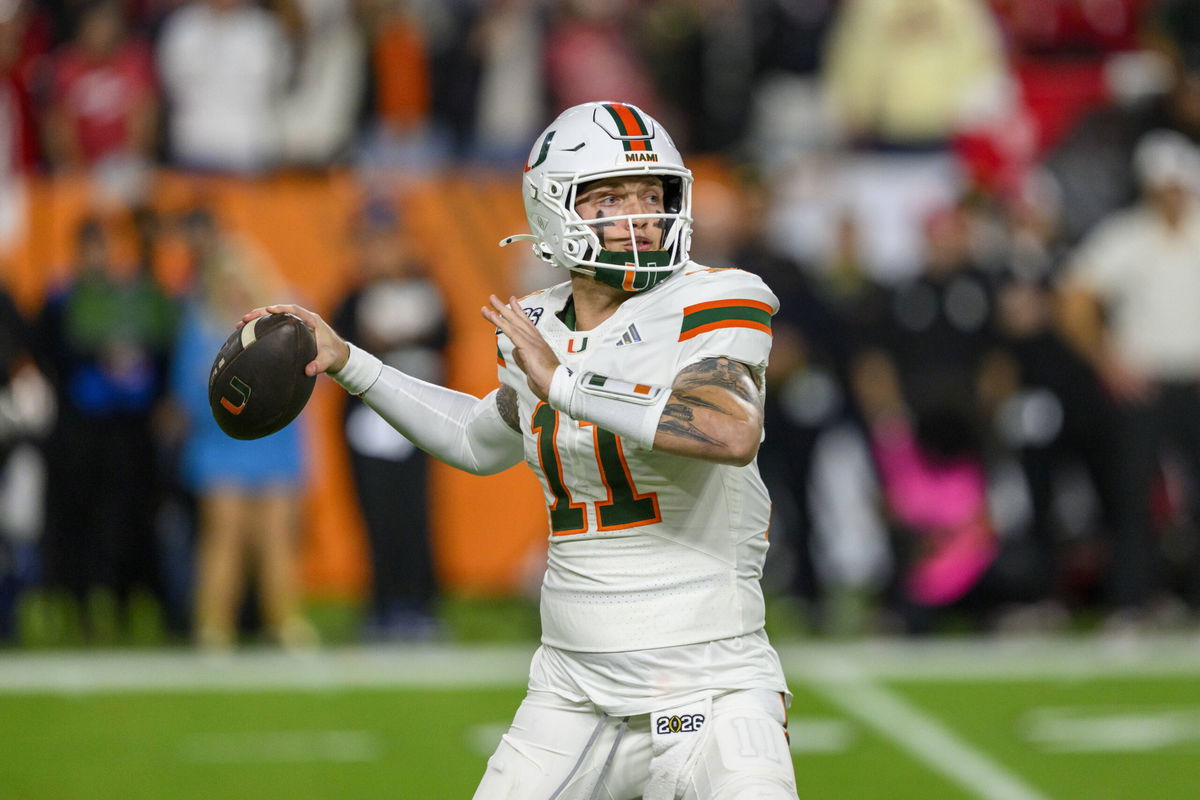
Let me preface this by saying I loved the Chase Bisontis pick. But man, the Arizona Cardinals reached on Carson Beck in round three. That wasn’t just a surprise in the moment. It stood out even more by the end of Day 2, when several higher-graded defenders and premium-position prospects were still available while Arizona committed a top-100 pick to a quarterback most evaluators had carrying a Day-3 projection. After Ty Simpson, there was no quarterback worth better than a fourth-round pick. Beck’s experience and size make him a reasonable developmental option, but using that kind of draft capital on a player unlikely to push for early starting snaps immediately limits what this roster could have added elsewhere.

Imago
NCAA, College League, USA Football: Louisville at Miami Oct 17, 2025 Miami Gardens, Florida, USA Miami Hurricanes quarterback Carson Beck 11 looks for a passing option against the Louisville Cardinals during the third quarter at Hard Rock Stadium. Miami Gardens Hard Rock Stadium Florida USA, EDITORIAL USE ONLY PUBLICATIONxINxGERxSUIxAUTxONLY Copyright: xSamxNavarrox 20251017_SNV_na2_00154
I understand they have a big need at quarterback, but when you have a roster with so many needs, and you already spent a first-rounder on a running back, why would you take a quarterback that’s never going to be a long-term starter in round three? Especially in a class where cornerback, offensive line, and defensive front talent was still sitting on the board deep into Day 2, this felt less like solving a quarterback problem and more like creating another timeline question at the position.
I love Jeremiyah Love as a player, but this team needs so much more than a running back and a backup quarterback. Love absolutely justified his top-five talent billing, he was widely viewed as the one running back capable of forcing teams to rethink positional value this year, but pairing that investment with a developmental quarterback instead of another early defensive starter left Arizona short on impact additions through the first two days. They could’ve got two quality starters at premium positions, but instead, they wasted them on Beck.
Winner: Tampa Bay Buccaneers
The Tampa Bay Buccaneers were big winners on day one with Rueben Bain Jr. falling to them at No. 15. They came back on day two and had another really good day. More importantly, they followed up that Round-1 value with two Day-2 selections that directly addressed future defensive turnover and added size-speed upside to an offense that needed another vertical presence.
Imago
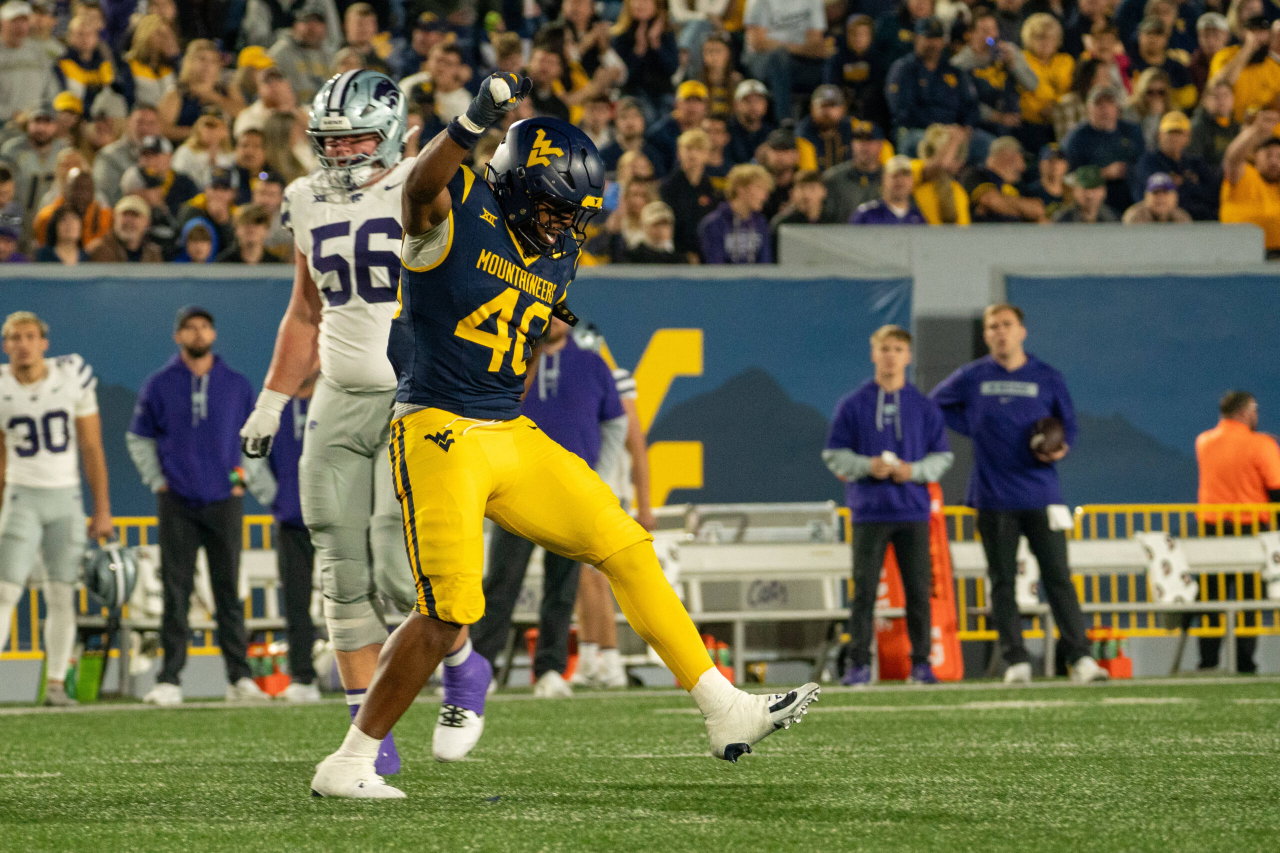
October 19, 2024, Morgantown, Wv, USA: October 19, 2024: Josiah Trotter during the West Virginia University Mountaineers WVU vs the Kansas State Wildcats in Morgantown, WV at Milan Puskar Stadium. Bradley Martin/Apparent Media Group. Morgantown USA – ZUMAa234 20241019_zsa_a234_072 Copyright: xAMGx
The Buccaneers got Josiah Trotter, who is one of the best off-ball linebackers in this class. He’s an excellent run defender, and while there’s work to do in coverage, he’s got loads of upside. With Lavonte David leaving, this pick just made a ton of sense. Trotter doesn’t just replace snaps, he fits the exact downhill tone Tampa Bay’s defense has leaned on for years, and landing him on Day 2 keeps continuity at linebacker instead of forcing a reset at the position.
In round three, the Bucs made one of my favorite picks of the round with Ted Hurst. The Georgia State product caught 71 passes for 1,004 yards and six touchdowns last season and has averaged 15.5 yards per catch in his career. On top of that, Hurst ran a 4.42-second 40-yard dash at 6-foot-4. That size-speed profile alone made him one of the more intriguing developmental receivers still available late on Day 2, and Tampa Bay adding him after already strengthening the front seven gave them one of the more balanced two-day stretches of any team in this draft.
Loser: Jermod McCoy
I feel awful for Jermod McCoy. He’s easily a top-15 talent in this draft class, but he tore his ACL in January of 2025, had surgery on it, and thought he would be good for the draft this year. Instead, by the end of Day 2, McCoy was still on the board, not because teams questioned the player, but because updated medical evaluations reshaped the timeline around when he might realistically return to the field. But after further medical tests, it appears something went wrong with his surgery and he may have to get another one before he even steps foot on the field again. That uncertainty alone is usually enough to push even first-round-caliber cornerbacks out of the top-100 picks.
Imago
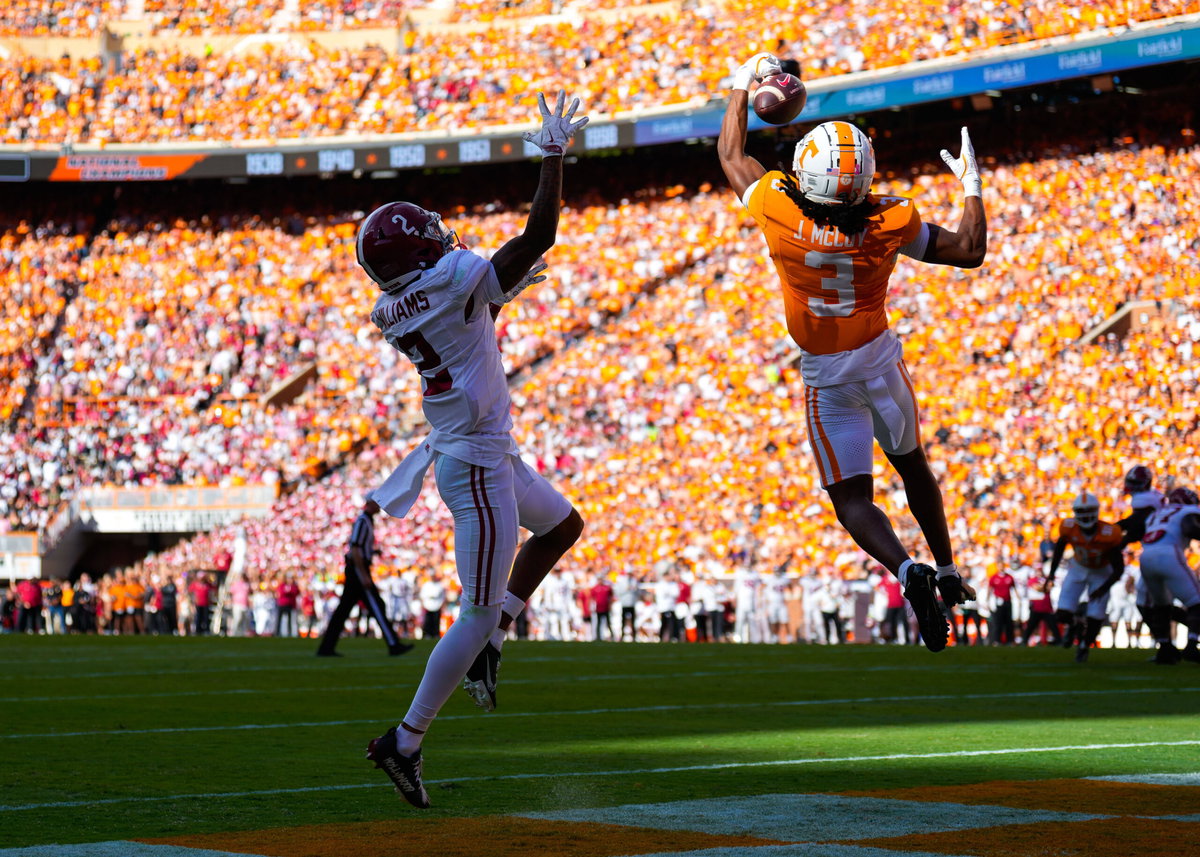
October 19, 2024: Jermod McCoy 3 of the Tennessee Volunteers intercepts a pass intended for Ryan Williams 2 of the Alabama Crimson Tide during the NCAA, College League, USA football game between the University of Tennessee Volunteers and the University of Alabama Crimson Tide at Neyland Stadium in Knoxville TN /CSM Knoxville United States – ZUMAc04_ 20241019_zma_c04_373 Copyright: xTimxGangloffx
Before round two even started, Tony Pauline broke the news that McCoy might not get selected. Many thought the CB would go at some point in round two or three, but his medicals are just too scary for a team to use a top-100 pick on him. And that’s exactly how Day 2 played out. Teams repeatedly passed on a player whose 2024 tape still grades among the best coverage resumes in this cornerback class. McCoy is otherwise a terrific player when he’s on the field. His slide isn’t about ability; it’s about availability, and front offices simply weren’t willing to spend premium capital without clarity on his recovery window.
I hope this knee stuff ends up not being a big deal after he gets it fixed. You have to feel for the kid, who a week ago thought he’d be a first-round pick. Instead, he now enters Day 3 as arguably the best player still available on the board, a remarkable shift for a defender many evaluators believed could challenge for CB1 status earlier in the process. Now, there’s no guarantee he even gets drafted. At this point, the conversation has shifted from where McCoy would go in the first two rounds to which team is comfortable betting on the long-term upside once the medical risk becomes manageable later in the draft.
Winner: Cleveland Browns
The Cleveland Browns had a great round one, where they traded back, got the top offensive tackle on the board, and added a speedy wide receiver in KC Concepcion. Those two picks immediately upgraded their offense, but they weren’t done picking on offense entering day two. Instead of treating those selections as standalone upgrades, Cleveland doubled down on the same offensive build through Day 2 and came away with one of the more complete two-day offensive hauls in this class.
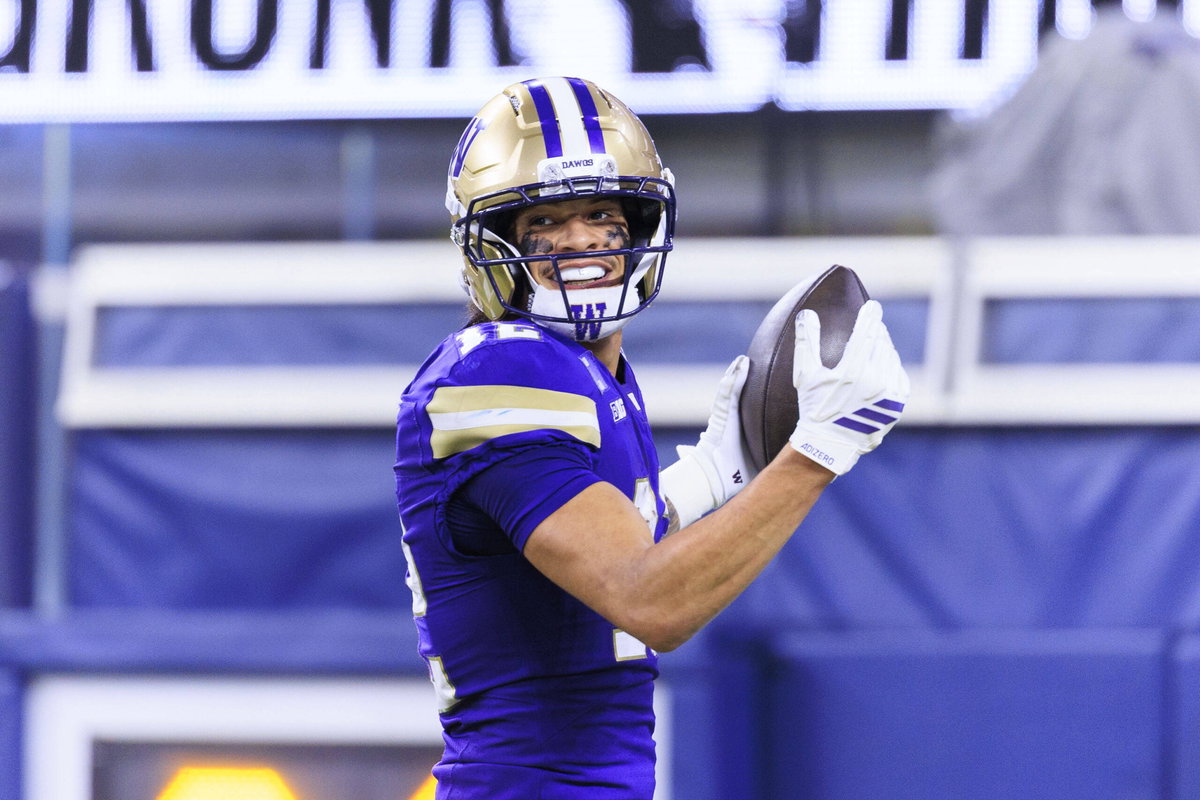
Imago
December 13, 2025, Inglewood, California, USA: 12 Denzel Boston, WR of the Washington Huskies scores a touchdown during the Bucked Up LA Bowl Hosted by Gronk against Boise State Broncos on Saturday December 13, 2025 at SoFI Stadium in Inglewood, California. ARIANA RUIZ/PI Inglewood USA – ZUMAp124 20251213_zaa_p124_011 Copyright: xArianaxRuizx
With their second-round pick, the Browns took Denzel Boston, who many thought would be a first-rounder. He’s 6-foot-4 and will be a perfect complement to the speedy Concepcion. That pairing gives Cleveland both a vertical separator and a boundary-size target added within the first two days of the draft, exactly the kind of receiver room balance teams try to build but rarely manage this quickly. The Browns also added another offensive tackle, Austin Barber, in the third round to further reinforce their offensive line. Adding Barber after already investing in protection on Day 1 made it clear Cleveland prioritized stabilizing the offense up front rather than hoping one early addition would be enough.
But their biggest pick of the night came when they traded back into the second round and selected Toledo safety Emmanuel McNeil-Warren. He’s got rare size at the safety position, and many thought he’d be a first-rounder for that reason. So getting him late on Day 2 wasn’t just filling a secondary need. It was one of the cleaner value swings of the round. The Browns needed to add an impact safety to the mix, and they got great value on McNeil-Warren.
Loser: Will Howard
Not long ago, Will Howard was quarterbacking the Ohio State Buckeyes to the National Championship. He was later selected in the sixth round by the Pittsburgh Steelers. And with such a thin QB class, it felt like he was a strong candidate to be the Steelers’ starter this year, as Aaron Rodgers is once again drawing out his decision for as long as possible. That possibility stayed alive entering Day 2, but it didn’t survive it. But after tonight, I don’t know if the job is Howard’s.

Imago
NCAA, College League, USA Football 2025: College Football Playoff Semifinal Cotton Bowl Ohio State vs Texas JAN 10 January 10 2025: Ohio State Buckeyes quarterback Will Howard 18 drops back for a pass during the 1st half of the NCAA Football game between Ohio State Buckeyes and the Texas Longhorns at AT&T Stadium in Waco, Texas. Matthew Lynch/CSM Credit Image: Matthew Lynch/Cal Media Arlington Tx US EDITORIAL USE ONLY Copyright: xx ZUMA-20250110_zma_c04_282.jpg MatthewxLynchx csmphotothree344210
The coach who drafted Howard, Mike Tomlin, is no longer with the team. In his place, offensive-minded head coach Mike McCarthy has taken over. That already put Howard on the back foot, but for McCarthy to spend a top-100 pick on another quarterback, Drew Allar, might spell the end of any chance of Howard starting in 2026. Once Pittsburgh used premium Day-2 capital on Allar, the quarterback timeline shifted from open competition to organizational direction. Teams don’t make that investment unless they expect the new addition to factor into the plan early.
Even if Rodgers returns for one more year and neither of them start, it’s unlikely that Howard beats out Allar in 2027. The Penn State alum has more tools, but this coaching staff hand-selected him to be their guy, while they just inherited Howard. I hate to say it, but Howard’s time in Pittsburgh might not last too much longer.
Winner: Malik Willis
After the Miami Dolphins took an offensive tackle, a cornerback, and a linebacker with their first three picks, it felt like Malik Willis was going to be a big loser from this draft. The Dolphins’ wide receiver room, led by Tutu Atwell, was looking mighty thin, but they made up for it in the third round. By the end of Day 2, that concern had flipped completely. Miami used multiple third-round selections to rebuild the pass-catching depth around Willis instead of leaving him to carry a short-handed receiving group into the season.
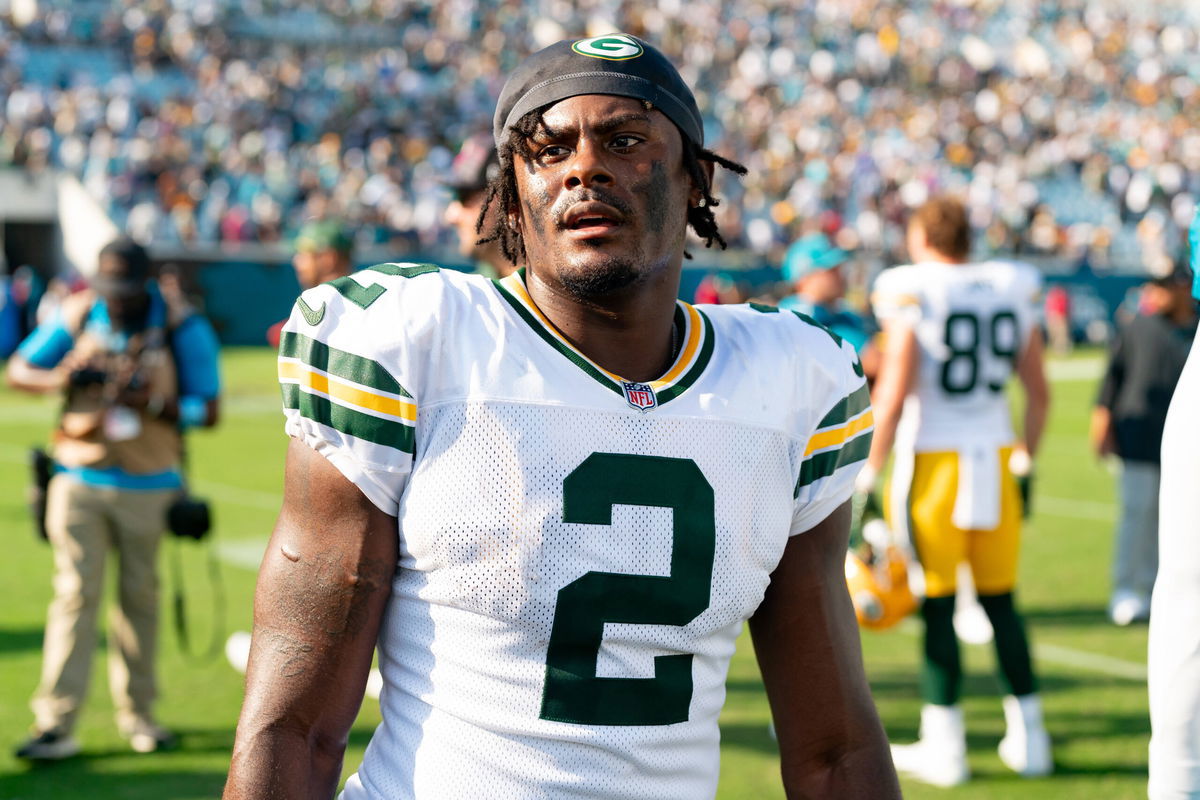
Imago
Jacksonville, FL – OCTOBER 27: Green Bay Packers quarterback Malik Willis 2 walks the field after NFL, American Football Herren, USA football game between the Green Bay Packers and the Jacksonville Jaguars on October 27th, 2024 at EverBank Stadium in Jacksonville, FL. Photo by Chris Leduc/Icon Sportswire NFL: OCT 27 Packers at Jaguars EDITORIAL USE ONLY Icon241027057
With their first third-round pick, the Dolphins selected Caleb Douglas, a 6-foot-3 1/2 receiver who ran a 4.39-second 40-yard dash and is coming off an 846-yard, seven-touchdown season at Texas Tech. He’s been rising up on draft boards, and he’s going to immediately help Willis out. Douglas gives Miami something the receiver room clearly lacked entering the night: boundary size and catch-radius support for a quarterback who benefits from vertical outside targets. But the Dolphins weren’t done adding receiver help.
They also selected Chris Bell, who probably would’ve been a first-rounder if he hadn’t torn his ACL in November. He’s 6-foot-2 and can do pretty much anything you want a receiver to do, so they got an absolute steal in round three. Landing Bell on Day 2 despite the injury risk mirrored the kind of calculated upside swing several teams avoided elsewhere in the draft, and if his recovery timeline holds, Miami may have added one of the better possession targets available outside the first round.
Oh, and you can’t forget that the Dolphins also selected Ohio State TE Will Kacmarek. He’s not the most athletic tight end, and he only had 168 yards last year, but he’s a great blocker and has room to develop into a pretty good receiver. Adding Kacmarek rounded out the support structure around Willis by strengthening the run-game edge and protection flexibility, the kind of tight-end role that quietly stabilizes young quarterback environments.
This draft sure was a rollercoaster ride for Malik Willis so far.
Winner: DeMeco Ryans
DeMeco Ryans has an embarrassment of riches on defense. I mean, seriously, how many more players do you really need on that side of the ball? You had the best defense in the league last season, which included what is probably the best pass-rushing duo in the league in Will Anderson Jr. and Danielle Hunter. And then, the league somehow let them get the best defensive tackle in this class in Kayden McDonald. Getting McDonald in Round 2 after entering the draft with one of the league’s most complete defensive units only strengthened a front that was already dictating games at the line of scrimmage.
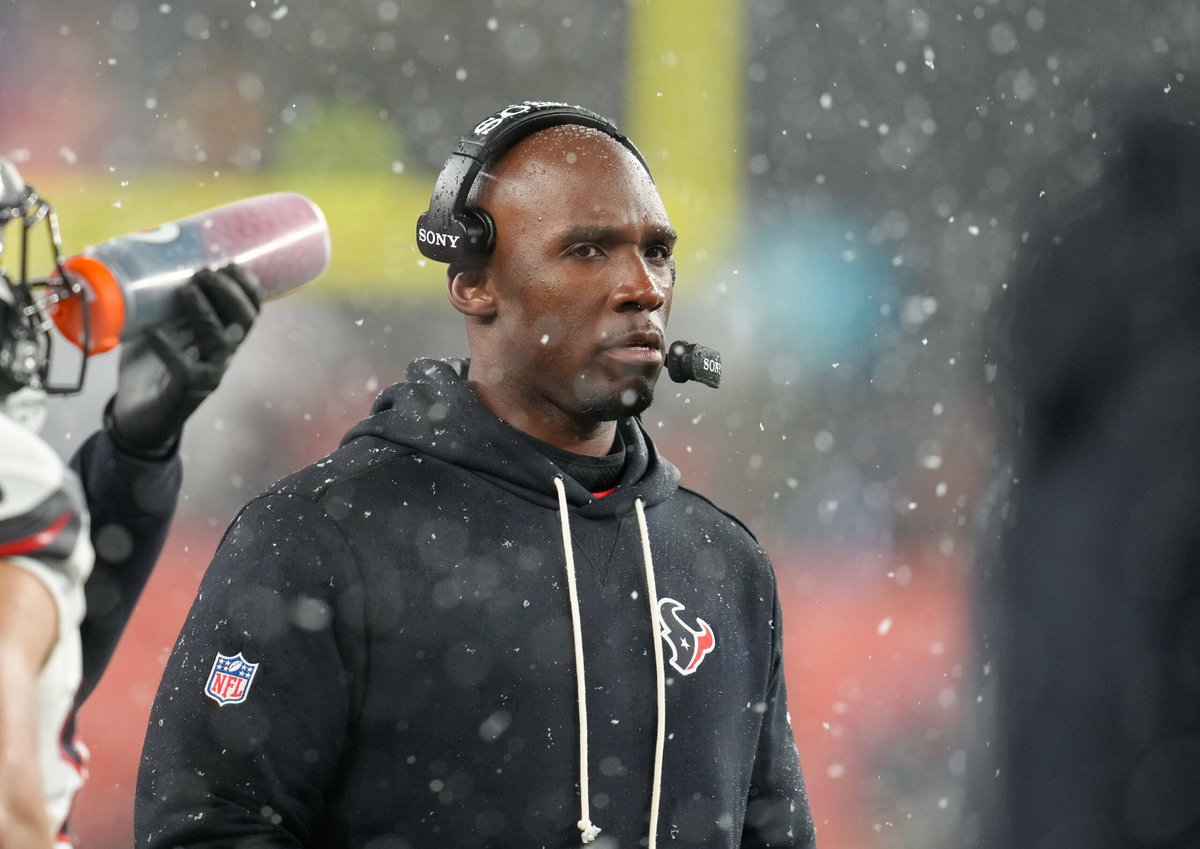
Imago
January 18, 2026, Foxboro, Massachusetts, USA: Texans head coach DEMECO RYANS during the second half of the NFL, American Football Herren, USA Divisional Round Playoff game between the New England Patriots and the Houston Texans on January 18, 2026 in Foxboro, Massachusetts. The Patriots won, 28-16. Foxboro USA – ZUMAc201 20260118_zap_c201_080 Copyright: xScottxColemanx
Houston’s defense didn’t really have any weaknesses last season, but if there was one, it was at defensive tackle. Sheldon Rankins is fine, but he’s getting older, and they needed to add a young talent next to him. McDonald will step in on day one and swallow up gaps in the run game while also getting after the passer a little bit. That interior presence matters even more in Ryans’ system, where strong edge pressure from Anderson and Hunter is designed to collapse the pocket inward, adding McDonald gives Houston the kind of interior anchor that turns pressure into disruption across the entire front.
I thought the Houston Texans could’ve taken McDonald in round one, so to get him in round two is great for them. If you told me they would come away with Keylan Rutledge and Kayden McDonald a couple of days ago, I would’ve given them an A+ for this draft.