
More than 50 years ago, Greg Papa and his younger sister Judy were children in the basement of their family’s home in suburban Buffalo. They pricked a finger, pressed their fingers together, and shook hands. It was their own little ritual to show that they were blood siblings.
Watch What’s Trending Now!
More than five decades later, that childhood ritual took on a very different meaning. Papa was 63 and preparing for a bone-marrow transplant at UCSF after being diagnosed with acute lymphoblastic leukemia. Judy was no longer just his little sister. She was a perfect donor match, and in March, five million of her harvested cells were infused into Papa through a line in his chest.
The transplant worked. The aftermath nearly killed him. Papa would spend 78 days at UCSF, most of them in intensive care, after developing pneumonia, suffering the collapse of both lungs and enduring multiple other complications. When he finally returned home on July 11, he was still using supplemental oxygen. But he was already thinking about the microphone again.
“Honestly, I’m not afraid to die,” Papa told NBC Bay Area’s Raj Mathai after the network decided to fire him. “I went from terminal to terminated. Right now the goal is to get back into that booth and, you know, bellow out.”
On August 7, Cumulus Media, which owns KNBR, issued a statement confirming their decision and praising his decades of work at the station: “We’re not able to comment on the specifics of his departure, but we want to be clear about this: our respect and gratitude for everything Greg has given to KNBR, its listeners, and its team runs deep,” read a part of the statement.
That call from KNBR came just as Papa believed he was preparing to return to the station.
He said his hematologist had cleared him for radio work, and he had planned to resume his midday show from his home studio, much as he did during chemotherapy last year. Instead, KNBR laid off Papa and his co-host, Greg Silver, as part of a change to its 10 a.m. to 2 p.m. programming.
On August 7, Cumulus Media, which owns KNBR, issued a statement confirming their decision and praising his decades of work at the station: “We’re not able to comment on the specifics of his departure, but we want to be clear about this: our respect and gratitude for everything Greg has given to KNBR, its listeners, and its team runs deep,” read a part of the statement.
Cumulus also said it was “continuing to explore ways we can bring his voice back to the station,” while wishing Papa “strength, healing and a full recovery.” The company did not explain why his contract was terminated.
The 63-year-old broadcasting veteran, a four-time California Sportscaster of the Year, was diagnosed with leukemia on July 16, 2025, while vacationing in France. The cancer had been discovered in his brain and spinal column, and Papa spent 23 days hospitalized, including 11 days in France, before returning to the Bay Area. He underwent two rounds of chemotherapy, reached remission and eventually underwent the bone-marrow transplant in March.
His recovery after the transplant was supposed to be measured in weeks. Instead, on April 24, Papa went to UCSF for routine blood work and did not leave for another 11 weeks and one day. His oxygen levels plunged, his right lung collapsed and twisted, his left lung later collapsed as well, and he eventually needed a ventilator. At one point, doctors told him to get his affairs in order.
“For many weeks, the situation was life-threatening,” Papa told the Chronicle. “Now it’s life-altering.”
He returned home needing oxygen when sitting, standing and walking, although those requirements have since fallen sharply. He has also been left to rebuild his strength through pulmonary rehabilitation. Yet even in the hospital, he was testing whether his voice could still carry. He tried his signature “Touchdoooown, San-Fran-ciscoooo!” call during his recovery.
“I was fully preparing to return to work,” he told NBC Bay Area. “There was never discussion that that would not be the case. And then one day you get a phone call and I thought it was a return-to-work plan…I was cleared, my hematologist cleared me [for radio work] and they went the other way and they chose to terminate my contract.”
Papa had already made one improbable return to the booth. On January 3, he called the 49ers’ regular-season finale against the Seahawks at Levi’s Stadium, his first game back after his leukemia diagnosis. He did it while still receiving immunotherapy through a catheter in his arm.
The 49ers had prepared five broadcasters to fill in for him during his illness. Papa’s return was therefore more than a routine comeback; it was a sign that he might still be able to reclaim the career that had defined him for more than four decades.
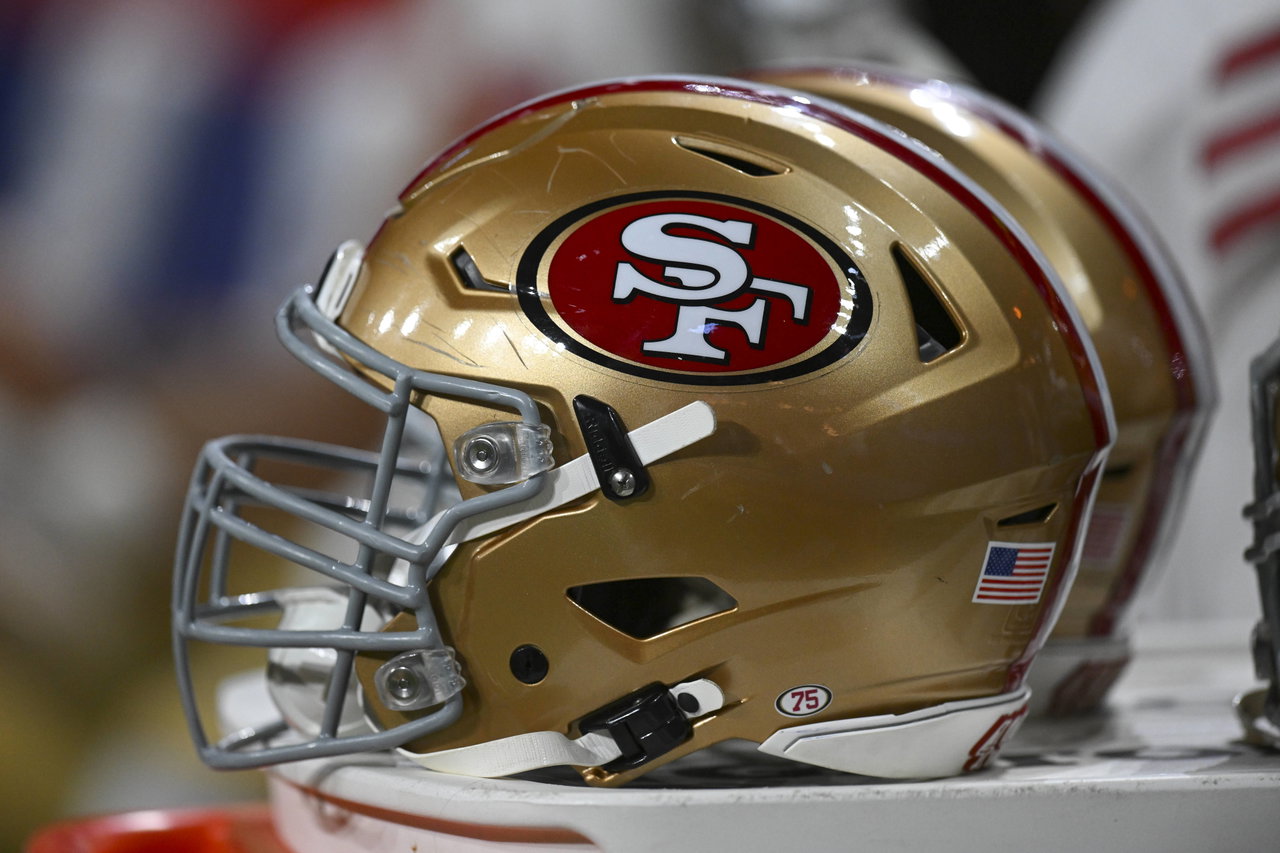
While Papa is no longer part of KNBR, his relationship with the 49ers remains separate. He has been the team’s radio play-by-play announcer since 2019 and remains under contract with the franchise. In April, the 49ers and Cumulus announced a multiyear extension that retained Papa and analyst Tim Ryan as the lead radio pairing through the 2030 season. Papa has said he would like to call games again this season, although he does not know whether his recovery will allow it. The easier target, he has acknowledged, would be the radio show.
“The radio show would be something that’s obviously much easier to return to. I could do it from my house. Doing a football game is a different challenge,” he told the Chronicle.
It is going to be tough for Papa to resume his career, especially now that he is without an important source of income. In an interview with the San Francisco Chronicle, he did not hold back on the financial pains of cancer.
“Cancer is unfair,” Papa told the Chronicle’s Eric Branch. “And it affects you physically, mentally, emotionally, spiritually. And then it ultimately gets you financially.
“When I’m off the radio show, I don’t get paid. And then there’s home care. There’s ancillary expenses. The medication. There was one medication I just started taking that was $5,000 for a month’s bottle. We were able to get it down to zero.”
A friend has also established a GoFundMe through the David Benzer Strike Out Fear Foundation to help with medical costs and everyday expenses that are not fully covered by insurance.
For decades, Papa’s voice has helped bring some of sports’ most memorable moments to life. Whether calling games for the A’s, Raiders, Warriors, Giants, or 49ers, he gave fans countless memories. He has spent 42 years behind the microphone and has become one of the defining voices of Bay Area sports.
But his own voice has become part of the recovery story. In a recent NBC Bay Area interview, Mathai asked Papa to try one of his famous touchdown calls. Papa obliged, his baritone still carrying the force that made it recognizable across the Bay Area.
After everything that has happened, the goal is still the same one Papa had before KNBR called: get back to the booth and bellow it out.