Imago
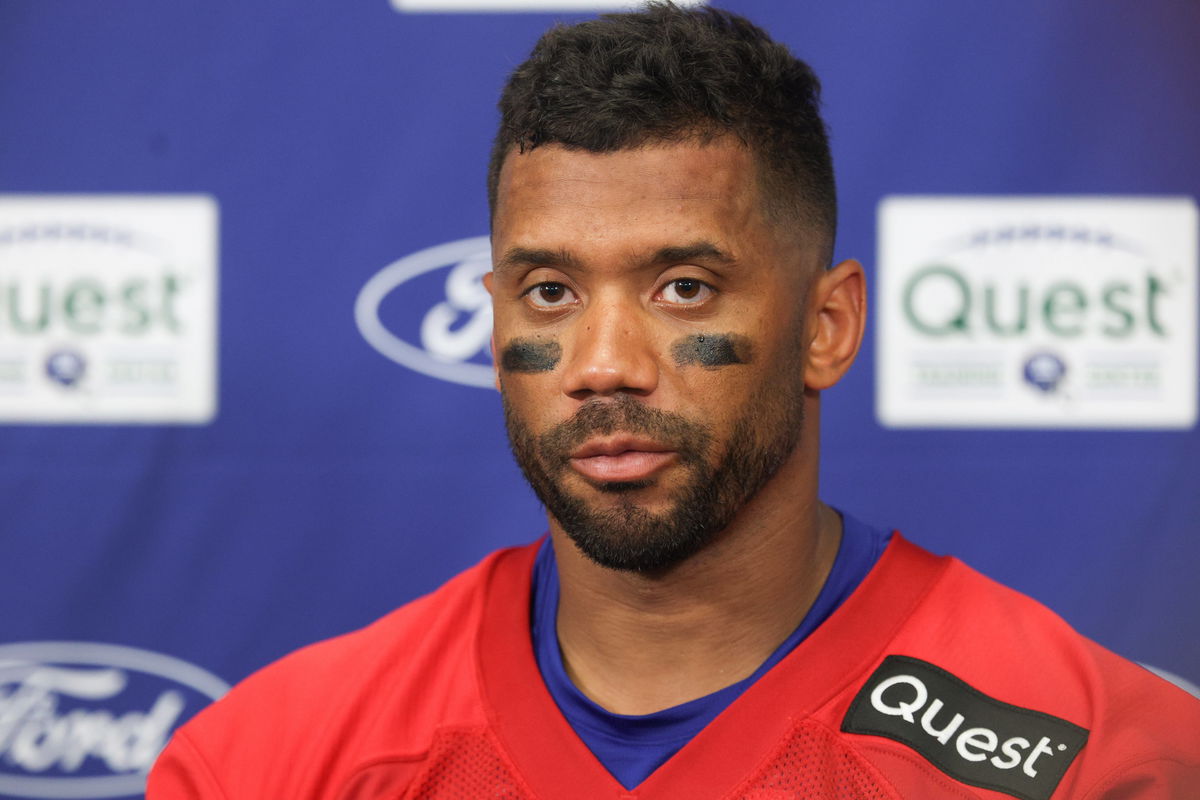
NFL, American Football Herren, USA New York Giants Training Camp Jul 23, 2025 East Rutherford, NJ, USA New York Giants quarterback Russell Wilson 3 talks with media during training camp at Quest Diagnostics Training Center. East Rutherford Quest Diagnostics Training Center NJ USA, EDITORIAL USE ONLY PUBLICATIONxINxGERxSUIxAUTxONLY Copyright: xVincentxCarchiettax 20250723_vtc_cb6_11382
Imago
NFL, American Football Herren, USA New York Giants Training Camp Jul 23, 2025 East Rutherford, NJ, USA New York Giants quarterback Russell Wilson 3 talks with media during training camp at Quest Diagnostics Training Center. East Rutherford Quest Diagnostics Training Center NJ USA, EDITORIAL USE ONLY PUBLICATIONxINxGERxSUIxAUTxONLY Copyright: xVincentxCarchiettax 20250723_vtc_cb6_11382
Lou Holtz was unlike any coach Notre Dame Fighting Irish football had seen. The fiery, undersized motivator hadn’t just pulled wins from unlikely places to finish with nearly 250 victories and a national championship; he had also briefly tried his hand at NFL coaching with the New York Jets. During just a 13-game stint in 1976, the Hall of Fame college football coach had managed to leave a lasting impact on the Jets team. That competitive fire finally faded on March 4, when Holtz died in Orlando at the age of 89, the team shared.
Watch What’s Trending Now!
“Lou Holtz, who spent 13 games as head coach of the Jets in 1976 and later won 100 games at Notre Dame and guided the Irish to the 1988 National Championship, has died,” reported Eric Allen on the official New York Jets site. “He was 89.”
While the exact medical cause of Holtz’s death has not been publicly disclosed, the Hall of Fame coach had been dealing with serious health challenges in the months leading up to his passing. Earlier this year, his family confirmed that the 89-year-old had been placed under hospice care at his home in Orlando. According to updates shared by his family in February, Holtz had been battling significant age-related health complications, though no single diagnosis was ever publicly confirmed.
ADVERTISEMENT
Despite the concerns around his health, there were moments in his final weeks when Holtz appeared stable.
ESPN broadcaster Rece Davis shared a lighthearted update during a discussion on the College GameDay podcast, revealing that Holtz’s caregiver had sent him a photo showing the longtime coach sitting comfortably with a pipe in his mouth, waiting for an episode of the classic television show Perry Mason to begin. The update helped reassure fans at the time, particularly as false rumors about Holtz’s death had circulated online.
Ultimately, however, Holtz’s condition continued to decline, and the legendary coach passed away peacefully on March 4 in Orlando, surrounded by family.
ADVERTISEMENT
His son Skip Holtz, who followed his father into coaching, had first shared the news on social media, writing that his father had passed away and was “resting peacefully at home.” But it was another line from Skip that captured how many around the sport remembered him: “He was successful, but more important he was Significant.”
That significance stretched far beyond the brief NFL experiment or even his celebrated years in South Bend.
ADVERTISEMENT
Remembering the Giant Across Sidelines, Lou Holtz
Over 33 seasons as a head coach, Holtz built a record of 249-132-7, leading programs such as Minnesota, Arkansas, South Carolina and Notre Dame into the national conversation. Wherever he went, the blueprint rarely changed: demand accountability, motivate relentlessly, and convince players they were capable of more than they believed.
Holtz’s sideline presence often felt larger than the man himself. Barely 5-foot-10, he commanded games with an intensity that made him impossible to ignore, while his homespun delivery turned locker-room speeches into something closer to theatre. For example, “You’re never as good as everyone tells you when you win, and you’re never as bad as they say when you lose,” Holtz often told his player.
ADVERTISEMENT
Nowhere did those principles show up more clearly than at Notre Dame, where Holtz inherited a program drifting away from its storied past and quickly turned it back into a national contender. By his third season, the Irish were celebrating the 1988 national championship, punctuated by a dramatic 31-30 win over Miami during the height of the sport’s famed “Catholics vs. Convicts” rivalry.
Top Stories
Federal Judge Takes Action in Lawsuit Against Patrick Mahomes & Travis Kelce

Buffalo Bills Hand Josh Allen a Trade Boost That Could Put Keon Coleman’s Future in Further Doubt – Report

Chiefs Get Significant Injury Update on Patrick Mahomes Amid Multiple Offseason Moves

Judge Delivers Crucial Ruling in Tyreek Hill Lawsuit After WR Allegedly Broke Model’s Leg

Imago
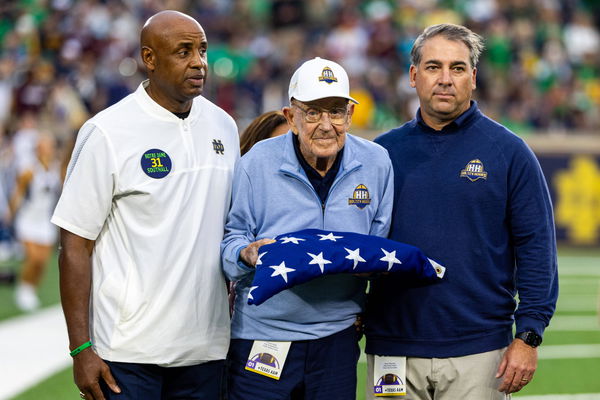
September 13, 2025: Former Notre Dame head coach Lou Holtz presents the flag prior to NCAA, College League, USA football game action between the Texas A&M Aggies and the Notre Dame Fighting Irish at Notre Dame Stadium in South Bend, Indiana. /CSM South Bend United States of America – ZUMAc04_ 20250913_zma_c04_595 Copyright: xJohnxMersitsx
Under Holtz, Notre Dame ripped off 23 straight victories across the 1988 and 1989 seasons, and his teams defeated three No. 1-ranked opponents during his tenure. By the time he stepped away after the 1996 season, he had restored the program’s stature and compiled a 100-30-2 record in South Bend.
ADVERTISEMENT
For Holtz, the job had always been about more than schemes or trophies. It was about belief, something he repeated to players again and again. “Everybody needs four things in life,” Holtz once said. “Something to do, someone to love, someone to believe in and something to hope for.”
And while his brief NFL stop with the New York Jets was only a detour in that long career, the episode still captured the stubborn self-awareness that defined him.
After struggling through a 3-10 season with the Jets in 1976, Holtz stepped away from the professional game with characteristic bluntness.
ADVERTISEMENT
“I can’t give professional football my heart,” he said at the time. “God did not put Lou Holtz on this earth for that.”
College football, as it turned out, was exactly where he belonged.
By the time he finally stepped away from the sideline for good in 2004, those ideals had already shaped generations of players and coaches, ensuring that long after the wins and championships faded into history, the lessons behind them would endure.
ADVERTISEMENT
Now, after hearing the news of his death, even the NFL world could not stay calm. Players, commentators, and analysts have all come together to mourn his death.
The NFL is mourning the passing of Lou Holtz
“RIP Lou Holtz,” wrote Skip Bayless on X. “Rare comic wit. Rarest of head-coach motivators. Greatest upset engineer ever. Ask the 1977 Oklahoma Sooners. Ask the 1982 SMU Mustangs. Ask the 1986 USC Trojans. Ask …”
ADVERTISEMENT
Bayless was true in pointing out that Holtz had a habit of causing upsets. It was one of his many traits, which reveals why he was such a great coach. While Bayless relied on his wits to pay respect to Holtz, a former Super Bowl winner with the Pittsburgh Steelers, who had the chance to play under him, was heartbroken with the news.
“My heart is broken today, but I’m also filled with gratitude for the time I had with him and for the impact he had on my life,” posted Jerome Bettis on X. “Coach will always be with us—in the lessons he taught, in the lives he changed, and in the love he gave so freely. Thank you for everything, Coach. I love you. You will forever be in our hearts.”
Not only commentators and former players, but NFL analyst Ryan Clark and New York Giants quarterback Russell Wilson also paid their respects.
“An absolute legend!!” Ryan Clark posted on X. “Lou Holtz had me praying nightly I could play for his team. Rest Easy to one of the greatest to ever live!”
“What an inspiration. I always loved being around you Lou the few times I was fortunate in your presence!” posted Russell Wilson on X. “Thanks for blessing us with your wisdom of the game and so much more.”
A couple of days ago, Wilson was on a podcast talking about his retirement. One of the hosts of the podcast and former NFL player, Will Compton, also mourned the loss.
“Rest in peace to the legend, Lou Holtz,” wrote Will Compton on X.
It is amazing to think of the impact Lou Holtz had on the sport. Despite never playing under him, his methods still influence players. Truly, football will be less shiny from now on, as it has lost one of its gems.
ADVERTISEMENT
ADVERTISEMENT
ADVERTISEMENT
Related Newsletters