
Prediction markets allow users to trade contracts on real-world outcomes, including NFL games. Those platforms are now at the center of a legal fight over who gets to regulate them. Federal appeals courts are split on whether the Commodity Futures Trading Commission has authority over sports-related event contracts, or whether states can treat them as gambling and enforce their own betting laws. Now the NFL is urging the Supreme Court to weigh in on the same matter.
Watch What’s Trending Now!
The National Football League (NFL) filed an amicus brief with the U.S. Supreme Court on Thursday, urging it to rule that individual states have the authority to regulate sports prediction markets as gambling, according to CNBC.
By filing this brief, the NFL is formally backing New Jersey’s petition to the high court to overturn a federal appeals court ruling that barred the state from enforcing its gaming laws against platforms like Kalshi. A bipartisan coalition of 39 states and the District of Columbia has also filed a separate brief supporting New Jersey’s stance.
However, platforms like Kalshi argued that their event contracts are financial derivatives (“swaps”) falling under the exclusive oversight of the federal Commodity Futures Trading Commission (CFTC).
The NFL counter-argued that these contracts are overwhelmingly used for consumer sports gambling and should be policed like traditional sports betting.
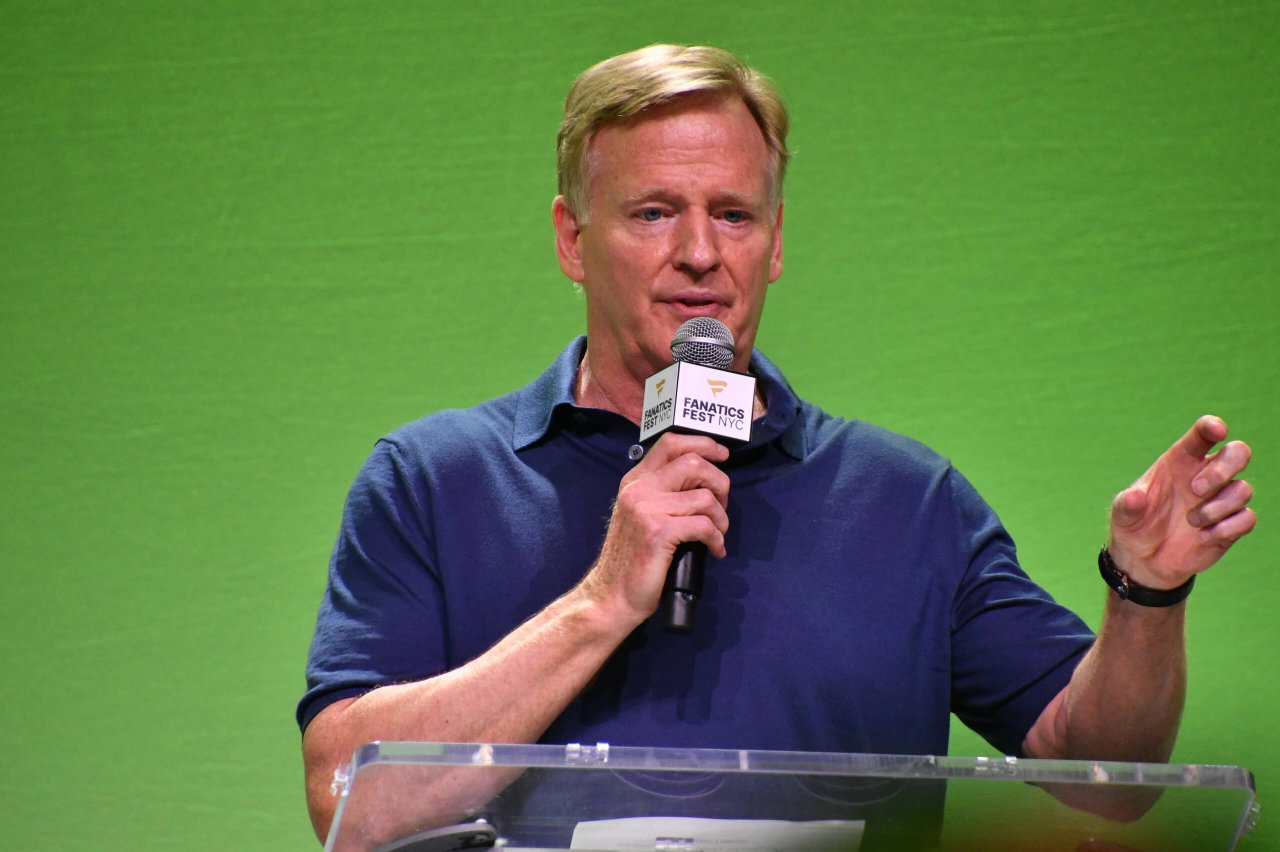
According to NFL commissioner Roger Goodell, the stance is more about the integrity of the game.
“We don’t feel like we have to be the first in this. We feel like we’re going to be right, and the best thing to do is be patient,” Goodell said in an interview with CNBC Sport on September 10 in Australia.
The issue has now reached the Supreme Court due to conflicting appellate decisions. Meanwhile, the Third Circuit Court of Appeals ruled that the CFTC has exclusive jurisdiction, preventing New Jersey from intervening.
Conversely, the Sixth and Ninth Circuits sided with states, ruling that sports prediction contracts do not have immunity from state gambling law.
As for the NFL, the league expressed deep concern over objectionable contracts that allow micro-wagering on easily manipulated elements – such as player injuries, referee decisions, or whether a kicker will miss a field goal.
The league argued that the CFTC lacks the specialized manpower (only 543 total employees nationwide) to monitor sports markets effectively compared to well-staffed state gaming authorities.
That said, the league also pointed out the exploding scale of the industry, stating that NFL-related contracts accounted for $1.8 billion of the $3.3 billion traded on prediction markets during the first Sunday of the NFL season.
The NFL is also pushing for a minimum age requirement of 21 (matching state sportsbooks), whereas some prediction markets allow users as young as 18. According to the league, this exposes younger audiences to unregulated gambling.
“Neither the CFTC nor the prediction market companies themselves— despite our persistent urging — have banned categories of bets susceptible to manipulation or set a 21 age limit,” the NFL told CNBC.
Now that the NFL, a bipartisan coalition of 39 states, and multiple gaming organizations have piled on in support of New Jersey’s petition, the legal process enters a highly structured phase.