
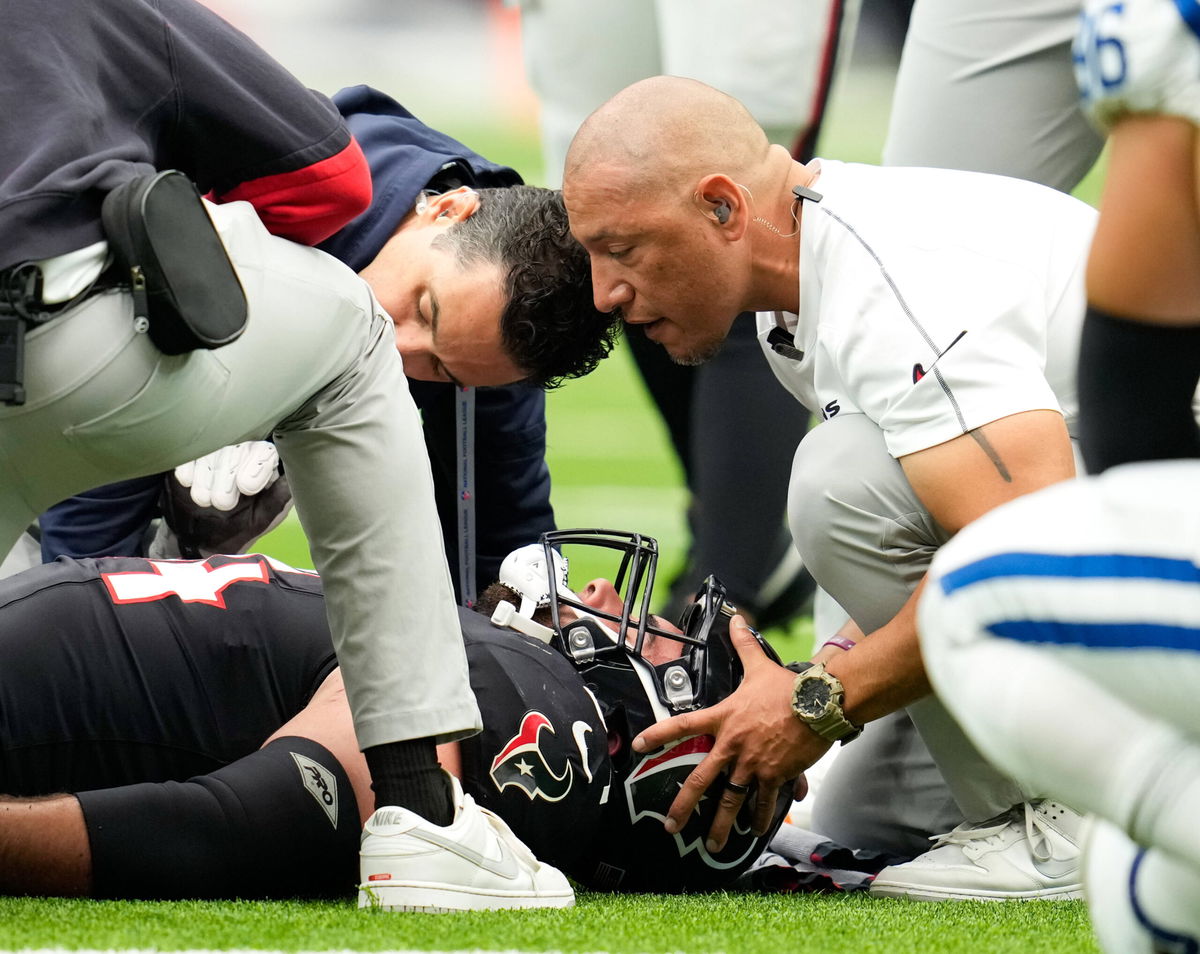
For the first time since the NFL began tracking concussion-related data in 2015, the league recorded a historic low in 2024, with numbers dropping 17% from the previous year. At the time, it looked like real progress had finally been made. But that optimism hasn’t lasted long. After that sharp decline, concussion concerns have started rising again, and the league has now identified a new factor behind the trend.
Watch What’s Trending Now!
The NFL had already taken major steps by banning seven helmet models ahead of the 2025 season and moving three others into the “not recommended” category, even though all 10 had been considered top performers as recently as 2022. That process is continuing into 2026 as well, with roughly 12% of active players expected to transition away from helmets that are no longer compliant under updated safety standards. Helmet technology across the league is evolving quickly. However, improvements in face-mask design haven’t kept pace with the progress made in helmet shells.
As reported by Front Office Sports, the NFL discovered that 44% of concussions during games are now caused by hits to the face mask, which is a big jump from 29% back in 2015. As a result, attention is now shifting toward face masks as the next area of concern in the league’s ongoing effort to reduce concussions.
“We’ve seen substantial improvements in the helmet shells over the last few years, but we have not seen a similar improvement in face masks in their ability to deter some of these concussions,” NFL EVP Jeff Miller said at the league’s annual meeting this week in Arizona. “So when we have concussions on the field from helmet contact, a greater percentage of them are happening on hits right to the face masks, and that piece of equipment does not have the same sort of force mitigation properties as the rest of the helmet.”
So, the league is now exploring new ideas instead of just sticking to the usual solutions. In February, some plans were shared for an innovation summit during Super Bowl week, which is the next step in the HealthTECH Challenge series focused on improving helmet safety.
The concept is straightforward yet bold. This challenge invites inventors, engineers, startups, researchers, and established companies to rethink helmet design, particularly focusing on how face masks absorb impact and lessen force during collisions.
The renewed focus comes after the league recorded 168 in-game concussions during the 2025 season, a 30% increase from the 129 reported in 2024. League officials also noted that the implementation of the dynamic kickoff rule contributed to a sharp rise in returns compared to 2022, increasing contact plays and prompting a closer look at protective equipment across the field.
However, the league is still hopeful about what comes next.
“Recent efforts to improve shell impact technology have been incredibly fruitful, and now we look forward to evaluating this next wave of creative solutions to face masks and other helmet components to further reduce injury,” Miller said.
Meanwhile, there is a real reason to get things done. Winners can get up to $100,000 in funding and expert help to make their ideas a reality. The NFL is not slowing down in its efforts to fix the concussion problem.
NFL prohibits 7 different helmet models
The NFL didn’t just talk about making gear safer; they took real action last year. The league decided to ban seven helmet models for the 2025 season after testing them with the NFL Players Association. They also moved three more designs into the “not recommended” category, making it clearer what players can safely wear.
At the same time, the facts behind those decisions were tough to overlook. Players who wore “not recommended” helmets between 2021 and 2024 were just 2% of the league, but they had a 35% higher chance of getting a concussion.
On the other hand, 10 highly rated helmets worked so well that players didn’t need extra guardian caps anymore, as Jeff Miller mentioned while talking about the findings.
Much of the progress in recent years has come from upgrades to helmet shells, padding systems, and position-specific helmet designs introduced after injury-tracking data showed different players experienced impacts in different areas of the head. By comparison, facemask structures have remained largely unchanged over the same period, even as their share of concussion-related impacts has grown.
At the same time, the league saw real progress. The 2024 season was “a seminal year and a huge step forward in helmet technology and the options available to players,” Miller said.
The NFL wants to get rid of helmets that don’t work as well more quickly, but the players’ union still puts player choice first. Miller said that the balance has caused some tension because the league “leans a bit more towards a mandate.”
The players’ union has also recently emphasized that broader safety conditions on the field remain interconnected, warning during a separate dispute involving officials that trained professional referees play a direct role in preventing dangerous situations from escalating during games.
So, all of this has led up to what will happen next. The bans, the data, and the push for better designs have already changed the way things are now, and this year will show how much those changes really make the game safer for players.