
For families, getting a child involved in youth sports can come with a surprisingly hefty price tag. Between participation fees, equipment/gear, and travel, the costs can climb into the thousands of dollars each year. A recent AP-Ipsos Poll put that burden into perspective: many parents spend about $2,000 annually on their children’s sports, while roughly 11% mentioned they spend $5,000 or more.
Watch What’s Trending Now!
So, when it was revealed that Rivals was charging players $499 for an ‘evaluation’, Robert Griffin III felt the platform was simply adding more to the burden.
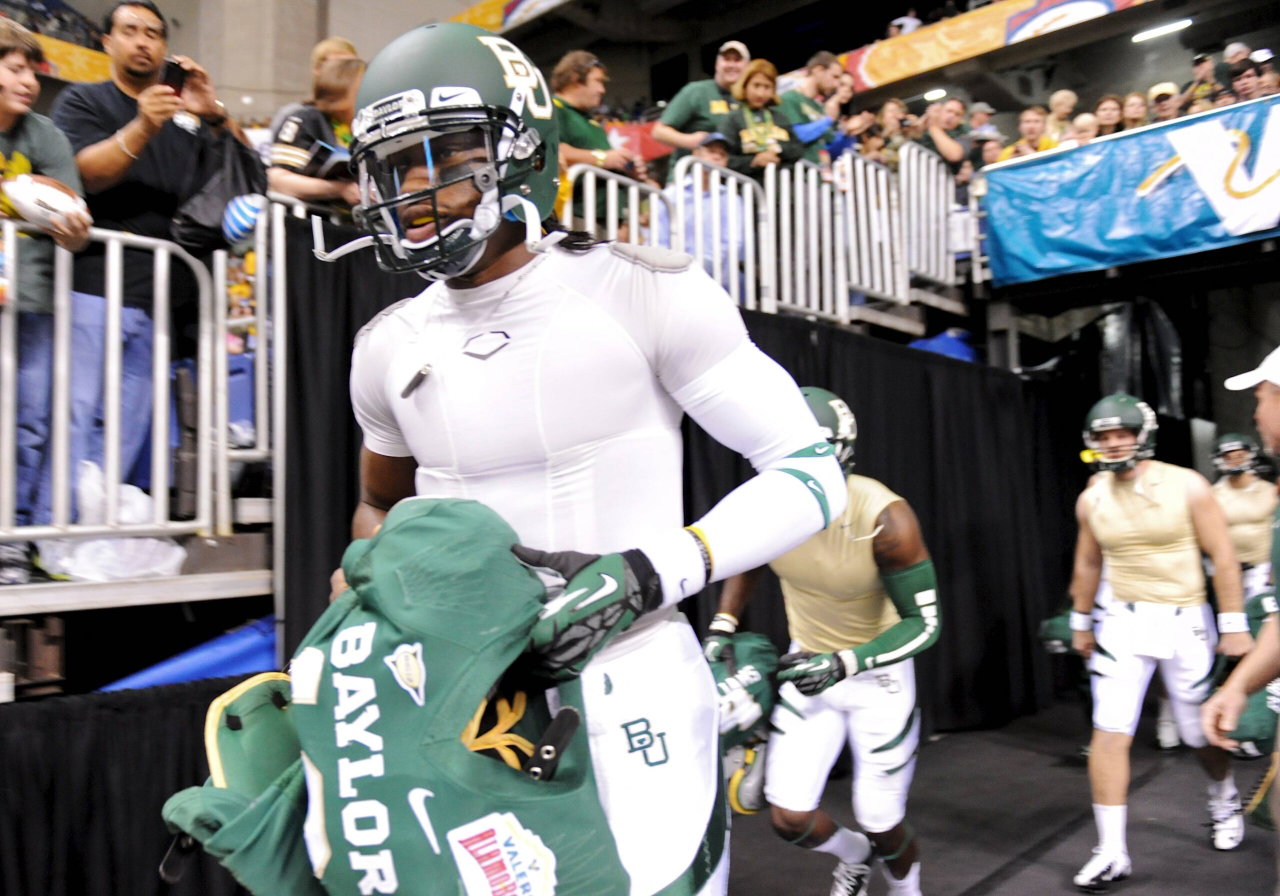
“This is a MASSIVE MONEY GRAB taking advantage of parents and kids. They should be ashamed of themselves,” wrote the former Baylor Bears quarterback on X, resharing Front Office Sports’ post, which reported on it.
“Rivals is charging high school athletes and parents $499 for an ‘evaluation’ by a Rivals scout,” reported FOS. “The fee includes a scouting report, grade, film evaluation, coach interview, and consideration to be ranked on their site.”
It is important to note that players cannot buy stars or rankings from Rivals.
That said, the $499 offer came after On3 acquired Rivals last year. By availing this service, the athletes will receive a position breakdown and interview coaching. It will help them pitch themselves in a better manner, as they will have something more formal than simply having a highlight reel online. But here’s the problem.
We are living in a time where it is easy for college coaches and scouts to find new players. Athletes can get their film directly in front of coaches through school-provided programs such as Hudl and MaxPreps Advantage, removing much of the distance that once existed between prospects and college programs.
While Rivals may possibly offer more advantage through interviews and prep help, Griffin III doesn’t think it adds much value. He believes that talent itself is enough for the high school athletes to shine in college.
Let us take Griffin’s own career as an example. In one of the episodes of The Joel Klatt Show, Griffin once described himself as a “world-class” track athlete coming out of Copperas Cove, Texas. Coming out of high school, programs like the Texas Longhorns and Texas A&M Aggies started having second thoughts because of his slight frame, unsure whether it could “translate over to playing quarterback at that level.”
But none of that mattered for Baylor, which took a chance with recruiting Griffin, and they did not regret it.
He was the first Baylor player to ever win the Heisman. As the team’s quarterback, Griffin has played a major role in turning around a program that had been dismissed for much of the past decade before he stepped in. He has helped lead the team to its best record since 1986.
Back then, Griffin did not have a platform like Rivals that would have helped him to get noticed by top FBS programs. But even though he could not win the trust of top programs like Texas and Texas A&M, he made the most of his opportunity at Baylor.
Griffin is not the only one who is unhappy
Recruiting analyst Matt Freeman approached three current college football general managers, looking for their perspective on the service by Rivals. One Power Four GM, however, offered a response that was anything but diplomatic, making it clear they had little patience for the idea.
“They’re just trying to make money on the dreams of the players who wouldn’t get recruited anyway,” the GM said, as per Freeman.
“Are there now more spots for FBS teams to take players? No. They’ll just rank more players who paid for it, but the opportunities don’t expand.”
Similarly, another Power Four manager opined that “exposure has never been easier,” pointing to college summer camps and combines as established avenues through which prospects can put themselves in front of coaches. He felt the service did not add value.
What was Rivals’ intention behind this service?
While Griffin’s career had taken off ever since he left high school, that’s not the case for all. According to Rivals, the new service is intended to expand its scouting reach by evaluating more high school athletes, including prospects who could go on to compete at levels below the FBS.
In fact, Shannon Terry, the founder and CEO of On3 | Rivals, clarified on X: “1.04M kids played HS football last season. About 6,600 held a Rivals star rating… roughly 0.6%. That’s not a talent gap. It’s a capacity gap. Our scouts have always focused on FBS prospects, and FCS, D-II, NAIA, and D-III kids rarely get their film watched.
“Rivals Recruits puts the same scouts, held to the same standards, on more of that film. You can pay for an evaluation. You can’t pay for the result. Great resource and link for all college coaches and scouts. More opportunities for athletes.”
College football signing day is February 3, 2027. With approximately four and a half months away, it’s time to see how successful Rivals’ new project becomes.