
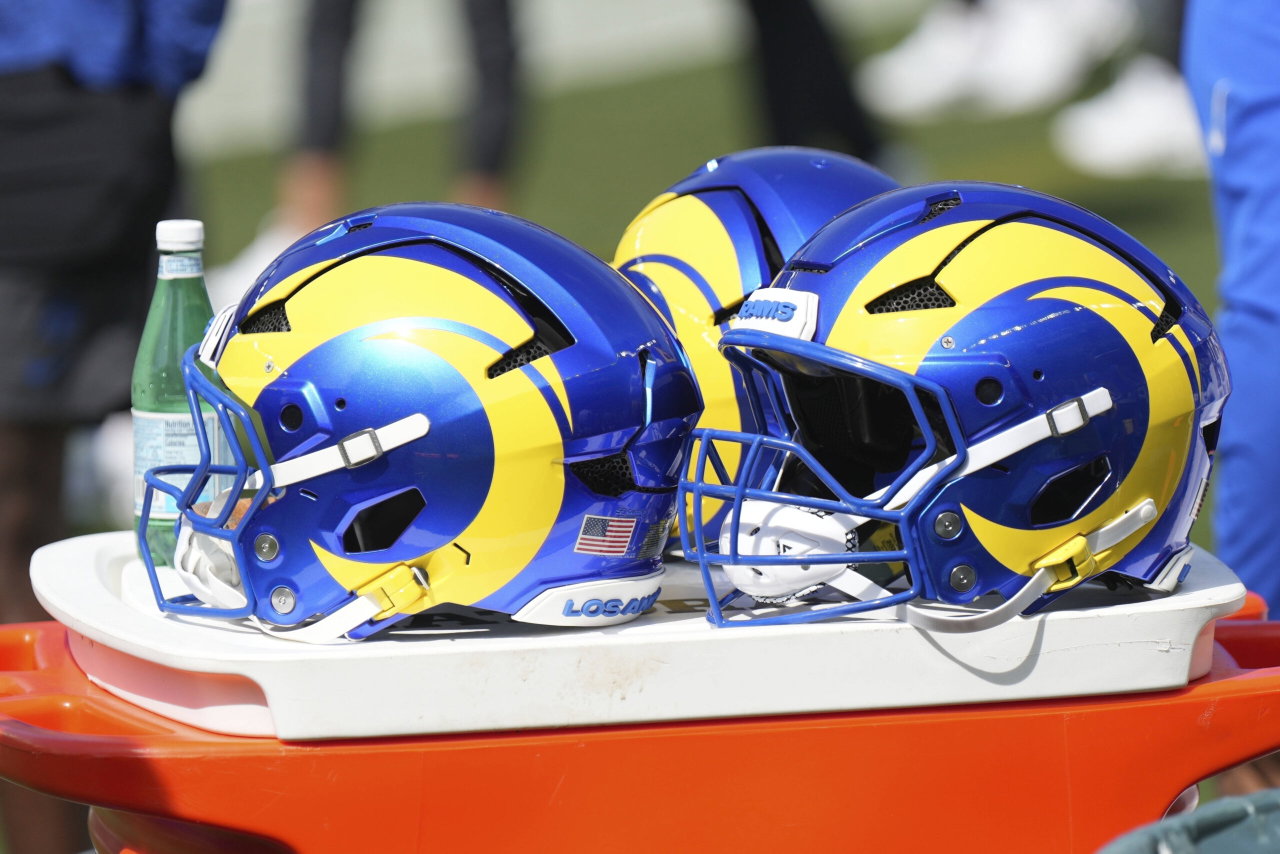
On January 20, 1980, under the towering lights of the Rose Bowl, the Los Angeles Rams dared to dream during Super Bowl XIV. Against the heavy-favorite Steelers, Lawrence McCutcheon ignited that hope in the third quarter, launching a breathtaking 24-yard halfback pass for the first Super Bowl touchdown in franchise history. In that fleeting, magic moment, “Clutch” lifted an entire fanbase to its feet. Sadly, decades later, on October 23, 2026, the five-time Pro Bowl icon passed away at 76 after a courageous battle with Parkinson’s disease.
Watch What’s Trending Now!
“It is with great sadness that we share the passing of our husband, brother, father, grandfather, and great-grandfather, Lawrence McCutcheon Clutch passed away on October 23 with family at his bedside following a long, courageous battle with Parkinson’s disease,” Lawrence’s family released a statement.
A groundbreaking 2026 study examining nearly 20,000 former NFL players revealed that those who played professional football are four times more likely than the general public to die from neurodegenerative diseases, including ALS, dementia, and Parkinson’s. For Parkinson’s specifically, the mortality rate among former players was found to be 3.88 times higher. It is a quiet epidemic shadowing the game.
Just recently, fellow Rams legend Marshall Faulk, 53, courageously went public with his own early-stage Parkinson’s diagnosis, emphasizing, “The earlier you catch it, the better chance you have at living a better quality of life.”
While the exact timeline of McCutcheon’s diagnosis remained private, his family’s moving statement leaves no doubt that his final chapter was defined by a long battle. Yet long before his body was tested by disease, McCutcheon was known for a lifetime spent rewriting history books. His story began at Colorado State, where the halfback from Plainview, Texas, first earned the moniker that would follow him for decades: “The Clutch.”
After overcoming an early wrist injury in 1969, he became the first player in school history to shatter the 1,000-yard single-season rushing barrier. By the time he left CSU, he sat seventh all-time in program rushing history with 2,917 yards, an imposing legacy that earned him a spot in the Colorado State Athletics Hall of Fame in 1989. That collegiate brilliance caught the eyes of NFL scouts, leading the Los Angeles Rams to select him in the third round (70th overall) of the 1972 draft.
Drafted as a mid-round pick, McCutcheon played with a tireless chip on his shoulder, swiftly transforming from a rookie prospect into the beating heart of head coach Chuck Knox’s offense. From 1973 to 1977, he led the Rams in rushing for five consecutive seasons. Knox recognized his rare versatility, repositioning him to maximize his vision; the move paid off brilliantly, with McCutcheon averaging around 1,200 rushing yards over a two-season stretch and landing among Proscout, Inc.’s elite top-five evaluations.
By the time his magical era in Los Angeles drew to a close in 1980, McCutcheon stood as the Rams’ all-time leading rusher from 1972 to 1979, with 6,186 yards, a historic benchmark that today places him in the pantheon alongside icons like Marshall Faulk, Eric Dickerson, and Steven Jackson. Though he went on to finish his 10-year playing career with brief stops in Denver, Seattle, and a six-game reunion with Chuck Knox in Buffalo, his soul forever belonged to the Rams. Over 109 career NFL games, he racked up 6,578 rushing yards, 26 rushing touchdowns, and 198 receptions for another 1,799 yards and 13 scores.
He saw himself as a complete running back capable of running the ball, catching passes and blocking, qualities he believed helped him become a starter in 1973.
“All it takes is quickness and blocking,” Lawrence said in a presser in 1974. “If you have our kind of blocking and any kind of ability, you should gain 1,000 yards every year. Quickness is the ability to hit between the blockers as soon as the hole starts to open. Speed only help on end runs.”
The Rams still occupied a large part of his heart, which led him to return to Los Angeles, but this time not as a player.
Lawrence McCutcheon Built a Second Career in the Rams’ Organization
His retirement marked the beginning of Lawrence’s long run with Los Angeles. He returned to the Rams squad in 1982 as a scout. But over the years, he has taken up multiple roles, including director of player personnel for seven years.
“Through a decade-long playing career and another 32 years in the Rams’ front office, Clutch earned the respect and admiration of teammates, opposing players, colleagues, and fans alike. Clutch will be missed and remembered forever. We are thankful to those in our community who have reached out with love and support,” the family’s statement read.
Finally, he retired from his front office role in 2016.
“The contributions he made as a player as well as a talent evaluator in our personnel department have been invaluable to this organization,” General Manager Les Snead said in a statement after Lawrence’s retirement. “We will miss ‘Clutch’ being around on routine basis, but he will always be an important part of our family.”
Lawrence’s impact extends well beyond his own playing days. His son Daylon spent eight seasons with the Cleveland Browns, and his grandson Dyson is carrying the family name forward as a defensive back at Middle Tennessee. Three generations later, Lawrence’s football legacy is still alive.