
Steve Gleason returned to the Superdome with his son Rivers at his side. Twenty years after his famous punt block, Rivers pushed his father’s wheelchair onto the field and raised his arm to lead the “Who Dat” chant.
Watch What’s Trending Now!
The Saints had spent the night bringing pieces of an old memory back to life. Irma Thomas, who sang the national anthem when the Dome reopened in 2006, sang it again. Drew Brees and other members of that team were back, too. Across the field stood the same opponent from that night: the Atlanta Falcons.
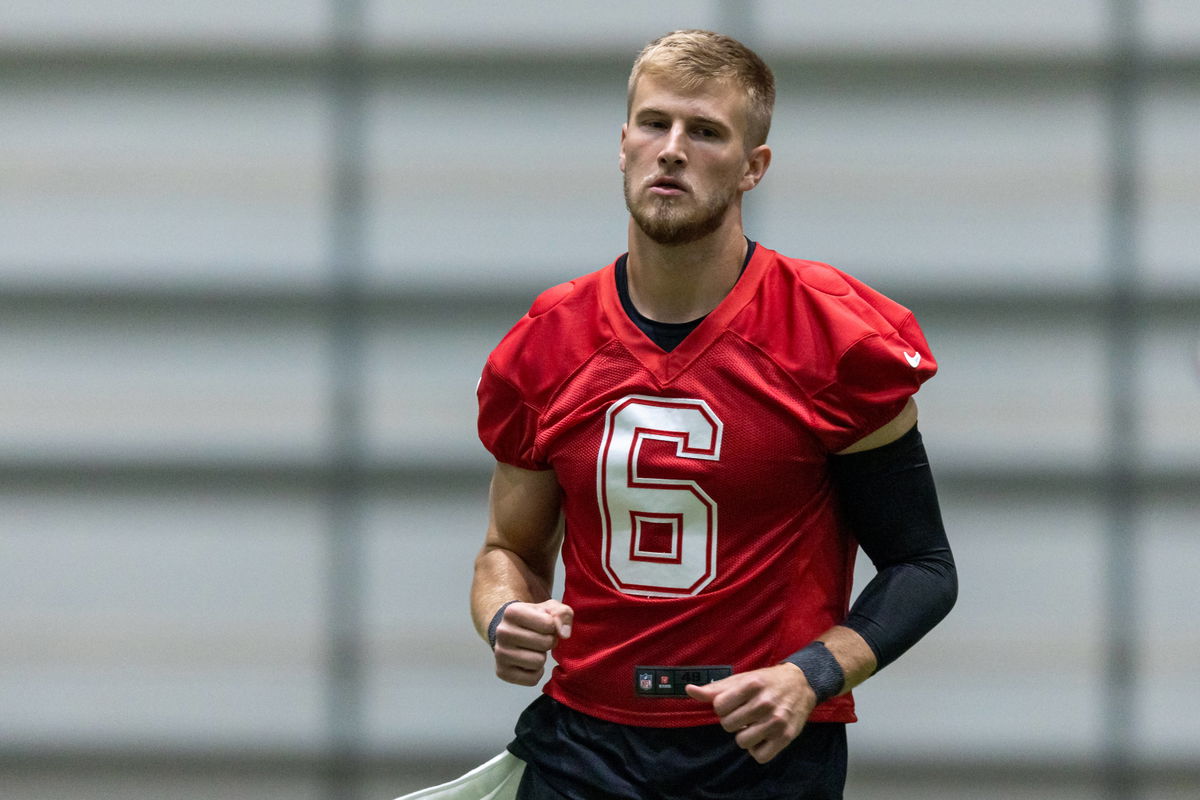
The reunion ended nothing like the original. Atlanta rolled to a 45-24 win, and when the boos came down from the Superdome, Saints quarterback Tyler Shough didn’t argue with them.
“It’s extremely disapointing, embarrasing.” Shough said to the media. “Fans are understandably upset. We had some opportunities that we didn’t take advantage of, and you’re playing the Falcons, and you lose like that. I mean, I’d boo too. That s–ks. But we want to get everybody going, as it’s part of it.
The weight of the night was not lost on Shough before kickoff, either. When the Saints announced the anniversary matchup earlier this year, he called it an “unbelievable opportunity.” He had met Gleason soon after arriving in New Orleans and said seeing what the former Saint meant to the city had made the occasion personal for him.
That made the result harder to separate from the occasion. The Saints’ first three possessions ended with a three-and-out, a missed 52-yard field goal and Kendre Miller’s lost fumble. Atlanta turned that fumble into a touchdown, and by the time Bijan Robinson broke a 59-yard run for another score on the Falcons’ third play from scrimmage, the celebration had already begun to slip away.
Atlanta’s early burst exposed the problem that would follow New Orleans all night. The Saints were playing from behind for the fourth straight game, and Shough later explained that the deficit changed what they could do offensively. “We just got behind a little bit too early, so now we’re playing drop-back ball,” he said. “Can’t move like that in the NFL.”
That showed up most clearly in the running game. New Orleans managed only 50 rushing yards on 19 attempts, averaging 2.6 yards per carry. Atlanta, meanwhile, piled up 205 yards on the ground, with Bijan Robinson accounting for 145 and two touchdowns and Brian Robinson Jr. adding 62 yards and three scores. The Falcons never trailed.
The gap was not simply about Atlanta’s running backs. The Falcons repeatedly created favorable situations before New Orleans could settle in. They scored on six consecutive drives, excluding their end-of-half possession, and five of those scoring drives covered at least 65 yards. Michael Penix Jr. did not have to carry the offense with volume—he finished 15 of 20 for 223 yards and a touchdown—but Atlanta’s ground game kept putting the Saints’ defense in difficult spots.
New Orleans finished with 320 total yards to Atlanta’s 420 and lost the turnover battle 1-0. The Saints also committed eight penalties for 49 yards. Their offense did have some bright spots: Shough completed 30 of 48 passes for 286 yards and a late touchdown, while Chris Olave caught eight passes for 116 yards. But much of that production came after Atlanta had already built control of the game.
The defensive collapse was harder to disguise. New Orleans forced only two Atlanta punts, recorded one sack and failed to create a turnover. More importantly, the Falcons averaged 7.5 yards per play, repeatedly finding room on the ground and then using that success to open up the passing game. Cameron Jordan put the problem bluntly after the game: “Our run defense did not show up to play early on.”
Kellen Moore took responsibility for the overall performance rather than pinning it on one unit. “We really, in all three phases, did not do enough to win this game,” the Saints coach said. “Atlanta came in and played a lot better than us.” He also acknowledged that the team had understood the significance of the anniversary but could not sustain the energy once Atlanta got moving.
For Shough, that was the part that hurt most. “You can’t say enough good things about the fans showing up and the entire process, what this game meant, and we fell short as a team to not get that win,” he said. “It was a team loss.”
He did not try to soften what happened, either. When asked about the boos, Shough accepted them as part of what came with a performance like this. “You’re playing the Falcons and you lose like that. I mean, I’d boo too,” he said.
Now the Saints have to turn from a night built around their past to a short week focused on their present. They are 1-3 and will host the undefeated Minnesota Vikings on Sunday. For a team that has trailed at halftime in all four games this season, the next test is not simply recovering from the Domecoming loss. It is finding a way to stop giving opponents the early control that has repeatedly forced New Orleans to chase games.