
In 2009, two young scouts, Mike Borgonzi and Ryan Poles, shared the upstairs apartment of a multi-family house in Kansas City. A young coach named Nick Sirianni lived downstairs. Seventeen years on, Borgonzi is the Tennessee Titans’ GM, Poles is the Bears’ GM, and the league still runs on that floor plan. Nobody wrote it down. GMs deal with GMs. Coaches stay downstairs.
Watch What’s Trending Now!
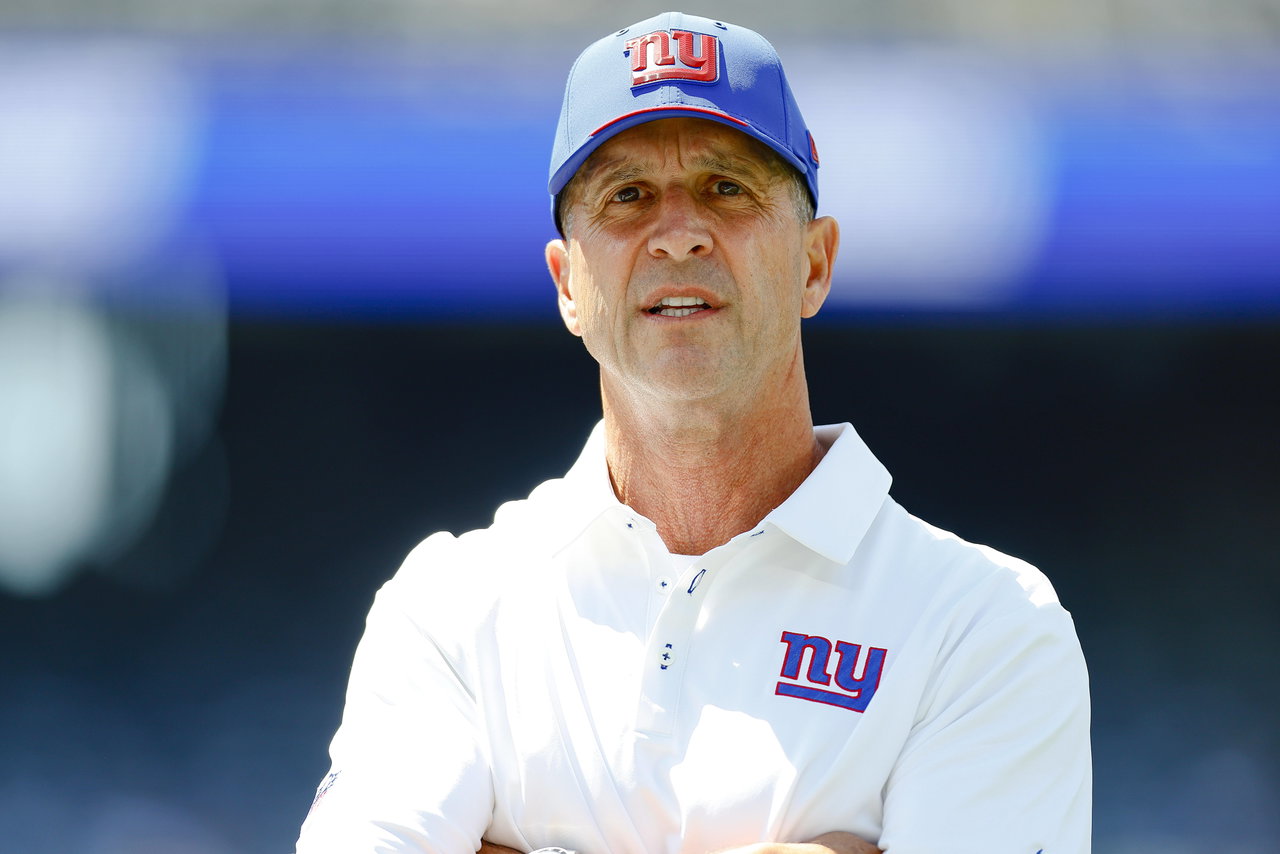
This January, two teams put their floor plans in writing. On January 2, 2026, Amy Adams Strunk handed Borgonzi final say over the 53-man roster, with the GM and president of football operations Chad Brinker reporting directly to her. Fifteen days later, the New York Giants agreed to a different arrangement to land John Harbaugh: he would report directly to ownership rather than general manager Joe Schoen. No Giants coach had ever done that. Then the unwritten protocols collided.
“Multiple sources tell The Athletic (that) the Giants head coach called Titans owner Amy Adams Strunk directly in an attempt to trade for the All-Pro defensive tackle, breaking with traditional NFL trade-talk norms,” The Athletic’s Jonathan Jones reported. “The Giants have been looking to make a deal ahead of the Nov. 10 trade deadline, knowing they will go into Week 9 atop the NFC East.”
Strunk made it clear that trade decisions rested with Borgonzi and she had no intention of overruling him. Harbaugh still wasn’t convinced.
“General manager Joe Schoen had previously reached out to Titans GM Mike Borgonzi, who told Schoen and other inquiring teams that they wouldn’t trade Simmons,” he further noted. “Harbaugh then opted to call Strunk, the Titans’ controlling owner, in an attempt to get Simmons. Harbaugh got the same message from Strunk, who has empowered Borgonzi to make football decisions for the franchise.”
Harbaugh’s approach did not sit well with everyone around the league. One general manager who learned about the call told Jones that it violated a code among primary football decision-makers, who are expected to deal directly with their counterparts. Another source in a key football position went further, describing the move as “shameful,” according to NBC Sports’ Mike Florio.
The Giants had a reason to push for Simmons
New York’s interest wasn’t difficult to understand. The Giants entered Week 9 at 4-2-1, leading the NFC East, and were looking to strengthen their roster before the November 10 trade deadline. Their need for help along the defensive interior had become more pressing after they traded three-time Pro Bowl defensive tackle Dexter Lawrence to the Cincinnati Bengals in April for the No. 10 pick in the 2026 NFL Draft.
Simmons offered the kind of production that could help fill that void. The 29-year-old had already generated 28 quarterback pressures through seven games in 2026, the most among defensive tackles, according to Next Gen Stats. He had also recorded 10 pressures and three sacks against double teams, both league-leading marks at his position. His 21 run stops were tied for the second-most among defensive tackles.
The numbers followed an equally productive 2025 campaign. Simmons recorded a career-high 11 sacks, along with 67 tackles, 17 tackles for loss, 60 quarterback pressures and three forced fumbles. He earned First-Team All-Pro recognition, adding to the Second-Team honors he received in 2021 and 2022. The Giants weren’t simply pursuing an established name; they were looking at one of the league’s most disruptive interior defenders.
Tennessee’s change of heart opened the door
The Titans, however, had spent much of the year treating Simmons as a long-term piece of their roster. On June 19, they handed him a three-year extension reportedly worth $105.8 million, including $100 million guaranteed. It made him the highest-paid defensive tackle in NFL history at the time. Simmons was equally committed to staying in Tennessee, saying, “Tennessee has become a second home for me,” and adding, “My job isn’t finished.”
That outlook became harder to maintain as the season unfolded. Tennessee had started 2026 with a 1-6 record after consecutive 3-14 finishes in 2024 and 2025. According to Jones, the Titans’ leadership group met on Tuesday, October 27, to discuss the team’s direction. Following that meeting, the organization decided to start listening to offers for Simmons.
There is an important distinction between that decision and actively shopping the defensive tackle. Borgonzi said the Titans had received plenty of calls but had never seriously considered moving Simmons. Albert Breer of Sports Illustrated reported that teams had generally asked whether Tennessee would entertain a trade, only to be turned away. Borgonzi had not received a firm offer until Poles approached him.
Poles’ longstanding relationship with Borgonzi helped seal the deal
The Bears GM had been interested in Simmons long before the October trade discussions. His connection with Borgonzi dates back to 2007, when Poles was a starting guard at Boston College and Borgonzi was working as a recruiting assistant. Two years later, both joined the Kansas City Chiefs’ personnel department under general manager Scott Pioli and spent 13 seasons working their way up the scouting ladder.
Poles had even considered Simmons during the 2019 NFL Draft. However, Kansas City had already traded its first-round selection to acquire defensive end Frank Clark and wasn’t positioned to select Simmons before Tennessee took him 19th overall. Years later, Poles finally had an opportunity to bring the defensive tackle to his team.
The negotiations moved quickly. According to Breer, Poles made his first call to Borgonzi during the 5 p.m. CT hour on Wednesday, October 28, after Tennessee had finished its afternoon practice. Unlike the earlier inquiries, Poles came with a concrete proposal. Borgonzi told him the deal would have to start with two first-round picks, and the Bears GM called back at 7 p.m. CT to continue negotiations. By 8 p.m., the two had reached a tentative agreement.
The discussions remained tightly guarded that night. Borgonzi, assistant GM Dave Ziegler and head coach Robert Saleh met to evaluate the proposed deal, while Poles took the offer to Bears ownership. The two general managers agreed to reconvene the following morning after consulting their respective organizations.
Tennessee ultimately accepted Chicago’s offer of its 2027 and 2028 first-round picks, along with a 2027 fourth-round selection. The Bears also received a 2028 fifth-round pick alongside Simmons. The deal gave the Titans four first-round selections across the next two drafts, providing significant draft capital to accelerate their rebuild.
Borgonzi explained his decision after the trade, saying, “Jeff has been an elite player in this organization both on and off the field. My respect and admiration for him is probably more than any player I’ve been around.” He also clarified that the organization had never actively tried to trade Simmons since he took over as GM.
“I got a phone call late last night from a person I have known for a while, Ryan Poles, GM with the Bears, and he’s really the only person that came out and said: Would you accept this?” Borgonzi said.
The Titans’ decision also came after discussions with Strunk and Saleh. Borgonzi said the organization believed the draft capital would put it in a better position to build for the future. Saleh acknowledged how difficult it was to part ways with Simmons, but felt the return was necessary given the team’s position.
“When you don’t close out games and you are standing here at 1-6, teams are going to start fishing, and eventually a team threw a hook big enough I don’t think any of us could have say no to,” Saleh said.
Giants could still be looking for defensive help
There is another question surrounding New York’s failed pursuit. NBC Sports’ Florio reported that the Giants were willing to offer more than the package Chicago ultimately sent to Tennessee. However, it remains unclear whether Harbaugh contacted Strunk before or after Poles presented his offer, and no formal Giants proposal has been made public. The reported willingness to offer more should therefore be treated as an indication of New York’s interest, rather than a confirmed higher bid that Tennessee rejected.
The Giants are not expected to abandon their search for reinforcements just because they missed out on Simmons. Jones reported that league sources expected New York to pursue additions at both defensive tackle and running back before the November 10 deadline. Harbaugh and Schoen will now have to find another way to address those needs after their attempt to bring Simmons to New York fell through.