
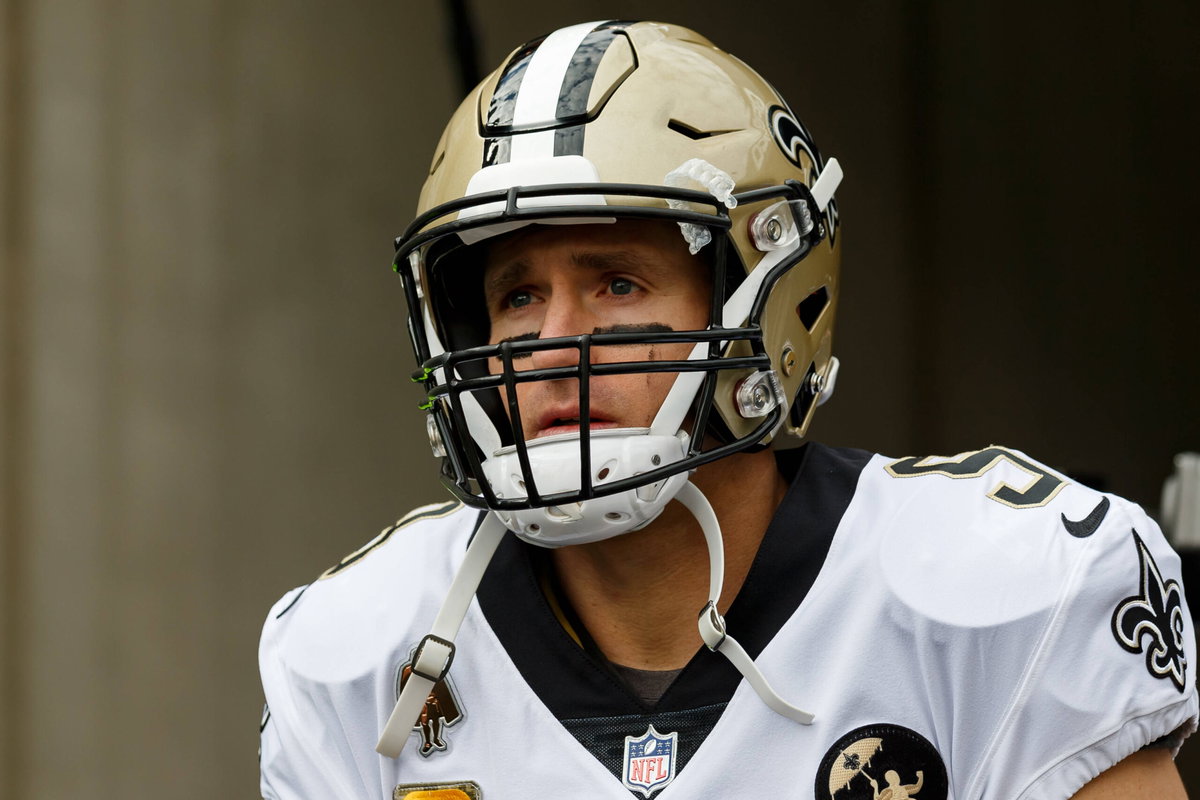
During their tenure with the New Orleans Saints, Sean Payton spent 15 long years coaching Drew Brees. And during those 15 years, the duo had many disagreements, especially when it came to plays. Even though Brees hung up his cleats six years ago, a recent incident reminded him of his relationship with his former head coach.
Watch What’s Trending Now!
It was the verbal altercation between the Pittsburgh Steelers’ head coach, Mike McCarthy, and star quarterback Aaron Rodgers. There was more than two-thirds of the time on the clock in the first quarter of the game against the Cleveland Browns when Rodgers asked the coach to make the call faster. But it came with an expletive word. And in return, McCarthy called Rodgers a “f—ing a—ole.” It was an equivalent exchange, but McCarthy apologized for his choice of words in the postgame press conference.
However, according to Brees, it was a funny incident that reminded him of his playing days.
“It’s funny,” Brees said on the Dan Patrick Show. “Those two are like an old married couple. And I guess Sean and I were like that at times. Heat of the moment, especially, there’s definitely some kind of spouting back and forth. Usually for me, it was like, just get the play in faster. I want more time at the line of scrimmage and he’s looking at me saying, ‘I called the play, you throw it to this guy. What are you doing?’
“There’s a little bit of that. And then all of a sudden, the headset start, you know, you can always act like you didn’t hear the play. You’re like, ‘I don’t like that play. I didn’t hear it. Sorry. I got it.’”
As the conversation continued, Dan Patrick revealed that Bill Cowher previously told him about his disagreements with former Steelers quarterback Ben Roethlisberger. If Roethlisberger didn’t like a particular call, he’d act as if he didn’t hear it and run to play that he liked.
“Sean Payton was ultra-aggressive, and I loved it because I felt like he was putting a lot of trust and confidence in me to make it right,” Brees went on. “He would even click in sometimes and say, ‘Hey, bail me out here if this doesn’t look good, or that doesn’t seem right.’ But then there were other times, like he would just immediately pipe in and call something, and I would look at him and just shake my head, and be like, ‘not the right time.’
Of course, the duo always discussed the plays. They discussed the situational plays around the fourth downs. For Payton and Brees, they’d go on with the play if crossing the target was manageable on fourth down. Otherwise, they’d choose to bring in the punter or the kicker. However, the conversations were always consistent.
Brees further claimed that he would go to the sideline, look at Payton, and tell the coach that he would go for it. And Payton would reciprocate if he agreed with it. That was the mindset with which they operated.
“The stats or the data may tell you to go for it, but if you don’t have a play you like, then you’re not going to do it,” Brees said. “Vice versa, if you know the data may say, ‘Hey, not the time to go for it.’ But I got a play I love, and I know the way their defense is going to play this. Let’s call it and run it. A lot of times if you believe it’s going to work, it usually works.”
These sideline exchanges are often just the messy price of winning. But the Steelers can certainly tone down their use of expletive language on the field.