

The NFL Draft is one of the most hopeful weekends on the NFL calendar. Most players who go in the first two rounds of the NFL Draft turn out to be solid players. Some even go on to become All Pros one day. But there’s always the runt of the litter that never pans out and ends up out of the league before their rookie deal is even up. I like a lot of the round one and two prospects in this draft class, but there are these five players among them that I think are guaranteed to bust.
Watch What’s Trending Now!
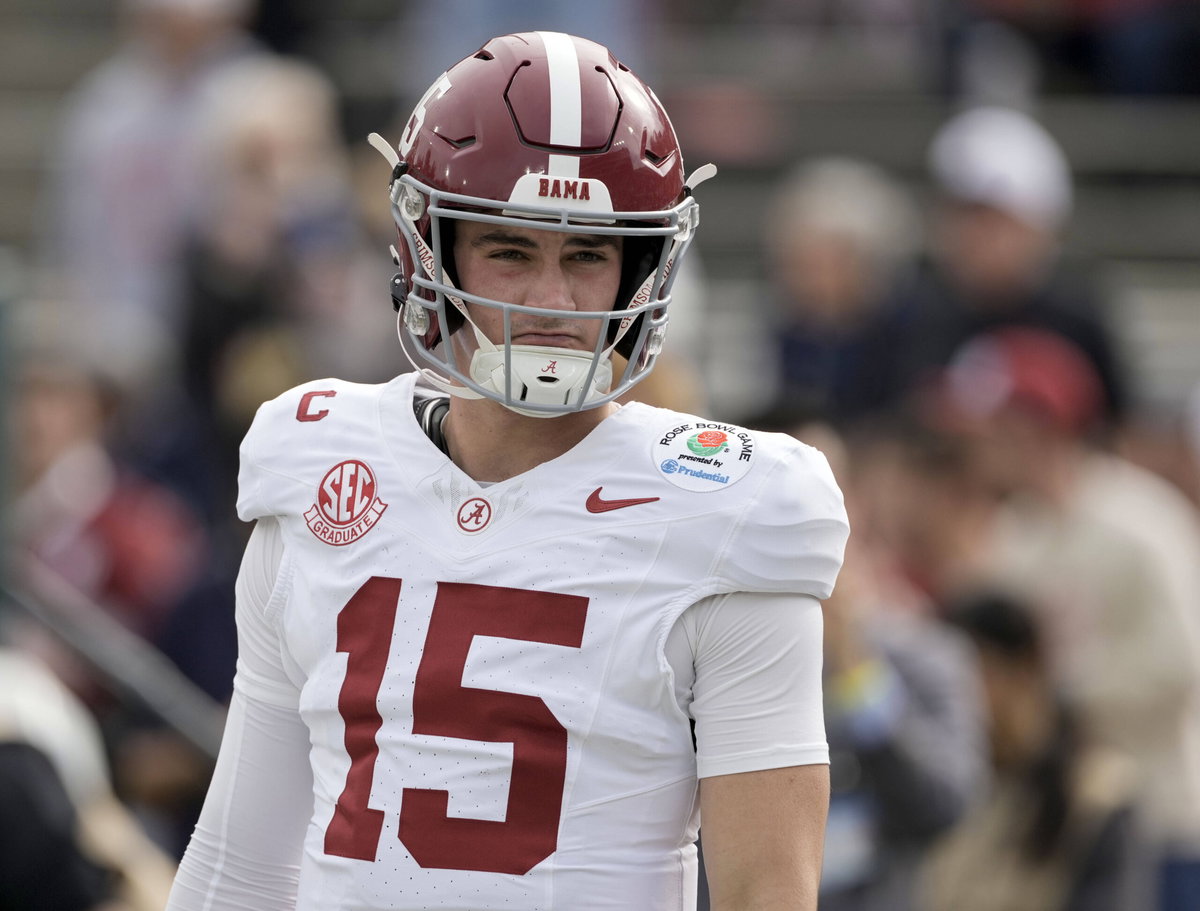
Ty Simpson, QB, Alabama
Some people are high on Ty Simpson, and some people are very low on Ty Simpson. I am very much on the low side, and I don’t really understand the hype. He’s very accurate and smart, I’ll give him that, but he doesn’t have an elite arm, and he profiles much more like a structure-dependent timing passer than a quarterback who can consistently create outside of it, and he played very, very poorly down the stretch.
Simpson’s first nine games were pretty good, but when it got to crunch time, he really struggled. Just look at how he played in his first nine games compared to his last six. When the lights got brighter and Alabama needed him to step up, he just didn’t.
| Stats | First 9 Games | Last 6 Games |
| Completion Percentage | 69.2% | 60.4% |
| Passing Yards Per Game | 273.3 | 184.3 |
| Passing Touchdowns | 20 | 8 |
| Interceptions | 1 | 4 |
| Points Per Game | 32.7 | 24.7 |
| Win-Loss | 8-1 | 3-3 |
For those of you saying, “Well, the competition got tougher, of course his numbers dropped,” yeah, it did. But the competition is only going to keep getting tougher once he gets to the NFL. That’s not an excuse for playing worse down the stretch. If anything, late-season regression is exactly what scouts look for when trying to separate quarterbacks who can manage games from quarterbacks who can elevate offenses once defenses start disguising coverage and shrinking throwing windows.
The College Football Playoff quarterfinal against Indiana was probably the clearest example of that concern. Alabama’s passing offense never found rhythm, Simpson finished with just 67 yards before exiting with a rib injury, and the staff eventually turned elsewhere trying to generate offense. Even accounting for the injury, that’s not the kind of playoff showing teams expect from a projected first-round quarterback.
Another reason I’m very low on Simpson is that he’s started 15 games in his college career. Typically, NFL scouts want to see 25-30+ college starts to feel good about a prospect. That’s not just a casual preference either, it traces back to long-standing evaluation benchmarks like Bill Parcells’ quarterback rules, which treated roughly 30 starts as the comfort threshold before projecting NFL readiness. There’s a direct correlation between the number of college starts you have and how good you are early in your career, so let’s take a look back at how many starts every quarterback drafted in the first round of every draft since 2020 had coming into the league and how their career has looked thus far.
And usually, when teams do draft quarterbacks with limited starting experience early, it’s because they bring rare physical traits that justify the gamble. Simpson’s profile leans more toward efficiency and decision-making than elite arm strength or top-tier athletic upside, which makes the limited-starts concern harder to ignore.
In 2025, two quarterbacks were selected in the first round: Jaxson Dart and Cam Ward. Dart was a three-year starter for Ole Miss and played in 45 games, and he’s looked pretty good so far. Ward was also a three-year starter at Washington State and Miami, and if you’re not just a box score watcher, you’d know he had a really good rookie season and showed a lot of flashes.
Imago
January 01, 2026 Alabama Crimson Tide quarterback Ty Simpson 15 in action during the College Football Playoff Quarterfinal between the Indiana Hoosiers and the Alabama Crimson Tide at the Rose Bowl in Pasadena, California. Mandatory Photo Credit : /CSM Pasadena United States of America – ZUMAc04_ 20260101_zma_c04_517 Copyright: xCharlesxBausx
In 2024, we saw six quarterbacks go in the first round, and all of them had 25+ starts. Caleb Williams, Jayden Daniels, Drake Maye, and Bo Nix all started 25+ games in college and all look like franchise quarterbacks. The only guy in this class who had 25+ starts and hasn’t looked great is Michael Penix Jr., who has suffered two injuries early in his career, and J.J. McCarthy, who many doubted heading into the draft anyway. So far, we’re 6-for-8 on guys with 25+ starts panning out.
In 2023, Bryce Young and C.J. Stroud both came into the draft with two years of starting experience and went first and second overall. They’ve both had their struggles early in their career, but they’ve also flashed at times and are still starters heading into year four. As for Anthony Richardson, who made 13 starts in college, he is basically the third-string quarterback for Indianapolis. Richardson is a good example of the risk teams take when they bet on upside without experience. The physical ceiling was obvious, but the developmental runway has been longer than expected.
Kenny Pickett was the only quarterback selected in the first round of the 2022 draft class, and while he had plenty of starting experience, he did not pan out in the league. But to be fair, not many people thought he should’ve been a first-rounder; Pittsburgh just panicked and made a bad pick.
Of the four quarterbacks drafted in the first round in 2021, Trevor Lawrence and Zach Wilson were the only two who met the 25+ start threshold. Lawrence has gone on to become a high-end starter, while Wilson is a journeyman backup trying to get another chance. The other two quarterbacks taken in round one, Justin Fields and Mac Jones, both started fewer than 25 games and are no longer starters in the league.
Finally, in 2020, four quarterbacks were taken in the first round of the NFL Draft: Joe Burrow, Justin Herbert, Tua Tagovailoa, and Jordan Love. Burrow, Love, and Herbert are all still starters in this league, and started over 25 games in college. Tua, the only one no longer starting in the NFL (or maybe he is with Atlanta? Who knows, but he certainly isn’t as good as the others), did not meet that threshold with 24 starts.
So let’s tally them all up. Of the 20 quarterbacks taken in the first round since 2020, 16 of them have started 25+ games, and 11 of them are what I would consider a “hit” (and if you consider Bryce Young and C.J. Stroud a hit, it could be 13 of 16). That’s a 68.8 percent success rate. Of the four who didn’t start 25+ games in college, only one of them (Tua Tagovailoa) has a chance to start next year, and it’s only because Michael Penix might not be ready for the start of the season. That’s a 0 percent success rate (0r 25 percent if you’re convinced Tua wasn’t a miss).
It’s clear that NFL teams don’t like to take quarterbacks with under 25+ starts in college, and when they do, they pretty much never work out. Tua is the only one whose had a somewhat successful NFL career, but the Miami Dolphins gave up on him for a reason. The other three – Zach Wilson, Kenny Pickett, and Anthony Richardson – aren’t even considered good backups.
And that’s what makes Simpson a difficult projection as a first-round quarterback; he doesn’t bring the kind of elite physical ceiling teams usually bet on when they’re drafting an inexperienced passer early.
Could Simpson be the exception to this rule? Sure, but I just don’t see that happening.
Keldric Faulk, DE, Auburn
If you’ve watched any of our live videos over on EssentiallySports’ YouTube channel, you’ll know I’m not a fan of Keldric Faulk. I never understood the top-10 hype early in the draft process, and as we get closer to the draft, others are starting to agree with me. Most still believe he’ll go in the first round, but he probably won’t be selected until the 20s. And a big reason for that slide is simple: teams increasingly see him as a traits-based projection rather than a finished pass rusher who can step in and produce immediately.
I get the appeal to Faulk. He’s 6-foot-6, 276 pounds, giving him the ideal frame for a modern-day defensive end. He’s also a pretty dang good athlete, running a 4.67-second 40-yard dash at his pro day to go with a 35-inch vertical and a 9-foot, 9-inch broad jump at the NFL Combine. However, for a guy who is relying on his athleticism to get him drafted, those numbers aren’t fantastic by any means. They’re solid for his size, but they’re not the kind of elite edge-testing numbers that usually push raw pass rushers into the top half of the first round.
When I say he’s relying on his athleticism to get him drafted, it’s because he didn’t produce in college. His sophomore season was pretty good, finishing with 45 pressures and seven sacks, but he completely fell off the map this year and finished with just two sacks. In fact, his 2025 pass-rush grade lagged well behind his run-defense grade, which lines up with what shows up on tape: a defender who can control the edge but still doesn’t consistently finish at the quarterback. I know he plays in the SEC, so he faced some really tough competition, but the NFL is tougher, and how many guys are getting drafted in the first round with 10 career sacks? Not many. Across three seasons, he finished with just 10 total sacks despite starting more than 30 games, which is unusually low production for a projected early first-round edge.
To Faulk’s credit, he is already one of the better run defenders in this class and actually led all FBS edge defenders with 62 run stops since 2023. That gives him a real floor as an early-down defender. But early-down defenders typically aren’t what teams are targeting in the top 10 unless they also bring proven pass-rush juice.

Imago
NCAA, College League, USA Football: SEC Media Day Jul 15, 2025 Atlanta, GA, USA Auburn Tigers defensive lineman Keldric Faulk answers questions from the media during SEC Media Days at Omni Atlanta Hotel. Atlanta Omni Atlanta Hotel GA USA, EDITORIAL USE ONLY PUBLICATIONxINxGERxSUIxAUTxONLY Copyright: xJordanxGodfreex 20250715_jla_th5_049
Another concern is how much of his projection depends on what he might become as a pass rusher rather than what he already is. Multiple scouting reports point to inconsistent hand usage, high pad level, and a slower first step off the snap as reasons his pressure numbers haven’t translated into sacks yet. Those are coachable issues, but they’re still projection bets.
As a New Orleans Saints fan, I’ve seen this play out many times. Marcus Davenport and Payton Turner were two pass rushers the Saints drafted based on their athletic upside, and they never panned out (and this was during their Super Bowl window). Both players were drafted largely because of frame, length, and movement traits rather than dominant college sack production, and neither ever developed into consistent double-digit sack threats. That’s the exact risk profile Faulk carries right now.
Faulk is also one of the youngest edge defenders in this class, which helps explain why teams are still willing to gamble on the upside. But youth only raises the ceiling; it doesn’t lower the risk if the pass-rush toolbox isn’t already there.
I just can’t get those two guys out of my head when thinking about Keldric Faulk. Maybe he actually reaches his potential, but if he doesn’t, whoever drafted him is going to look very stupid.
Cashius Howell, DE, Texas A&M
Cashius Howell is quite the opposite of Keldric Faulk. He’s a good athlete, but he actually has the production to match. Over his last three seasons in college, Howell has logged 25 sacks, including 11.5 in 2025 as a member of the Texas A&M Aggies. That total includes double-digit sacks after transferring up from Bowling Green to the SEC, which is usually the quickest way to test whether mid-major production is real or inflated. In Howell’s case, the production held up against better competition. He proved that his production at Bowling Green wasn’t a fluke and that he can compete against some of the best talent in the country, but if you’re concerned about Rueben Bain’s arms, you need to be terrified of Howell’s.
Howell’s arms measured in at 30 1/4 inches at the NFL Combine. Say what you want about combine measurements always being shorter than pro day measurements, but he measured in with the shortest arms of any defensive end at the NFL Combine since at least 1999. Yeah, it’s that bad. For context, most starting NFL edge defenders typically fall in the 33- to 35-inch range, and even many teams’ internal thresholds start around 32 inches for outside pass rushers. Howell isn’t just below average but also well outside the historical comfort zone for the position.

Imago
NCAA, College League, USA Football: Auburn at Texas A&M Sep 27, 2025 College Station, Texas, USA Texas A&M Aggies defensive end Cashius Howell 9 defends in coverage against the Auburn Tigers during the first half at Kyle Field. College Station Kyle Field Texas USA, EDITORIAL USE ONLY PUBLICATIONxINxGERxSUIxAUTxONLY Copyright: xMariaxLysakerx 20250927_FB_NCAA_AUBURN_TAMU_MLC_4088
You want to know some of the names of the other edge rushers with sub-31-inch arms at the combine? Nate Williams, Sutton Smith, and Tyree Johnson (and Rueben Bain, of course). That’s the end of the list. If you know who any of those players are, it’s probably because you watch college football, because none of them amounted to anything in the NFL. And that’s really the problem here. There just isn’t a meaningful track record of players with this kind of length succeeding as full-time NFL edge defenders. When teams bet on players this far outside prototype thresholds, they’re usually betting on rare athletic traits to compensate.
I hate to be the guy who’s worried about arm length, because I think Howell and Bain could be good players in the league, but if you draft either one in the first round, you’re counting on them being complete outliers. Arm length matters more at edge than almost any other defensive position because it affects how quickly a rusher can establish first contact, control tackles at the point of attack, and finish around the corner without getting washed past the pocket. Shorter rushers can still win, but they usually have elite bend or twitch to compensate, and Howell’s testing profile doesn’t clearly put him in that rare category. Nobody has ever succeeded as an edge rusher with that short of arms, so I’m not counting on Howell being anything special in the league.
Peter Woods, DT, Clemson
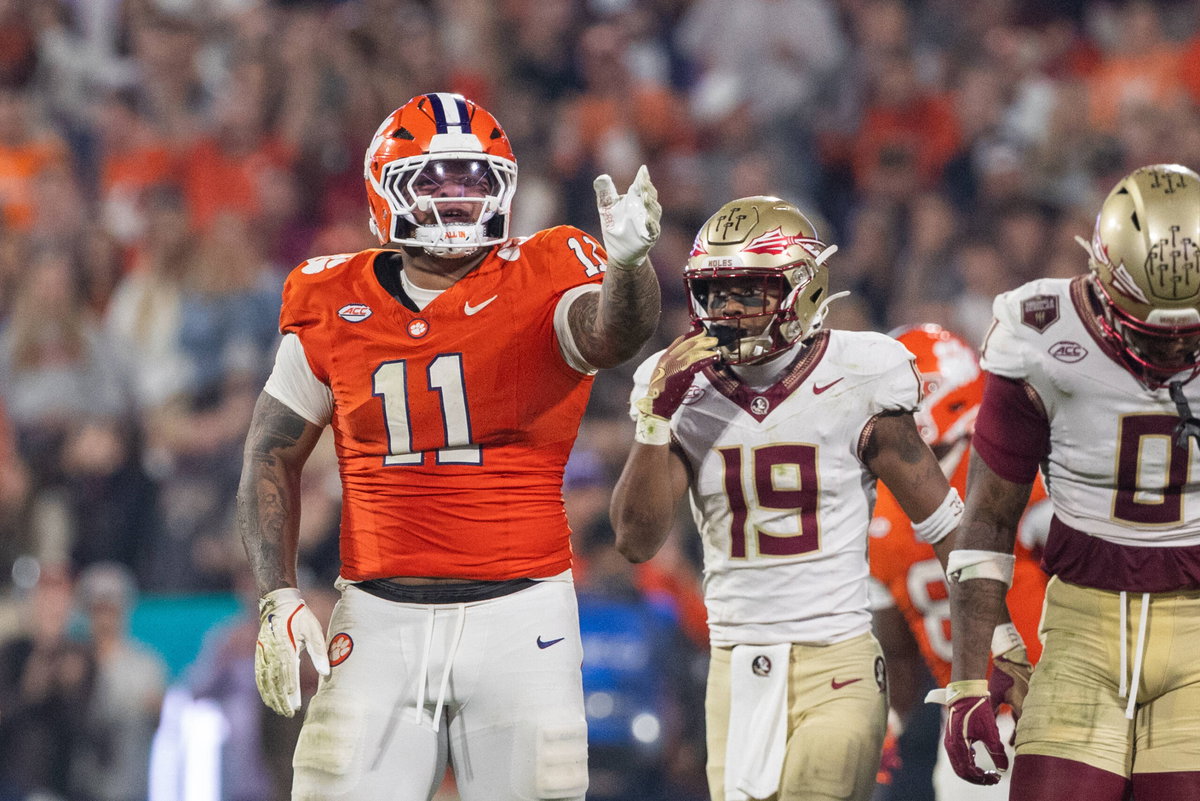
The Peter Woods hype has died down significantly since the start of the college football season, but I don’t get why some people still think he should be a first-round pick. What did he do last year to be worthy of that title? Absolutely nothing. And that’s especially noticeable because the early hype around Woods came from how disruptive he looked as a freshman, when he flashed interior penetration ability that suggested future top-10 upside. The problem is that the expected second-year leap never really came. And on top of that, he was supposed to be this athletic freak, but he didn’t even test well.
In 2025, Woods totaled 30 tackles, 14 pressures, and two sacks. That is EXTREMELY underwhelming for a guy tabbed as a top-five pick entering the season. Interior defenders don’t always need huge sack totals, but first-round defensive tackles almost always show consistent backfield disruption, and Woods simply didn’t do that this year. He earned a 65.4 pass rush grade and took a step back as a run defender, missing nearly 20 percent of his tackles and seeing his run defense grade drop from an 87 in 2024 to a 74 in 2025. For a player whose projection relies heavily on being a disruptive interior presence, that kind of regression raises real questions about whether the sophomore breakout people expected is actually coming.
Even after his disappointing season, people were still high on him because of his athletic traits. But he didn’t perform at the combine, opted out of the 40-yard dash at his pro day, and recorded a 29-inch vertical and an 8-foot, 8-inch broad jump. He’s also only 6-foot-2 and weighs 302 pounds. You can’t be 300+ and expect to be a terrific athlete. And when interior defenders go in the first round at that size, it’s usually because they show rare explosion numbers: quick first steps, elite jumps, or dominant testing profiles that translate to interior pass-rush upside. Woods’ testing didn’t really support that kind of projection.
Imago
NCAA, College League, USA Football 2025: Florida State At Clemson Nov 08 November 8, 2025: Clemson Tigers defensive tackle Peter Woods 11 celebrates after getting a first down against the Florida State Seminoles in the second half of the NCAA Football matchup at Memorial Stadium in Clemson, SC. Scott Kinser/CSM Credit Image: Scott Kinser/Cal Media Clemson Sc United States EDITORIAL USE ONLY Copyright: xx ZUMA-20251108_zma_c04_241.jpg ScottxKinserx csmphotothree440242
Modern first-round defensive tackles who succeed at roughly this size, players in the 3-tech mold rather than nose tackles, usually separate themselves with either elite get-off or consistent penetration production. Right now, Woods’ evaluation still leans more on what he looked like early in his Clemson career than what he actually showed in 2025.
No part of me wants anything to do with Peter Woods in this draft. I’d easily take Kayden McDonald and Lee Hunter over him, and if Caleb Banks wasn’t so hurt, I’d take him too. At this point, drafting Woods early means betting on tools returning rather than trusting what he most recently put on tape, and that’s not usually how safe first-round defensive tackle evaluations are built.
Zion Young, DE, Missouri
Zion Young is getting a lot of round one hype right now, but I think the consensus on him needs to be much lower. I think he could be a fun day two prospect, but I don’t believe he should be a top-32 pick. Most of the first-round momentum behind Young right now is being driven by his senior-year jump rather than a long track record of disruption, and teams usually want to see more than one season of high-level production before investing a premium pick at edge.
Young was a late bloomer. Over his first two seasons at Michigan State, he racked up 2.5 total sacks. Then, in his first year at Missouri, he only recorded 2.5 sacks. It wasn’t until the senior season that he really broke out, but he still finished 2025 with just 6.5 sacks. That’s 11.5 sacks over four years, which doesn’t exactly look great to NFL teams. Even when edge rushers develop later in their careers, first-round prospects typically show either sustained pressure production or clear year-to-year growth earlier than Year 4. With Young, the breakout came late and wasn’t dominant enough statistically to erase the earlier quiet seasons.
To his credit, Missouri used him in a variety of alignments across the defensive front, which helped his snap counts and versatility, but it also means the evaluation is based more on flashes and traits than consistent pass-rush wins.

Imago
NCAA, College League, USA Football: SEC Media Day Jul 17, 2025 Atlanta, GA, USA Missouri Tigers defensive end Zion Young talks to the media during the SEC Media Days at Omni Atlanta Hotel. Atlanta Omni Atlanta Hotel GA USA, EDITORIAL USE ONLY PUBLICATIONxINxGERxSUIxAUTxONLY Copyright: xJordanxGodfreex 20250717_jhp_th5_0212
Young also isn’t as good an athlete as someone like Keldric Faulk. He ran a 4.77-second 40-yard dash at his pro day, which would’ve ranked 15th out of 19 edge rushers at the combine. He didn’t test in the vertical or broad jump at his pro day, but he has never been labeled as a great athlete. And when edge defenders are projected in Round 1 without elite production, teams usually expect top-tier testing numbers to support the upside argument. Without those explosion metrics, it becomes harder to justify projecting him as a high-end NFL pass rusher rather than a rotational developmental edge.
At roughly 6-foot-5 and around 260 pounds, Young has the frame teams look for on the edge, but the testing profile didn’t clearly separate him from the middle tier of this year’s edge class. That’s typically where Day 2 value starts to make more sense than Round 1 investment.
Young also had some legal trouble. He was pulled over for driving under the influence and speeding in December 2025, so that’s just another blemish on his record. Incidents like that don’t automatically remove a player from first-round boards, but they do become part of the evaluation process, especially for prospects whose case already depends heavily on projection rather than résumé strength.
I’m not as low on Young as the other four guys on this list, but I don’t believe he’ll ever live up to his first-round price tag, if he’s taken that high. Right now, his profile looks much more like a developmental Day 2 edge with upside than a plug-and-play first-round pass rusher.