
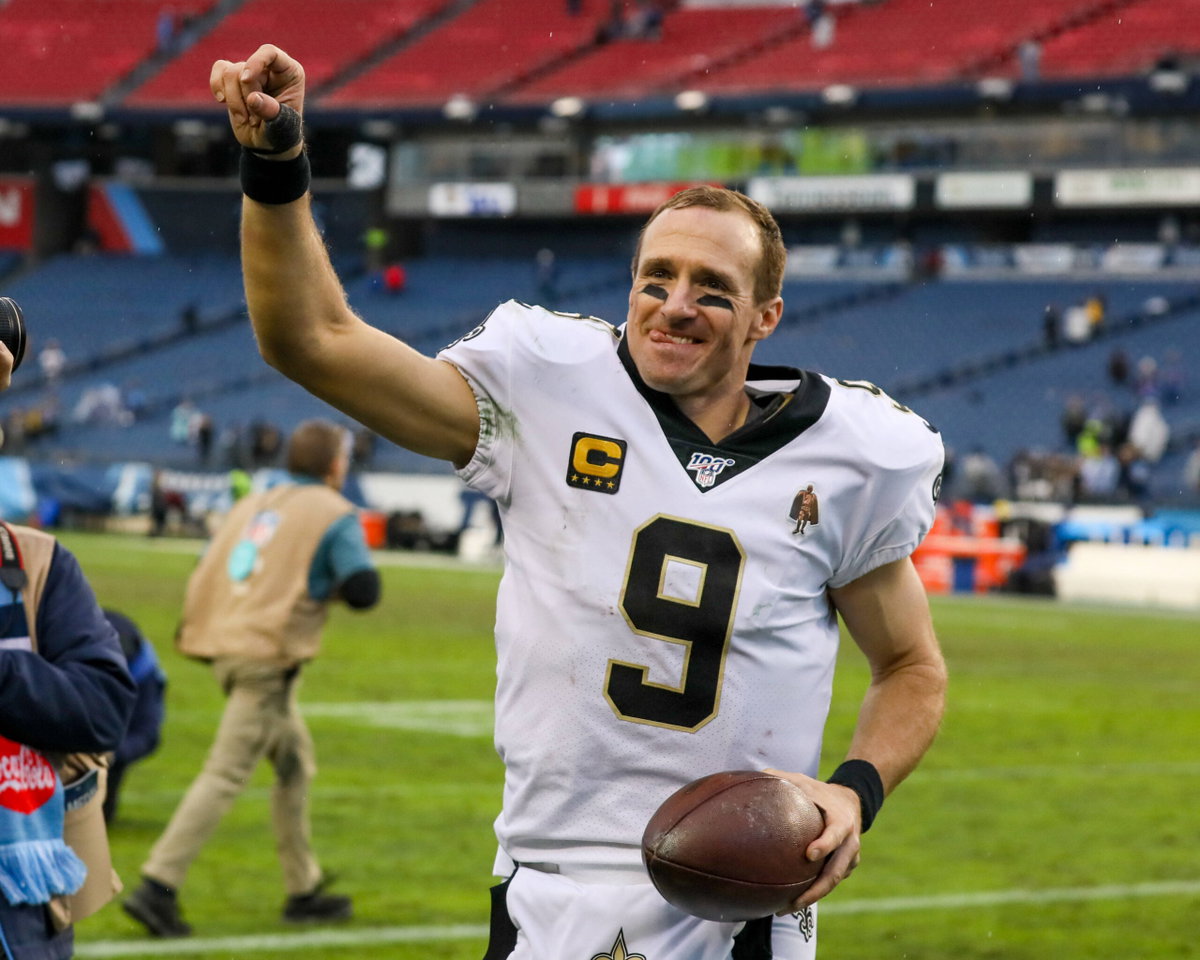
After a legendary career, New Orleans Saints icon Drew Brees will finally get to put on the gold jacket and see his Hall of Fame bust in person at Canton this August. Having been one of the most prolific passers in NFL history, the former quarterback was bound to get the honor. Fans saw him retire as the NFL’s all-time leading passer and completion percentage leader, a feat not many get to see tacked on to their legacies.
Watch What’s Trending Now!
Over the next five weeks, we at EssentiallySports are going to be honoring the five HOF inductees. This week, we’re obviously starting with Drew Brees, but we’ll also be honoring the legendary Larry Fitzgerald, Roger Craig, Luke Kuechly, and Adam Vinatieri here shortly.
Brees’ career isn’t short of a Hollywood-worthy script. From looking at absolute uncertainty in his early years to becoming a local hero for New Orleans, the quarterback has given us lots of memories to look back on. Here are my picks for the best of his 20-year-long career.
Miami or New Orleans?
USA Today via Reuters
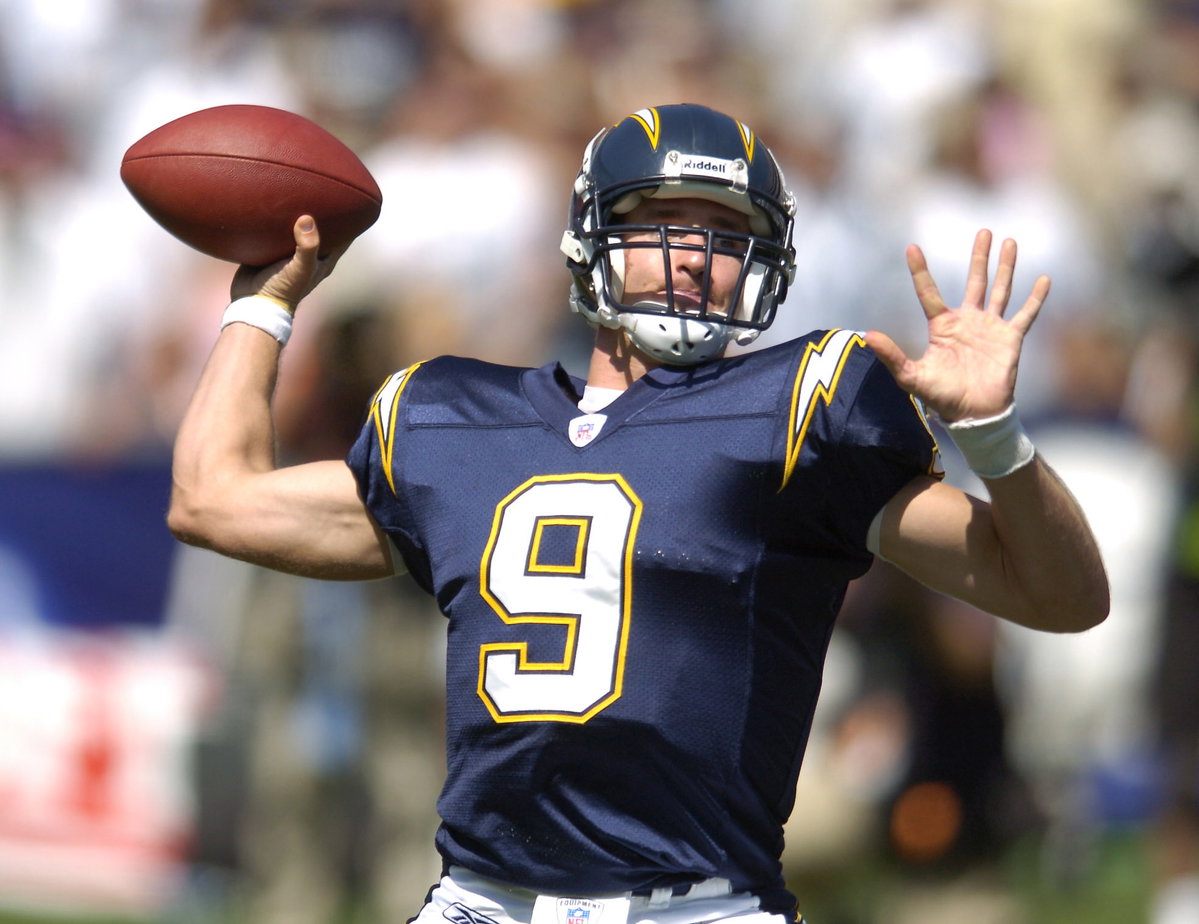
Sept. 11, 2005; San Diego, CA, USA; San Diego Chargers QB Drew Brees throws a pass in 1st half action against the Dallas Cowboys opening the 2005 NFL season at Qualcomm Stadium. Mandatory Credit: Photo by Andrew T. Malana-USA TODAY Sports Copyright (c) 2005 Andrew T. Malana
Drew Brees spent the first five years of his career with the San Diego Chargers, the team that drafted him back in 2001. However, after five seasons and a gruesome shoulder injury, the Chargers let him test the waters in free agency.
Two suitors quickly separated themselves from the pack: the Miami Dolphins and the New Orleans Saints. The former Charger wanted to go to Miami for a very valid reason: Nick Saban. Brees visited the Dolphins, and things went well. However, the Dolphins closed the door on him.
Before he could sign with Miami, the former QB needed to pass a physical. Unfortunately (at least at the time), Miami’s doctors failed him and said he only had a 25 percent chance of playing football again. Obviously, the Dolphins passed on Brees, leading to him signing with the Saints.
The Saints had just hired Sean Payton to be their next head coach. They were coming out of a grim year that season, and were still reeling from the impact Hurricane Katrina left on New Orleans. Payton and the Saints’ top brass made a gamble by signing Brees on a six-year, $60 million contract. Everyone knows how his story goes from there.
Brees would go on to lead the Saints to their first and only Super Bowl title a few years later and would end his career as one of the most prolific passers in NFL history.
The Dolphins, however, would start three different quarterbacks in 2006, with the leader being Joey Harrington, who threw for 2,236 yards, 12 touchdowns and 15 interceptions, while finishing the season 6-10. Saban resigned at the end of the year and went on to take the Alabama job, where he’d become the most successful coach in college football history.
Can you imagine if Miami’s doctors didn’t fail Brees and he ended up with the Dolphins? Who knows what would’ve happened?
Would the Dolphins have been good enough to keep Saban around? Would the Saints ever win a Super Bowl? And, would Alabama have built one of the most successful dynasties in all of college sports?
But one thing’s for certain: this was the best outcome for Brees.
Super Bowl XLIV
Imago
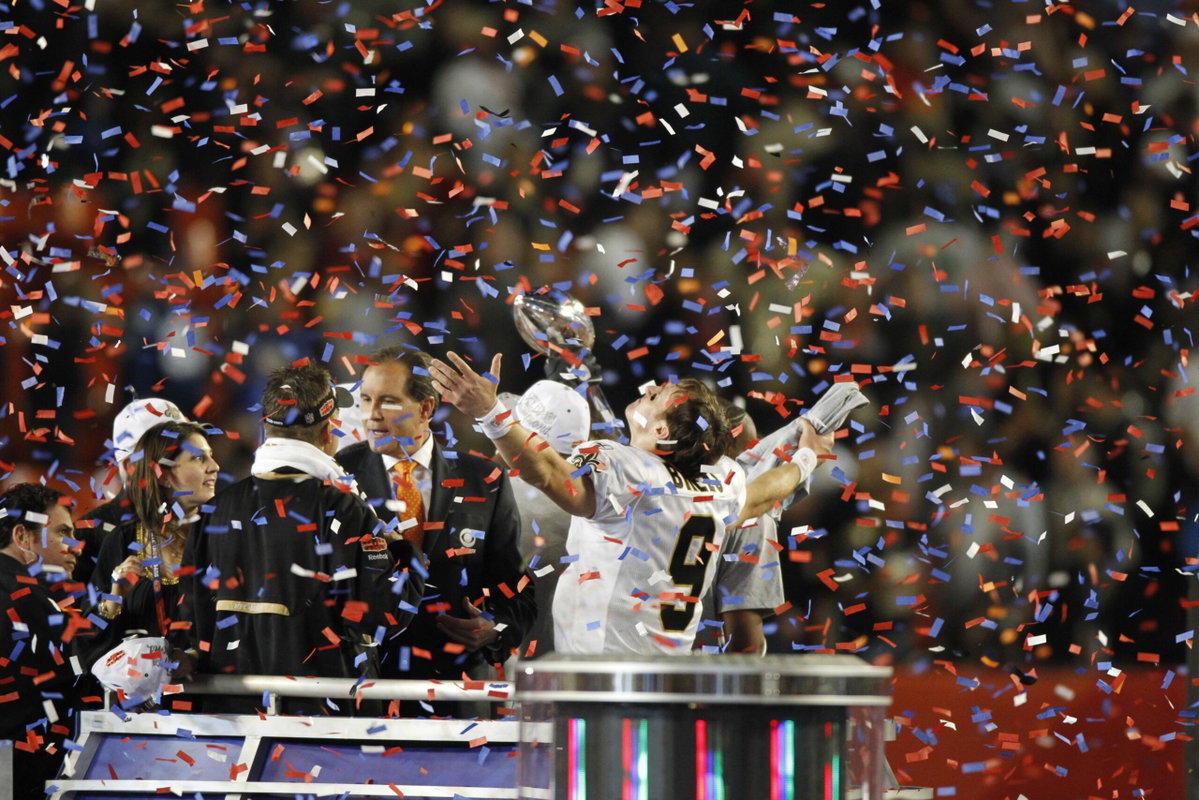
07 February 2010: New Orleans Saints quarterback Drew Brees celebrates on the podium after the New Orleans Saints 31-17 victory over the Indianapolis Colts in Super Bowl XLIV at Sun Life Stadium in Miami, Florida. PUBLICATIONxINxGERxSUIxAUTxHUNxRUSxSWExNORxONLY Icon952100207116`
After a fantastic first season with the Saints, which ended in an NFC Championship berth, New Orleans would miss the playoffs the next two seasons, but it wasn’t because of Brees. The former Charger threw for 4,423 yards and 28 touchdowns in 2007 and 5,069 yards and 34 touchdowns in 2008, but their defenses were just too bad, finishing 25th and 26th in points allowed.
But in 2009, something changed. Brees was his usual self, throwing for 4,388 yards and 34 touchdowns while completing over 70 percent of his passes. But New Orleans’ defense stepped up too, finishing 20th in points allowed. Still not great, but given how good the Saints’ offense was, it was good enough to finish 13-3 and capture the 1-seed in the NFC.
After their first-round bye, the Saints rolled the Arizona Cardinals, 45-14 in the Divisional Round, setting up a date with Brett Favre and the Minnesota Vikings in the NFC Championship game. That game was controversial for many reasons, but the biggest moment came with under 20 seconds left on the clock.
The Vikings had the ball on the edge of field goal range. Instead of trying to pick up a few yards, Favre tried to play hero and ended up throwing an interception to Tracy Porter (remember that name), sending the game to overtime, where the Saints would win with a field goal, sending them to the Super Bowl for the first time in franchise history.
Drew Brees and the Saints clashed with Peyton Manning’s Indianapolis Colts in Super Bowl XLIV, and things weren’t looking great for them. They fell behind 10-0, somehow managing to cut the lead to four before halftime. But Manning and the Colts were set to receive. That’s when Sean Payton made one of the gutsiest calls in NFL history.
Instead of kicking off to Indy to begin the second half, the Saints elected to go for a surprise onside kick. And after a huge chase for the football, the refs ruled that the Saints recovered it.

On this day in #Saints history (2/7/2010), #Ambush happened at Superbowl XLIV! What a tone setter for what was to come in the 2nd half! @thomasmorstead
The Saints would drive down the field and score on a 16-yard touchdown pass to Pierre Thomas, giving them a 13-10 lead early in the second half. The Colts would respond with a touchdown of their own, but from there, it was all New Orleans.
The Saints would march down the field and kick a field goal, get a stop on defense, then go right back down and score another touchdown. After the two-point conversion, the Saints were 24-17 with under six minutes to go. But with the ball in Peyton Manning’s hands, anything could happen. But here’s why I asked you to remember Porter’s name.
Manning and Co. got the ball inside the Saints’ 35-yard line and had a chance to tie the game at 24. But Porter came up huge once again, picking off an in-route intended for Reggie Wayne and taking it 74 yards for the game-sealing touchdown.
Brees was named the Super Bowl XLIV MVP after a 288-yard, 2-touchdown performance where he completed 32 of his 39 (82.1 percent) attempts. To this day, Brees’s 82.1 percent completion percentage is the second-highest in Super Bowl history.
Four years after joining one of the most pitiful franchises in NFL history—one whose fans used to wear bags on their heads and call their team the Aints—in a city that just went through one of the biggest natural disasters our country has ever seen, Brees helped deliver their first Super Bowl title. That’s a career-defining moment if I’ve ever seen one.
The 2011 season

Getty
BUFFALO, NY – NOVEMBER 12: Head coach Sean Payton of the New Orleans Saints yells out instructions at Drew Brees #9 during NFL game action against the Buffalo Bills at New Era Field on November 12, 2017 in Buffalo, New York. (Photo by Tom Szczerbowski/Getty Images)
This is one that Drew Brees and Saints fans everywhere will always remember. And it wasn’t because the Saints went 13-3 for the second time in three seasons.
The 2011 Saints offense might be the greatest we’ve ever seen. Brees threw for 5,476 yards (an NFL record at the time) and 46 touchdowns (third-most in NFL history at the time) while completing 71.2 percent of his throws (again, an NFL record at the time). Statistically, it was the greatest quarterbacking season we had ever seen, but he was inexplicably denied the MVP.
Instead of Brees winning the award, Aaron Rodgers took it home despite being objectively worse. Rodgers threw for 4,643 yards, 45 touchdowns, and nine interceptions while completing 67.2 percent of his throws. That is an incredible season that should win MVP nine times out of 10, but you can’t look me in my face and tell me that Brees wasn’t better that year.
The reason Rodgers won the MVP was that the Green Bay Packers went 15-1 and were the 1-seed in the NFC. I would understand if the Saints went 9-7 and missed the playoffs. But they were the 2-seed in the NFC, right behind Green Bay, and Brees had clearly had better numbers: 1,000 more yards, one more touchdown, and a much higher completion percentage.
Drew Brees’s 2011 season was probably the greatest show from a quarterback we’d ever seen, outside of maybe Dan Marino in 1984. The Saints star missing the MVP honor in 2011 is inexplicable to me.
Brees, unfortunately, was robbed of the honor many more times, having thrown for 5,000 yards five different times. After 2011, he went on to throw for 4,800+ yards in each of his next five seasons, while topping the 5,000-yard mark in three of those. But the 2011 miss was just inexplicable to me, since it really established him as one of the greatest in the game.
October 8th, 2018
Imago
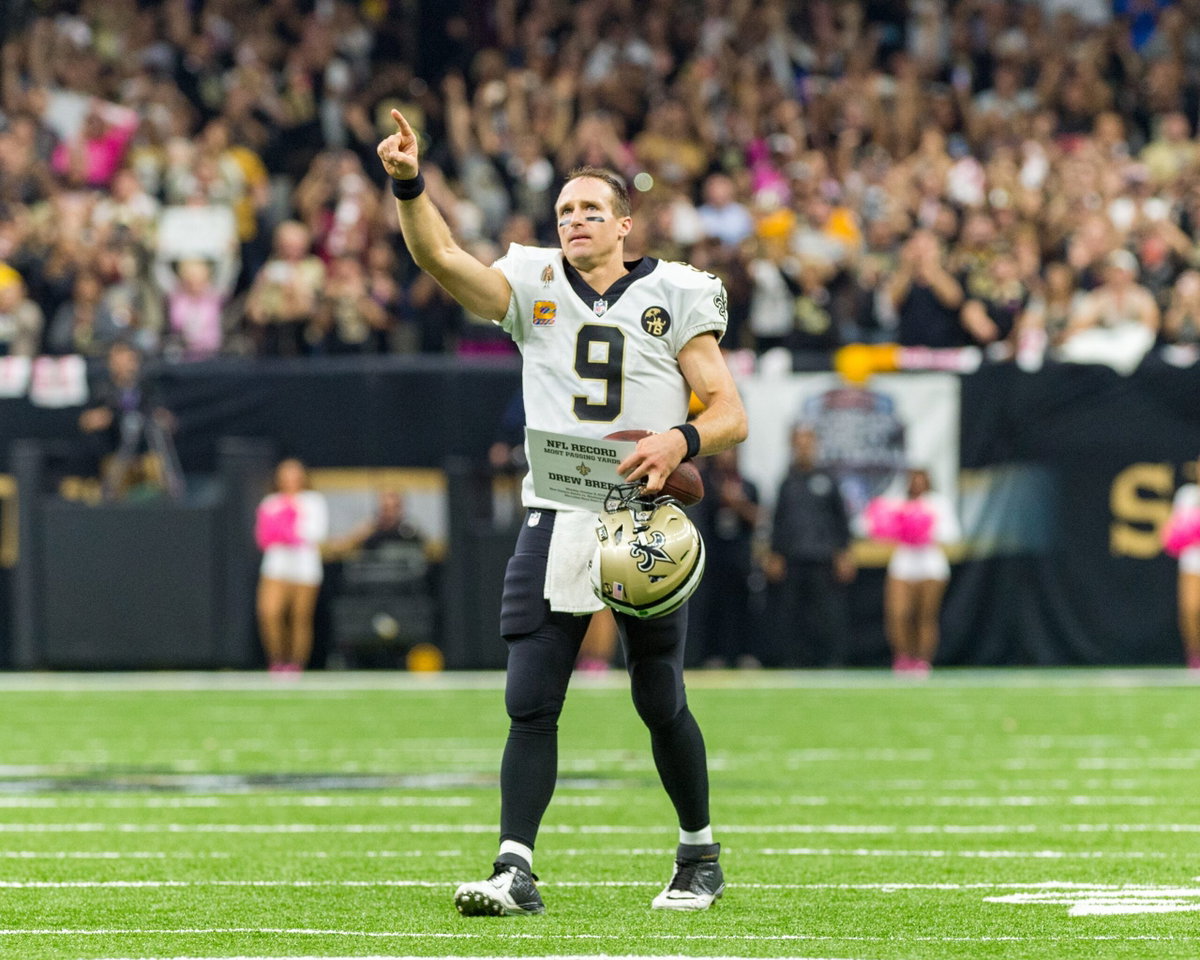
Drew Brees Breaks All-Time Passing Yards Record as The New Orleans Saints take on The Washington Redskins during Monday Night Football at the Mercedes-Benz Superdome. Monday, Oct. 8, 2018.
On October 8th, 2018, the New Orleans Saints hosted the Washington Redskins on Monday Night Football in front of a sold-out Superdome. Saints fans from across the country gathered in the Big Easy to see Brees break the NFL’s all-time passing yards record, which was set by Peyton Manning.
To break the record, Brees needed to throw for 201 yards against Washington. And with their next game being at Baltimore, Brees had extra motivation to get it done in front of the home crowd.

Drew Brees completed his first NFL pass to @terrellfletcher for 7 yds back in 2001 with the San Diego @Chargers . 71,000+ yds later, he threw a TD pass to Tre'quan Smith for 62 yds to become the NFL's all-time passing leader. #GOAT
The Saints got off to a red-hot start, building a 20-6 lead late in the second quarter. After Washington punted with under three minutes to go in the first half, the Saints got the ball back, and Brees took a shot downfield to Tre’Quan Smith, who was wide open down the sideline, for a 62-yard touchdown on the first play of the drive. The score took him well over Manning’s 71,940-yard mark, officially making him the NFL’s all-time leading passer.