
Back in 2014, Cuban, then the owner of the Dallas Mavericks, issued one of the most quoted warnings in sports business history. The NFL, he argued, was making a fatal mistake by aggressively expanding its schedule and flooding the market with more and more games.
Watch What’s Trending Now!
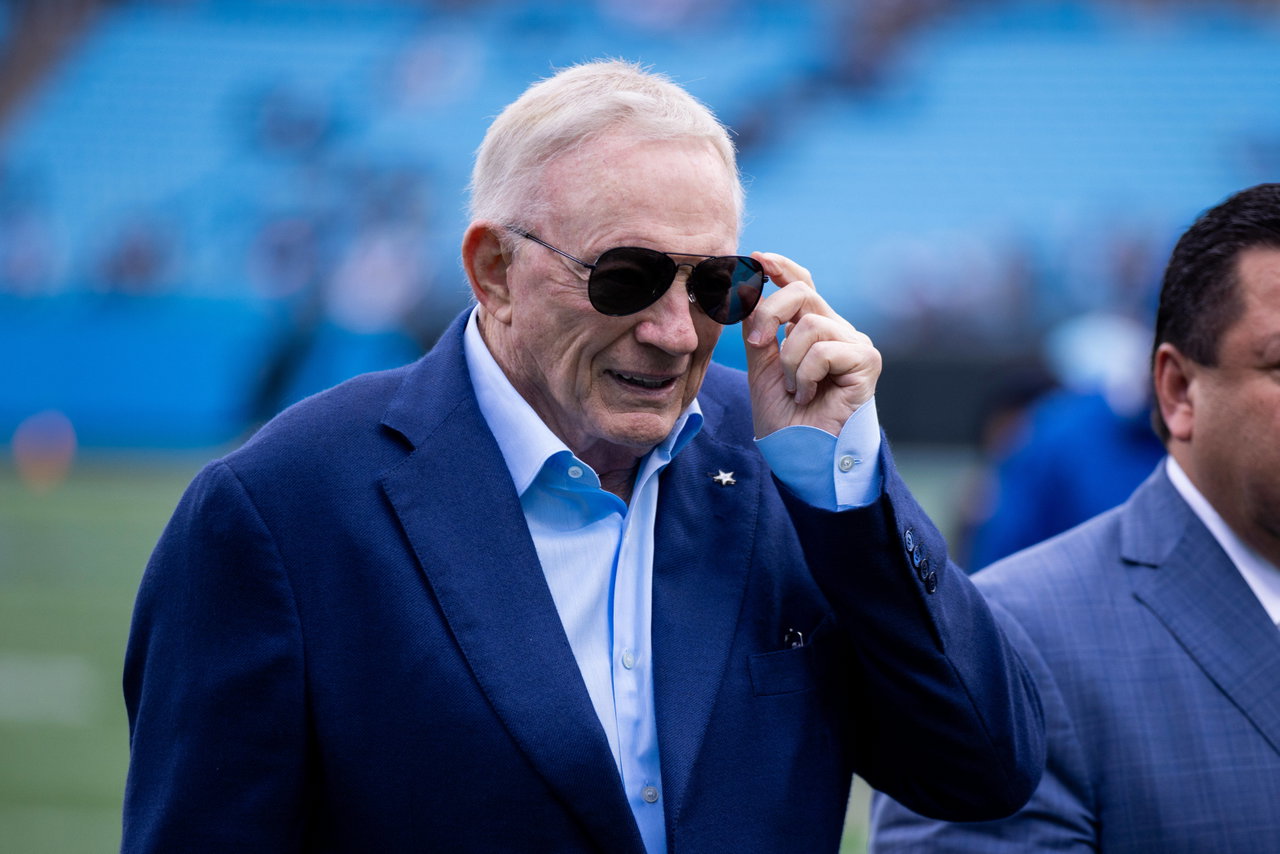
“I think the NFL is 10 years away from an implosion,” Cuban told ESPN bluntly. “Pigs get fat, hogs get slaughtered. And they’re getting hoggy.” Dallas Cowboys owner Jerry Jones was asked directly about Cuban’s famous “hogs get slaughtered” warning during Tuesday’s league meetings, and he fired back with a philosophy of his own.
“When the ducks quack, feed them,” Jones said, as quoted by Jon Machota of The Athletic on X. “We have that demand for our games because of the hard work and great players that we have. We have great demand. We should address it, respond to it, and feed it.”
In other words, the people keep showing up, so why on earth would you stop giving them more? But that wasn’t Cuban’s main point.

Former Dallas Mavericks owner Mark Cuban to ESPN in 2014 on the NFL expanding to have games on more days of the week: "I think the NFL is 10 years away from an implosion. I'm just telling you: Pigs get fat, hogs get slaughtered. And they're getting hoggy." Cowboys owner Jerry Show more
Cuban’s warning was a business lesson on the dangers of greed and overexposure. He argued that the NFL’s power came from scarcity—the fact that games were rare, high-stakes events. By trying to “take over every night of TV” with more Thursday, Friday, and Saturday windows, Cuban believed the league would eventually alienate its audience and dilute its own value.
According to Cuban, expanding the NFL schedule to almost every day of the week would lead the game to be oversaturated. Back in 2006, the NFL had added games on Thursdays and potentially Saturdays. Cuban argued the league was prioritizing short-term TV profits over the long-term interests of the fans. But then, as years progressed to 2026, everything turned opposite to what he had predicted.
The numbers definitely back up Cowboys owner Jones.
While Cuban thought fans would get bored, the opposite happened. As of the 2024-2025 season, the games were broadcast from September to January across four main days of the week: Thursday, Friday, Sunday, and Monday. Average viewership in the 2025 season hit 18.7 million viewers per game, a 10% increase over the previous year. Even more surprising was a 17% jump in preseason ratings, suggesting the public’s appetite for football has not yet peaked.
During this time, the NFL pulled in roughly $23 billion in revenue last season, which is about $9 billion more than what the league made in 2024, a total revenue of $14 billion. This means that the league will easily surpass the goal that Roger Goodell had set.
Goodell had, in the year 2010, set his sights on a massive $25 billion goal by 2027. To get there, the league is pushing into every available time slot, playing games on Fridays, Saturdays, and even Christmas Day, to make sure they own the conversation all week long during the regular season.
This strategy is all about maximizing broadcasting rights and keeping streaming partners like Amazon happy. Streaming expansion has proven particularly lucrative; Amazon’s Thursday Night Football grew its audience by 12% recently, capturing a younger demographic that is essential for the league’s future.
Even though federal law prevents the NFL from airing games on Friday and Saturday nights during the high school and college football seasons, the league is aggressively filling every other gap. But how will the NFL achieve this profit maximization goal of theirs? The answer is obvious: more games.
Jones speaks on the 18-game regular season
The NFL had followed a 16-game schedule for almost half a century. That tradition changed in 2021 when the league moved the games to 17 games. It felt like a massive shift at the time, but the league isn’t done yet.
Only five years into this new era, team owners are already pushing to tack on another week, bringing the total to 18 regular-season games. But how will that be possible? They’d likely scrap another preseason game to keep the total calendar length roughly the same.
One owner who seems very enthusiastic about this adaptation is none other than Dallas Cowboys owner Jerry Jones. But the reason he is citing is a little questionable. Jones isn’t just saying it’s good for business; rather, he’s pitching it as a massive win for the players. Jones argues that an 18th game represents a “better application” of a player’s career and talent by replacing “meaningless” preseason reps with high-revenue regular-season action.
According to Jones, moving a game from the preseason to the regular season creates a bigger scope to earn more. Under the current revenue-sharing rules, both the team owners and the players can make more money by playing for one more day in the regular season.
“My interpretation of the 18th game would be less preseason games. I like that. I think that’s great for the players—emphasize “great” for the players. It increases the viability of the financial aspect, more gate and more money for the players as well,” Jones said.
That’s not all; Jones also believes that playing more games will give the players more exposure to the athletes. But the problem for the Cowboys owner is that the players aren’t exactly lining up to thank him.
The NFL Players Association (NFLPA) is understandably worried about the physical toll an extra week of high-stakes hitting takes on the human body. NFLPA leadership reiterated earlier this year that players currently have “no appetite” for an 18th regular-season game, stressing that any change of that scale would have to come through collective bargaining rather than owner preference alone.
Everything comes down to one last question: whether the players will compromise on their health to make more money or not.
The 18-Game tug-of-war: profit, player safety, and the push for global expansion
The NFL is strongly considering adding an 18th game to the regular season at some point in the future, with such a move gaining support from various owners across the league. It’s a topic that undoubtedly was discussed at this week’s annual owners meeting, and it’s not hard to see why owners would be in favor of the additional game.
More regular-season games mean more money raked in from television broadcasts, ticket sales, sponsorships, and merchandising. It could also aid the league’s efforts to expand internationally, opening up more opportunities for games played overseas. Robert Kraft of the Patriots has even proposed that every team play one international game per year as part of the 18-game structure, aiming for a 16-game international slate in the future.
One means of balancing the schedule while adding an 18th game would be to shorten the preseason by two weeks, something that multiple owners have voiced support for, including Robert Kraft and Carlie Irsay-Gordon of the Colts. However, Irsay-Gordon noted that the preseason remains vital for player development, even if the “fan product” isn’t ideal.
Speaking at the owners’ meetings on Tuesday, Cowboys owner Jerry Jones was asked for his stance on the possible 18-game regular season, and he made clear he thinks it’s a great opportunity for owners, but also players. When asked about the potential benefits for players, Jones said, “I think it’s a better application of their careers and talent. Less preseason. More playing in games that have the right balance of financial reward as well as exposure.”
Jones believes that an additional week of regular-season action would offer more exposure to players, though he is seemingly ignoring the obvious risks that come with adding an 18th game. Another game in the regular season means more wear and tear on players, which significantly heightens the risk of injury. The 2025-2026 season saw a string of devastating injuries that bolstered the NFLPA’s argument: Chiefs quarterback Patrick Mahomes suffered a season-ending ACL injury in Week 15, while Packers edge rusher Micah Parsons and Ravens quarterback Lamar Jackson also dealt with significant late-season ailments.
Beyond the schedule, the “composition” of the game is also under fire. While the league claims injury rates are nearly identical on turf (.43) and grass (.42), the NFLPA notes that 90% of players prefer grass, citing the “energy return” of synthetic surfaces as being much harder on the body.
The NFLPA has openly taken a stance in opposition to an 18-game regular season, though that’s done little to curtail the conversation about the potential schedule adjustment in the future. One idea, floated previously by Kraft, to address the increased risk of injury that comes with an 18-game season would be to add a second bye week. Another idea that was reportedly floated would see the schedule increased to 18 games but would also implement a 17-game cap for most players, preventing them from suiting up in all 18 contests.
Clearly, there’s a lot of details that have yet to be ironed out in regards to the potential expansion of the league schedule, but it’s clear that the idea has gained support from many owners across the league. While Mark Cuban’s 10-year “implosion” clock has run out without a collapse, the tension between profit and player safety has never been higher. As the league eyes the 2027 season for a potential shift, the “ducks” may still be quacking, but the “hogs” are definitely getting hungrier.