
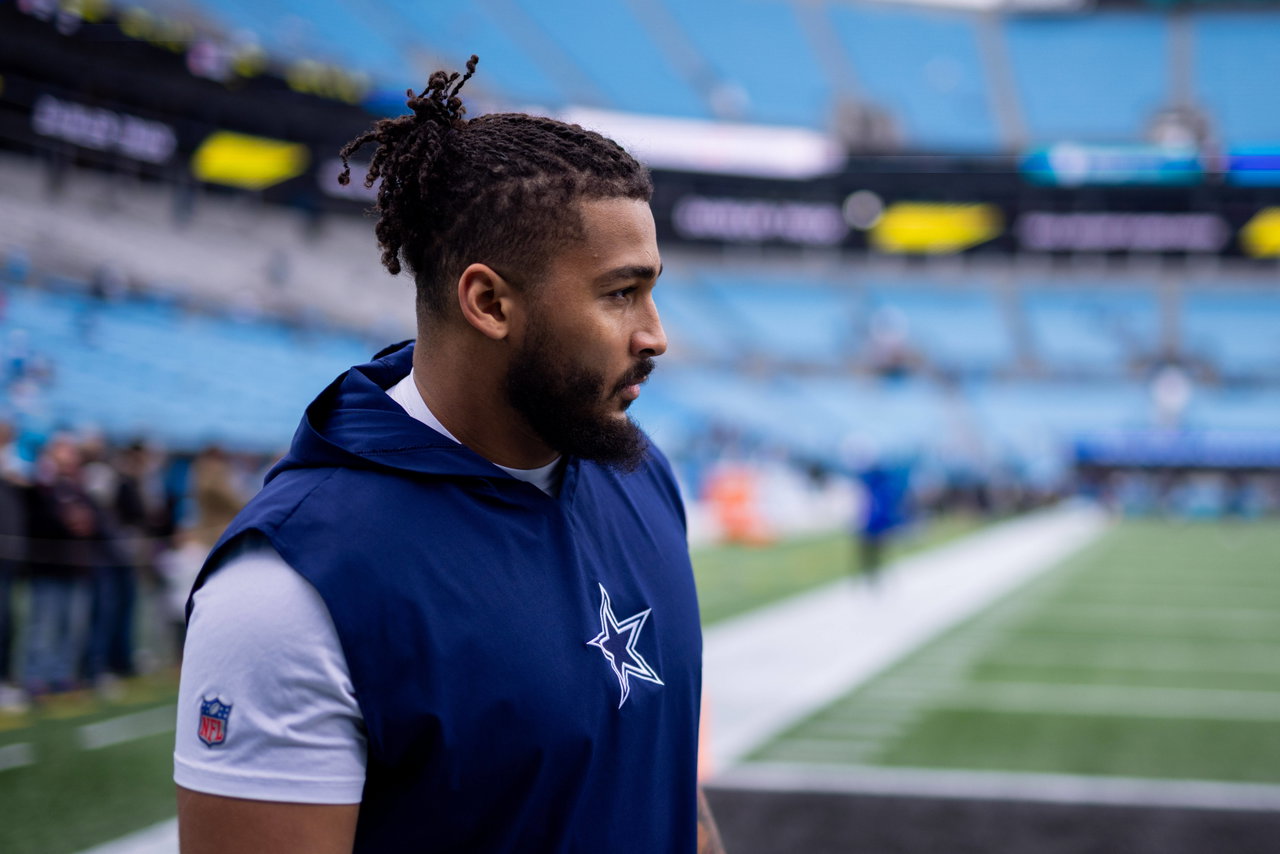
Marshawn Kneeland’s sudden passing was a wake-up call for the football community. His struggles with mental health were unknown to the larger public, but those who were close to him were aware. When he was at Western Michigan University, coaches would inform authorities whenever they were concerned, who, in turn, would conduct welfare checks. Those troubles ultimately led to his untimely death last year, which has pushed the football community to ramp up mental health awareness.
Watch What’s Trending Now!
Hall of Famer Drew Pearson acknowledged that the NFL and NFLPA have been working to make players more aware of the support available to them at a recent event.
“Well, the NFL and NFL Players Association really are making strides with this and dealing with it,” he said. “And what they can do better is to continue to make it part of the process of being part of the NFL, taking it to the next level. You know, a lot of guys come into the league having issues?”

Authorities reported that former Cowboys defensive end Marshawn Kneeland died on November 6, 2025, from an apparent self-inflicted gunshot wound at the age of 24. He had reportedly expressed suicidal thoughts before his death. Earlier that night, his girlfriend, Catalina Mancera, had also shared concerns with authorities about his mental health struggles.
The NFL and the NFLPA have been working on mental health resources for a long time. In 2019, both sides introduced a joint Behavioral Health Agreement that placed mental health support at the forefront of player care.
One of the key parts of this agreement has been that each NFL team is now required to have a licensed and experienced mental health clinician on board who will become a complete part of the team. Even though some teams already had professionals, after the agreement, they all must have one.
Teams must develop Mental Health Emergency Action Plans that ensure players receive help immediately if they need it. This effort resulted in the formation of the NFL and NFLPA Mental Health and Wellness Committee.
The committee consists of experts working on education programs for players, coaches, club employees, and even players’ family members. These programs aim to normalize discussions regarding mental health issues, reduce the stigma surrounding them, and spread awareness about suicide prevention.
Drew Pearson shared a similar message, encouraging younger athletes to speak openly about their struggles.
“So what you’ve got to do, though, is continue to make awareness of the situation and encourage the athletes to come forward with their situation,” Pearson said. “Again, we got a lot of pride. I get around my guys, we all get up like this, and everything like that. We’re all broken down. But when we’re around each other, it’s okay because we’re all like that.”
The league also offers the NFL Life Line, an independent and confidential 24/7 hotline that provides suicide prevention support, crisis management, and immediate guidance for anyone struggling emotionally. Trained crisis counselors are available through the service by phone or through live chat at NFL Life Line.
Voices like Pearson speaking openly about these struggles can help encourage players dealing with mental health challenges to come forward, ask for help, and know they are not alone before things reach a breaking point. Pearson also discussed how his brother’s loss had a profound impact on his life, giving the whole discussion a personal perspective.
Drew Pearson talks mental health through personal loss
The Hall of Famer has personally dealt with tragedy after losing his brother, Carey Mark Pearson, in a car accident more than 42 years ago. In March 1984, Pearson survived the crash after reportedly falling asleep at the wheel, but the loss of his brother left a lasting impact on him.
“Car accident, lost my brother,” Pearson added. “And that set a whole different light on what mental health is all about. Because now I’m dealing with sadness and all these other things, pulling away from people. These traits that I think you doctors, experts recognize when they’re dealing with mental health.”
Pearson admitted that grief changed the way he understood mental health and how easy it is for people to hide what they are truly feeling.
“Everybody is saying [I’m fine], but they don’t know,” Pearson said. “They do not know that you’re just fine. So you keep a lot in. And because of that, you develop a lot of sadness within yourself. Because of that, you start to pull away. That’s my deal.”
Seeking help for mental health issues during Pearson’s time was much more difficult than it is today. But he still charged on and scripted a great career that lasted a decade. He had earned three Pro Bowl selections and been named first-team All-Pro thrice during his career. In 2021, he was inducted into the Pro Football Hall of Fame.
Nowadays, Pearson continues to use his platform to encourage athletes to speak openly about mental health, hoping future generations feel more comfortable asking for help when they need it most.