
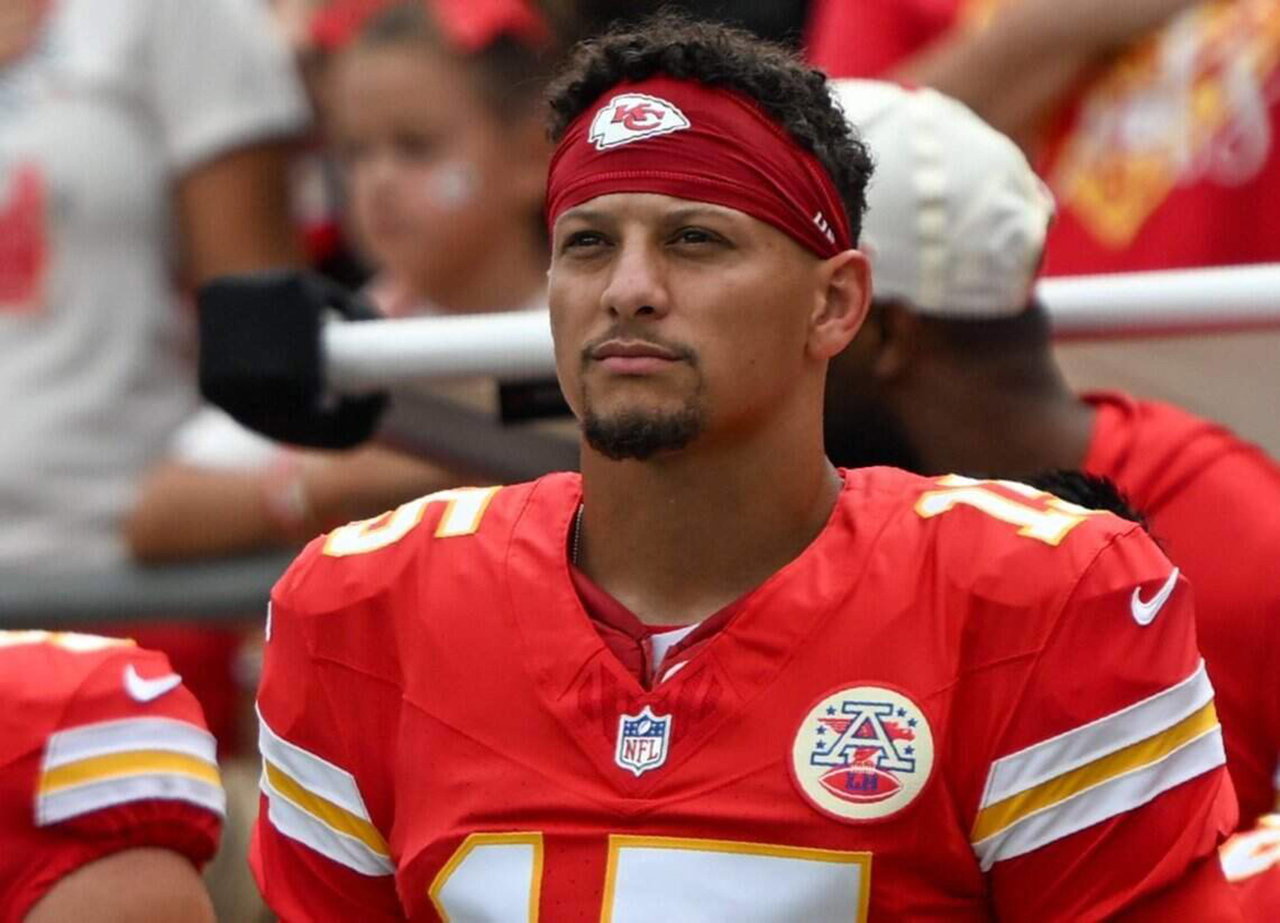
Patrick Mahomes had barely gotten the pass away when Chop Robinson arrived. The Dolphins edge rusher drove the Chiefs quarterback into the turf from behind, with his 265-pound frame coming down on Mahomes as the ball fell incomplete. It was a jarring end to a third-and-9 play from Kansas City’s own 5-yard line, but Mahomes was back on his feet moments later and ready for the next snap.
Watch What’s Trending Now!
The hit was still fresh enough for Andy Reid to joke about it afterward. The Chiefs coach said it looked like Robinson had given Mahomes more than a chiropractor could, with “every bone” in the quarterback’s body seeming to crack. Mahomes had a lighter description of his own, calling it a “natural chiropractor” and admitting that Robinson had “got me pretty good.” Yet neither the quarterback nor his coach treated the hit as something that had taken Mahomes out of the game. He stayed in, and Kansas City kept the drive moving. Then the replay gave the play a second life.
Former NFL quarterback Chase Daniel wasn’t focused on how hard Robinson had hit Mahomes. He was looking at the official standing behind the play. When Daniel slowed the footage down, he pointed to the referee’s hand moving toward his flag while Mahomes was still going down, raising a question about whether the official had already decided to throw it before Robinson’s landing was complete. Former Eagles great Seth Joyner later amplified that concern:
“This is such a bag look for the @NFL & @NFLOfficiating This adds fuel to the conspiracy theories! SMDH,” Joyner wrote on X on October 2.
And that flag was only the beginning of the play’s complication.
Daniel’s point was not simply that the penalty was questionable. He focused on the sequence. In his breakdown, the official appeared to be reaching for the flag while Robinson was still coming through on Mahomes, well before the defender had completed his landing. Daniel himself acknowledged that he believed the roughing call could be defensible under the rule, but the timing of the flag was what caught his attention.
That distinction matters because the NFL’s roughing-the-passer rule does not require a late hit for a flag. A defender who tackles a passer after the throw is expected to avoid landing with all or most of his body weight on him, using his arms or falling to the side where possible. The officials evidently judged Robinson’s finish to have crossed that line.
Robinson’s own explanation fits into that gray area. He did try to get his hands down as he fell, but later admitted he could have done it sooner: “Just put my hands out earlier.” He also made clear that, from his perspective, it was a football play and he had to move on from the decision.
There was another flag on the snap that changes the way the sequence should be read, though. Miami defensive tackle Zach Sieler was called for defensive holding on the same play. That penalty would have given Kansas City an automatic first down even if Robinson had never been flagged for roughing the passer. Kansas City accepted Robinson’s 15-yard penalty instead, moving the ball from its own 5 to the 20.
That does not make the roughing call irrelevant. It changed the field position by an additional 10 yards and gave Kansas City much more room to operate. The Chiefs then turned that possession into a 13-play, 80-yard drive that lasted 6:36 and ended with Harrison Butker’s 34-yard field goal early in the fourth quarter, stretching the lead from 14-10 to 17-10.
But the reaction to the call did not begin and end with one replay. Mahomes has spent years at the center of a much larger argument over how NFL officials handle contact around him, particularly in the postseason.
The Chiefs’ officiating debate has a longer memory
The 2025 AFC divisional round against Houston is one of the clearest examples. Will Anderson Jr. was flagged for roughing the passer after contact with Mahomes, and Henry To’oTo’o was later penalized for unnecessary roughness when Mahomes slid during a scramble. Both calls extended Chiefs possessions, with Kansas City turning them into 10 points. Anderson left the field afterward saying, “We knew it was going to be us versus the refs.” The referee who made Anderson’s call, Clay Martin, later told a pool reporter that Anderson had made forcible contact with Mahomes’ facemask area.
The following week, another disputed moment involving Kansas City became part of the same conversation. Buffalo’s Josh Allen was ruled short on a fourth-and-1 quarterback sneak in the AFC Championship Game. Goodell was asked about that decision at his Super Bowl press conference, where he rejected the broader claim that officials were deliberately helping the Chiefs.
Goodell called the theory “ridiculous,” while acknowledging why officiating had become such a major part of the conversation. FOX rules analyst Mike Pereira, a former NFL officiating chief, went further, calling the idea that officials favor Kansas City a “myth.” He also pointed out a less obvious consequence of the debate: officials know when their work has become part of the story, even if Pereira maintained that it does not change how they officiate.
The numbers, however, make the argument harder to settle with a simple penalty count. A 2025 Ringer review of the Mahomes era found that Kansas City had actually been penalized slightly more than its opponents in the regular season, while the balance shifted sharply in the Chiefs’ favor in the playoffs. Since 2018, the Chiefs had been penalized for eight more infractions than their opponents in the regular season but 21 fewer when postseason games were included.
There is also research pointing in the other direction. A University of Texas at El Paso study published in Financial Review examined more than 13,000 NFL penalty calls from 2015 through 2023 and reported that postseason officiating disproportionately favored the Mahomes-era Chiefs, particularly on defensive penalties that produced first downs, significant yardage or subjective calls such as roughing the passer and pass interference. The study’s findings are part of the debate, not a finding that the NFL has established as evidence of intentional favoritism.
However, Miami still had opportunities after the penalty.
The call did not decide the game by itself
The Dolphins trailed 17-10 late in the fourth quarter but turned the ball over on downs at their own 48 with 5:56 remaining. Mahomes then found Travis Kelce for the touchdown that effectively put the game away, sending Kansas City to a 24-10 victory.
That matters when assessing the weight of the Robinson call. Kansas City benefited from it, but the Chiefs did not simply walk away with the game because of one roughing penalty. Miami failed to convert three fourth-down attempts, while Malik Willis threw for 210 yards and an interception.
There was also a larger problem unfolding for Miami that afternoon. De’Von Achane left in the first quarter with a knee injury and was later diagnosed with a torn ACL that ended his season. The Dolphins were already struggling to generate offense, and they finished the game with only 10 points.
That does not erase the officiating debate. Perhaps the most revealing reaction came from the quarterback at the center of the controversy
Mahomes never treated the hit as an injustice
Mahomes did not complain about Robinson’s hit. Instead, he gave the pass rusher credit for beating the play.
“No, he got me,” Mahomes said. “He got me for sure pretty good.”
He explained that Miami had brought a defensive-line stunt and that he was exposed once he committed to the throw. “When you throw the ball, you’re kind of exposed,” Mahomes said. He then added that he was able to get back up and finish the drive.
Robinson was similarly restrained. He did not insist that the officials had made an outrageous mistake. He simply said he could have gotten his hands out sooner and accepted the ruling.
That leaves the most contentious part of the sequence outside the players themselves: the replay of an official reaching for his flag. That is what Chase Daniel questioned, and it is what Joyner said could add “fuel” to an argument that was already waiting to be reignited.
For Kansas City, the next test comes against the Raiders in Week 4. For the NFL, the Robinson flag is another reminder that with Mahomes, sometimes the whistle becomes a story of its own.