
Denver waited until the fourth quarter against San Francisco to attempt a pass that travelled at least 20 yards through the air. By then, the Broncos were already chasing the game, and Bo Nix had struggled to find his range downfield.
Watch What’s Trending Now!
That wasn’t an isolated problem. Denver had managed just 13 first-half points across its opening four games, with a sputtering run game and too few explosive plays leaving the offense struggling to sustain drives. A 2-2 record kept the season afloat, but the attack was falling well short of what the Broncos needed. Sean Payton has now decided to make a change.
“Just in: #Broncos HC Sean Payton is taking over offensive play-calling duties from OC Davis Webb, he announced today,” NFL Insider Ari Meirov’s X post read on Thursday.
But the struggles ran deeper than one late deep ball, and the numbers weren’t the only concern.
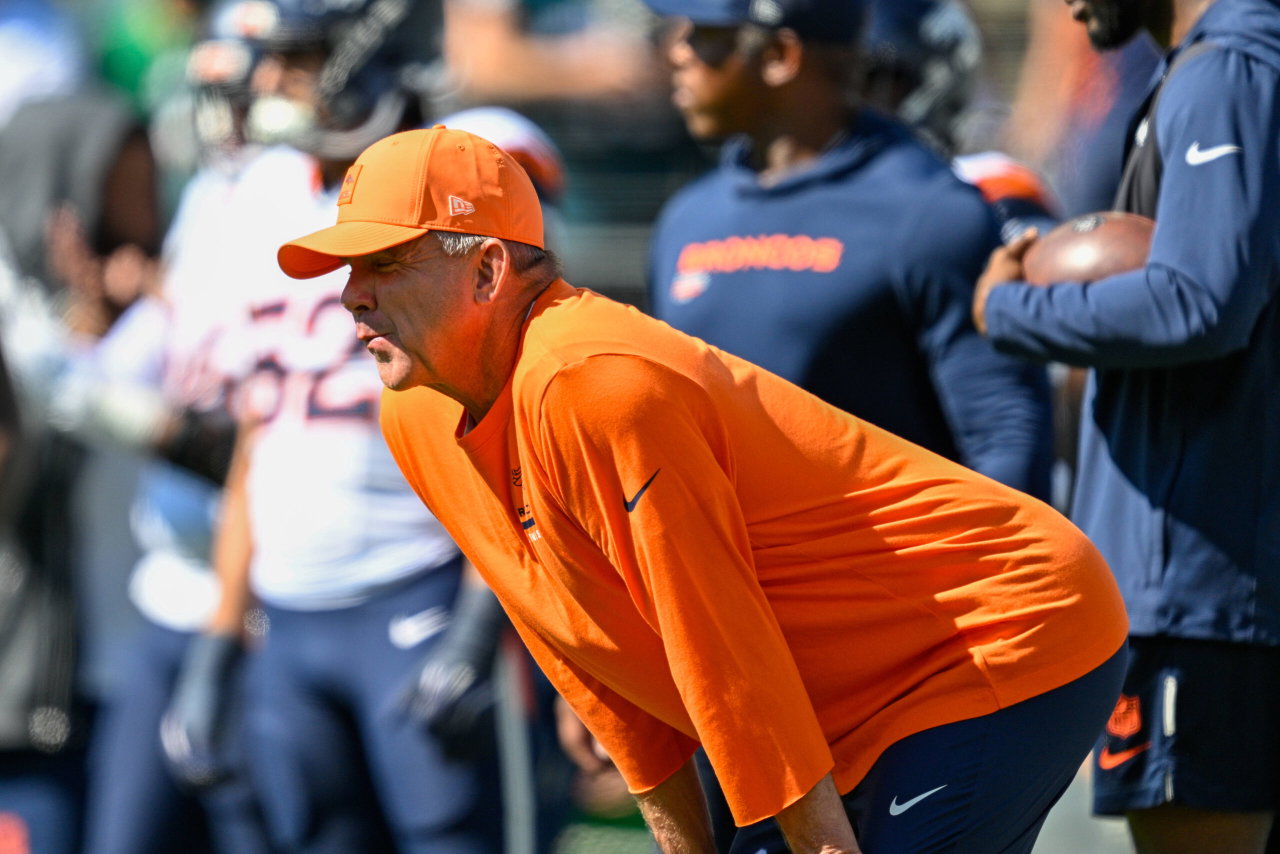
The decision comes just months after Payton promoted Webb to offensive coordinator and made him the Broncos’ primary play-caller for the 2026 season. Webb will remain heavily involved in the offense and game planning, but Payton will take over the play-calling beginning Sunday against the Los Angeles Chargers.
The scale of Denver’s problems becomes clearer when the numbers are put together. The Broncos ranked 27th in both scoring and total offense and 29th in rushing through four games. But the advanced metrics offered a more mixed picture: Denver ranked 21st in EPA per play and 15th in offensive DVOA, according to Denver Sports. The offense was struggling, but it wasn’t ineffective by every measure.
The biggest problem has been the lack of explosive plays. Denver is 29th in plays of at least 20 yards and 30th in explosive plays overall, with only 16 through four games. Nix is also averaging just 6.1 air yards per attempt (per StatMuse), further highlighting the offense’s struggles to create plays downfield.
The running game has offered little relief. J.K. Dobbins averaged 3.5 yards per carry without a rushing touchdown through the first four games, according to The Gazette. Against San Francisco, he didn’t record a carry until early in the second quarter. That left Denver struggling to establish the run while its passing attack was also failing to stretch the field.
Why Sean Payton changed his mind?
Payton spent much of the week insisting that the problem was bigger than whoever was calling the plays. He pointed to execution, first-down efficiency, and the “details” of individual plays rather than simply blaming Webb.
“I think our focus needs to be more on the specific and the detail of each play regardless [of who’s calling the plays],” Payton said on October 8. “I think Davis is very fast, very quick, and understands what we’re doing. I think that the most important job I have is really evaluating the whys. I think collectively, we all, after a game, and after a four-game sample size, certainly this isn’t championship football, what we see. How quickly can we correct those things?”
Payton had already decided on the change by Monday, following Denver’s 24-14 loss to San Francisco, although he announced it publicly on Thursday. The timing matters because the decision followed a game in which Nix completed only one of nine passes travelling at least 10 yards through the air.
But the quarterback’s decisions also came under scrutiny. The Washington Post reported that analysts Dan Orlovsky and Kurt Warner identified plays on which Nix appeared to pass up opportunities to throw downfield. That made it harder to pin the passing game’s problems on play selection alone.
There had been a more specific flashpoint earlier in the season, too. In Denver’s 31-10 Week 1 loss to Kansas City, Webb called an empty formation on third-and-one, with Nix in shotgun and no running back beside him. Fullback Adam Prentice, who had featured in short-yardage situations during the preseason, was split out wide. Nix’s pass fell incomplete, and Denver punted.
Sports Illustrated’s film analysis questioned why Denver had removed the threat of a conventional run on a play that required just one yard. It was one disputed call, not proof that every part of Webb’s approach was flawed, but it gave critics a concrete example to point to.
The receiving game raised another question. Courtland Sutton, who had been a dependable target for Nix on third downs and in the red zone, had just nine catches for 86 yards and no touchdowns through four games. His receiving EPA was minus-12.7, ranking 77th among qualified receivers, according to Next Gen Stats figures cited by The Gazette.
Denver had traded a first-round pick to acquire Jaylen Waddle from Miami, adding another major receiving option. But Sutton’s reduced production still mattered, particularly with Pat Bryant dealing with an ankle injury. Nix offered a reminder of the challenge facing the passing game: “It’s sometimes a little bit tougher to really target one guy and say the ball is going to him, because you get so many different coverages on the other end,” he said, per The Gazette.
The results have left Denver with little choice but to change something.
Still, the offensive problems were not confined to the play sheet. Protection, route execution and the quarterback’s reads all played a part. A coordinator can design a play to create a downfield opportunity, but the line must protect long enough for it to develop, and the quarterback must recognise when the throw is available. Equally, the coordinator has to find ways to give the offense better answers when those plays aren’t working.
That does not mean Payton has lost faith in Webb. In fact, he continued to praise his offensive coordinator after announcing the change.
“I’ve done this long enough where I know when I have a future head coach. And he’s going to be one,” Payton said.
Webb also retained support inside the locker room. Tight end Adam Trautman told Denver Sports that he believed in Webb and argued that the struggles were a collective matter. “Nothing falls entirely on him,” Trautman said. “… It’s everything.”
Webb only received the playcalling job this season after spending the previous three years on Payton’s staff. The Broncos promoted him to offensive coordinator in February, and Payton said at the time that he would not have surrendered the responsibility unless he believed Webb could help the team.
There was a practical reason for the original decision, beyond giving a young coach a chance to develop. Before the season, The Washington Post reported that Payton felt he could sometimes be slow getting plays to the quarterback. Webb’s quicker communication during the preseason gave Nix more time at the line of scrimmage to survey the defense and make adjustments. The hope was that a new voice could improve the offense’s tempo as well as give Webb valuable experience.
The original decision also made sense from a developmental standpoint. Webb had already built a strong relationship with Nix and had worked closely with the quarterback since joining Denver in 2023. Payton believed handing him the offense could help the Broncos and give Webb valuable experience as a future head coach.
The early results, however, failed to deliver the improvement Denver needed. The team had been outscored 43-13 in the first half through four games and did not score a touchdown against San Francisco until the fourth quarter, according to The Gazette. The recurring slow starts were especially concerning because Denver was repeatedly forced to play from behind instead of allowing its offense to dictate the game.
Now Payton is reversing course before the situation gets worse.
The timing gives Denver an immediate chance to test the change against a winless Chargers team on Sunday. The Broncos then face the Seattle Seahawks four days later on Thursday, October 15, making these next two games an early gauge of whether Payton can get the offense back on track.
Payton has also made clear that this is a change in responsibility, not a dismissal. Webb will remain involved in game planning and on the sideline, while Payton will communicate the plays directly to Nix through the headset-to-helmet system. Asked whether the arrangement would be permanent, Payton said the team was “focused on this week.”
For now, Payton has removed one variable from the equation. With the play sheet back in his hands, Denver will find out whether the problem was the playcaller, the execution, or a combination of both.