Imago
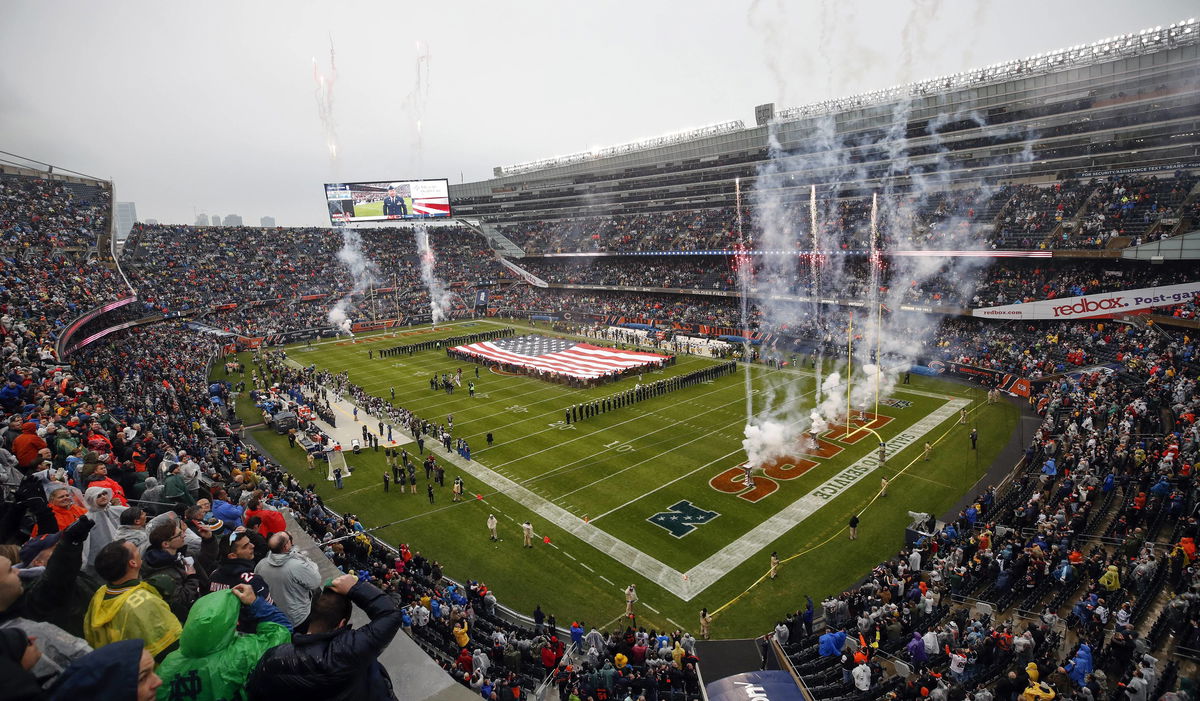
Bilder des Tages – SPORT U.S. flag is displayed on the field during the national anthem before an NFL American Football Herren USA football game between the Chicago Bears and the Green Bay Packers at Soldier Field in Chicago on November 12, 2017. PUBLICATIONxINxGERxSUIxAUTxHUNxONLY CHI2017111201 KAMILxKRZACZYNSKI
Imago
Bilder des Tages – SPORT U.S. flag is displayed on the field during the national anthem before an NFL American Football Herren USA football game between the Chicago Bears and the Green Bay Packers at Soldier Field in Chicago on November 12, 2017. PUBLICATIONxINxGERxSUIxAUTxHUNxONLY CHI2017111201 KAMILxKRZACZYNSKI
Essentials Inside The Story
- Indiana lawmakers push to fund a multibillion-dollar stadium project.
- Many residents are questioning who truly benefits.
- The Bears' future home still awaits a final decision.
Indiana lawmakers are prepared to help finance a proposed $3 billion stadium for the Chicago Bears. They have identified Hammond as a possible site and advanced amendments to Indiana State Bill 27 last month in an effort to attract the franchise. They have openly praised the proposal, with sponsors saying they feel “honored” by the chance to host the Bears and viewing the project as a significant historic moment for the region.
Watch What’s Trending Now!
However, the move has drawn opposition from residents who object to using taxpayer funds for the project, especially as many face rising living costs. In fact, as reported by Robert McCoppin of the Chicago Tribune, taxpayers who opposed the plan were absent from comments at the capital in Indianapolis. That explains the lack of initial dissent.
Opposition from taxpayers was inevitable. Constructing a new stadium in Hammond would introduce several levies, including a 1% food and beverage tax in Lake County and Porter County, a 5% increase on hotel stays in Lake County, and a 12% admissions tax. The proposal also calls for toll roads and the creation of a special taxing district designed to channel additional revenue toward the stadium project.
ADVERTISEMENT
Speaking about the issue, WJOB-AM radio host Chuck Pullen said, “A lot of blue-collar people in the area are struggling to get by. They’re asking, where’s our local and state government to help us? And why do the Bears get this special treatment?”
Americans for Prosperity Indiana, a libertarian advocacy group, was initially neutral about this development. But they also pushed back after knowing the tax burden on people. The group argued that the law puts taxpayers at financial risk while offering them limited benefits. They sent a letter to state senators, which read:
“It exposes taxpayers to massive financial risk while delivering little public benefit,” the group wrote. “Decades of economic research show stadium subsidies fail to generate net growth, and this proposal repeats the same mistakes — granting broad powers, open-ended liabilities, and special treatment for a private sports franchise at taxpayer expense.”
ADVERTISEMENT
“We welcome the Bears and private investment coming to Indiana, but it should not be on the back of state and local taxpayers.”
Despite the backlash, the proposal cleared the legislature with near-unanimous, bipartisan backing. In fact, even the eight lawmakers who voted against it, didn’t have much to say in opposition.
The proposal also had backing from Mike Braun, Todd Huston, and the majority of local officials, leaving critics with little expectation of stopping it. The measure also offers Republicans a political win: shifting an NFL franchise from solidly blue Illinois to a red state, while putting potential Democratic presidential hopeful JB Pritzker in an awkward spot.
In response, an Illinois House committee advanced legislation that would allow the Bears to pursue tax incentives through negotiations with local governments. However, the full General Assembly is not scheduled to consider the proposal until March 18, and resistance from some lawmakers persists.
Many residents in northwest Indiana are far less enthusiastic
According to Kevin Mejia of East Chicago, Indiana, who recently helped organize utility protests in Hammond and Merrillville, many northwest Indiana residents are not as supportive of the Bears’ proposal as their elected officials. And after posing the question about the Bears’ proposal to his 31,000 Facebook followers, he said the feedback he received was overwhelmingly negative.
“The residents are not happy,” he mentioned. “A lot don’t want more taxes. Some think they shouldn’t have to pay when the rest of the state doesn’t. It’s creating more of a burden we can’t withstand.”
Here’s why things get worse for Northwest Indiana: Northwest Indiana’s average income trails much of the broader Chicago region. U.S. Census data show a 19% poverty rate in Hammond and figures approaching 30% in neighboring Gary and East Chicago, conditions that could put Bears tickets out of reach for many residents. In Lake County, a 2021 study by Northwest Indiana Community Action found that nearly one-third of seniors reported having to choose between buying food and paying for medical care.
Plus, there are other issues.
For instance, the area near the stadium has problems. Wolf Lake, where the stadium is to be built, was a dumping ground for years.
Plus, after severe flooding hit Hammond in August last year, shutting down roads and inundating basements, some residents have questioned whether the city’s sewer infrastructure could manage the strain of a stadium drawing more than 60,000 people.
Now, it rests on the lawmakers to decide whether the economic upside of attracting the Bears could outweigh the backlash. For now, the NFL franchise hasn’t finalized the deal with the state. Meanwhile, their other plan involving Illinois is also facing uncertainty.
The Bears face legislative delays in Illinois
On Thursday, the Illinois House Revenue and Finance Committee voted 13-7 to advance House Bill 910. The legislation would allow the Bears to lock in property taxes at their Arlington Heights site. The proposal would pause property assessments for large megaprojects, allowing developers to negotiate payments instead of taxes with local governments.
It could have been a major step toward clearing the way for the Bears to build a stadium at their original choice. However, the full Illinois House adjourned without discussing the bill and will not return until March 18. The delay could give Indiana lawmakers an advantage, especially if they clear their differences with the residents.
Notably, the current bill in Illinois does not address how it will fund the public infrastructure for the new stadium. Lawmakers from both parties on the committee have voiced their doubts about the proposal’s functioning.
It suggests that there could be revisions. Meanwhile, the original bill required companies to invest at least $500 million to be eligible for incentives. But the state has lowered the requirements. Now, projects investing $250 million with 50 new jobs, or $100 million with 100 jobs, could qualify. Until last year, Arlington Heights was one of the most ideal sites for the Bears to build a world-class stadium.
The team was even ready to invest over $2 billion privately, but the differences with lawmakers derailed its original plan. Team president and CEO Kevin Warren said the project only required basic infrastructure upgrades and reasonable property tax terms. But momentum slowed amid limited legislative backing.
Moreover, the lawmakers told the Bears that they would not prioritize the project until 2026. With Indiana now giving Illinois tough competition, the future of the Bears’ next home remains uncertain.
ADVERTISEMENT
ADVERTISEMENT
ADVERTISEMENT
ADVERTISEMENT
Related Newsletters