Imago
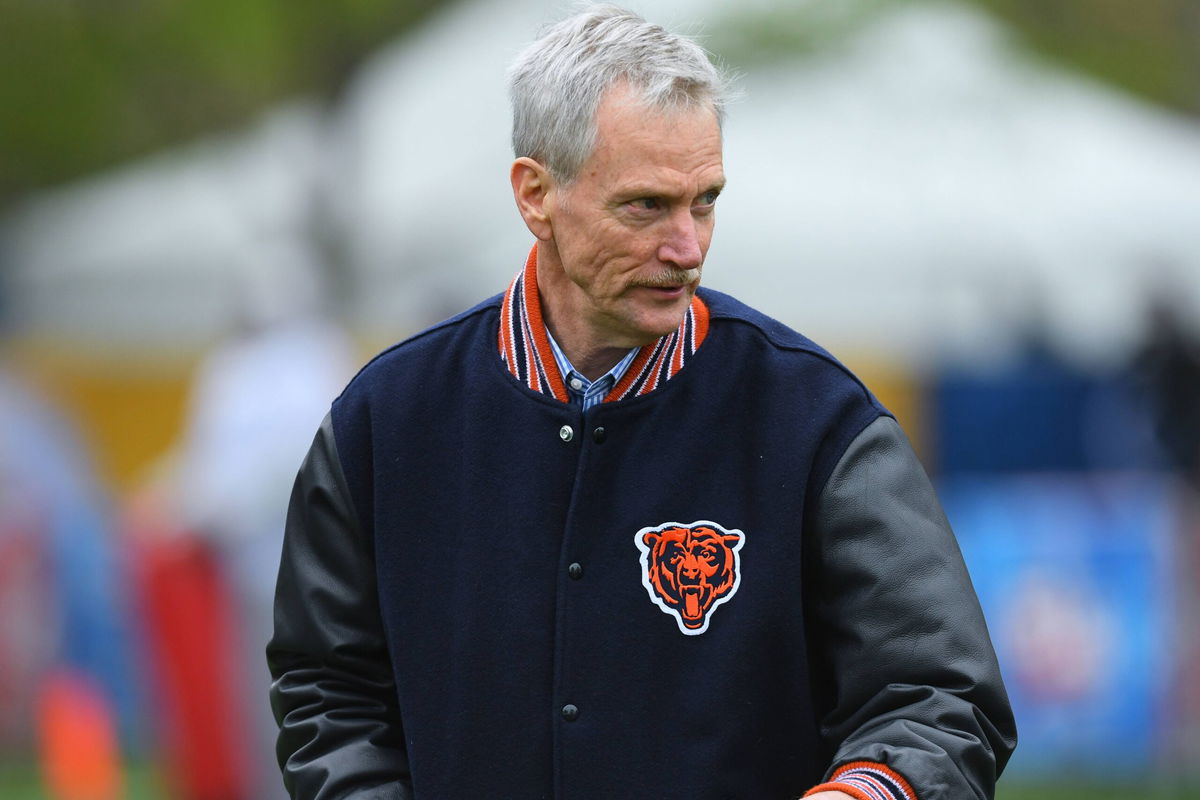
27 APRIL 2016: Chicago Bears chairman George McCaskey participates at the NFL American Football Herren USA Play 60 Draft Prospects Clinic held in Grant Park. The NFL Draft is being held at the Auditorium Theatre in Chicago, IL. (Photo by Robin Alam/Icon Sportswire) NFL: APR 27 Draft – Play 60 PUBLICATIONxINxGERxSUIxAUTxHUNxRUSxSWExNORxONLY Icon1640042716207560 27 April 2016 Chicago Bears Chairman George McCaskey participates AT The NFL American Football men USA Play 60 Draft prospects Clinic Hero in Grant Park The NFL Draft is Being Hero AT The Auditorium Theatre in Chicago Il Photo by Robin Alam Icon Sports Wire NFL APR 27 Draft Play 60 PUBLICATIONxINxGERxSUIxAUTxHUNxRUSxSWExNORxONLY
Imago
27 APRIL 2016: Chicago Bears chairman George McCaskey participates at the NFL American Football Herren USA Play 60 Draft Prospects Clinic held in Grant Park. The NFL Draft is being held at the Auditorium Theatre in Chicago, IL. (Photo by Robin Alam/Icon Sportswire) NFL: APR 27 Draft – Play 60 PUBLICATIONxINxGERxSUIxAUTxHUNxRUSxSWExNORxONLY Icon1640042716207560 27 April 2016 Chicago Bears Chairman George McCaskey participates AT The NFL American Football men USA Play 60 Draft prospects Clinic Hero in Grant Park The NFL Draft is Being Hero AT The Auditorium Theatre in Chicago Il Photo by Robin Alam Icon Sports Wire NFL APR 27 Draft Play 60 PUBLICATIONxINxGERxSUIxAUTxHUNxRUSxSWExNORxONLY
Essentials Inside The Story
- Illinois stalling the megaprojects bill leaves George McCaskey exploring immediate options.
- Indiana Governor Mike Braun quickly signs an active stadium authority framework into law.
- A two billion dollar private investment now hinges on this rivalry.
Nearly five years ago, George McCaskey’s Chicago Bears first showed interest in purchasing the former Arlington International Racecourse to build a new stadium. But with the Illinois State House adjourning until March 18 before voting on the HB 910 bill to help the Bears, Indiana’s lawmakers have a simple message: You snooze, you lose!
Watch What’s Trending Now!
“They came to us. We didn’t try to lure them,” Indiana Governor Mike Braun said of the Bears on The Pat McAfee Show at the NFL Scouting Combine. “They were being told bluntly (by Illinois), ‘You’ve got to build your own stadium. We’re not putting any taxpayer dollars into it.’ We never got ahead of our skis.”
As is common in these negotiations, the Bears’ camp hinted at other offers to apply pressure on Illinois. One of them was the state of Indiana. Yet, HB 910, a “megaprojects” bill that could support a stadium in Arlington Heights, awaits a floor vote.
ADVERTISEMENT
While HB910 would grant the Bears developments of $500 million or more to negotiate a long-term freeze on property tax assessments, it stops short of providing the direct state funding for infrastructure such as roads, utilities, or sewers that the team is seeking, a major sticking point in the negotiations.
The bill cleared the committee on a 13–7 party-line vote. But it has not yet reached or passed the full House. Internal opposition centers on long-term tax impact.
“It would shift liability from megaproject developers directly onto homeowners, small businesses, creating a mechanism that could double or triple the effective property tax rates over the next few decades,” said Brian Costin, deputy state director of the Illinois chapter of Americans for Prosperity, a Libertarian policy advocacy group.
ADVERTISEMENT
If enacted, any property tax agreement tied to a Bears stadium would require negotiations with local taxing bodies, including the Village of Arlington Heights, Cook County, and area school districts. The proposal also includes exemptions from state and local taxes on construction materials.
“You’ve gotta look at how long the Bears were trying to talk to their own state and city..
That goes back like three years and the Bears came to us because they thought there was no interest..
They gotta good look at what it’s like to do business in a place like Indiana” ~… pic.twitter.com/Mgc1G9PlsS
— Pat McAfee (@PatMcAfeeShow) February 26, 2026
ADVERTISEMENT
Chicago officials have formally opposed the legislation, and there are open questions about whether enough votes exist to move it to the Senate. The question also arose whether the bill was proposed exclusively for the Bears. State Rep. Kam Buckner (D-Chicago), whose district includes Soldier Field and who introduced the bill, refuted the notion and explained that it is designed to apply to large-scale developments statewide.
“Instead of letting a megaproject blow up a tax base in unpredictable ways, or letting negotiations happen in the shadows, this bill creates a clean structure,” Buckner said.
At the same time, Chicago city leaders have pushed back. They argued that the city deserves an equal opportunity to present its own proposal to keep the Bears at or near Soldier Field. They also have time, as the Bears would not move out until the agreement with Chicago is complete.
ADVERTISEMENT
All things considered, the broader dynamic is now clear.
For now, Illinois has pumped the brakes on the Bears’ stadium plans, with lawmakers debating the bill’s structure and vote count until further updates in March. Meanwhile, Indiana has already signed legislation creating a stadium authority and financing pathway. The Bears have not made a final decision. As for Indiana, the state has claimed itself open for business. That timing could matter.
ADVERTISEMENT
Indiana Gov. Mike Braun signs the Bears’ stadium framework bill
While Illinois lawmakers were adjourned, Mike Braun signed Senate Bill 27 into law. The bill will create a formal legal framework for a potential stadium in Hammond, Indiana, just across the state line from Chicago. Braun made it clear that Indiana views itself as a serious contender.
“I think they are really now getting a good look at what it’s like doing business in a place like Indiana, and it’s going to be a lot easier to run a business over the next 40 or 50 years than it would be there,” Braun told McAfee.
Top Stories
Cowboys Lose Defensive Player to Bears as Jerry Jones’ Defensive Woes Continue
Travis Kelce & Taylor Swift’s Wedding Plans Reportedly Confirmed Amid Chiefs TE Returns for 14th Season

NFL Looking to Address Troy Aikman’s Role With Dolphins Amid ESPN Conflict of Interest – Report

Mark Davis Clarifies Position on Selling Raiders as NFL Prepares to Vote on Succession Contingency Plan
ESPN Relieves Troy Aikman’s Colleague From Hosting Duties After 9 Years, Makes Decision on Her Future
The legislation creates the Northwest Indiana Stadium Authority, granting it the power to acquire land, issue bonds, and structure financing if the Bears move forward with that option. In practical terms, it gives Indiana an organized vehicle to execute a stadium deal.
ADVERTISEMENT
Strategically, the goal is simple: present Indiana as a stable, business-friendly alternative to Soldier Field.
The law allows revenue generated from ticket taxes, hotel taxes, and food and beverage taxes connected to stadium operations to be used to repay construction and infrastructure bonds.
“It gives the city of Hammond the authority to enact a 12% ticket tax. It requires proceeds from a renegotiated toll road agreement on the Indiana toll road be spent in the seven toll road counties,” said state Sen. Ryan Mishler, R-Mishawaka.
ADVERTISEMENT
Lawmakers estimate it could take approximately 35 years to retire those bonds using the designated revenue streams. Meanwhile, the Bears have signaled a willingness to invest roughly $2 billion of their own capital into a new stadium.
With uncertainty still surrounding whether the franchise ultimately chooses Hammond or Arlington Heights, one thing is evident: the competition for the Bears’ future home is far from settled.
ADVERTISEMENT
ADVERTISEMENT
ADVERTISEMENT
Related Newsletters