
During his final years, Pittsburgh Steelers’ Hall of Fame center Mike Webster lived in his pickup truck, unable to sleep through his relentless head pain. Trying to find a way to get some relief, the 4x Super Bowl champion would even shock himself with a stun gun to knock himself unconscious. When Webster passed away from a heart attack in 2002, forensic pathologist Dr. Bennet Omalu examined his brain tissue and discovered Chronic Traumatic Encephalopathy (CTE). This was the first time the neurodegenerative disease was documented in an American football player.
Watch What’s Trending Now!
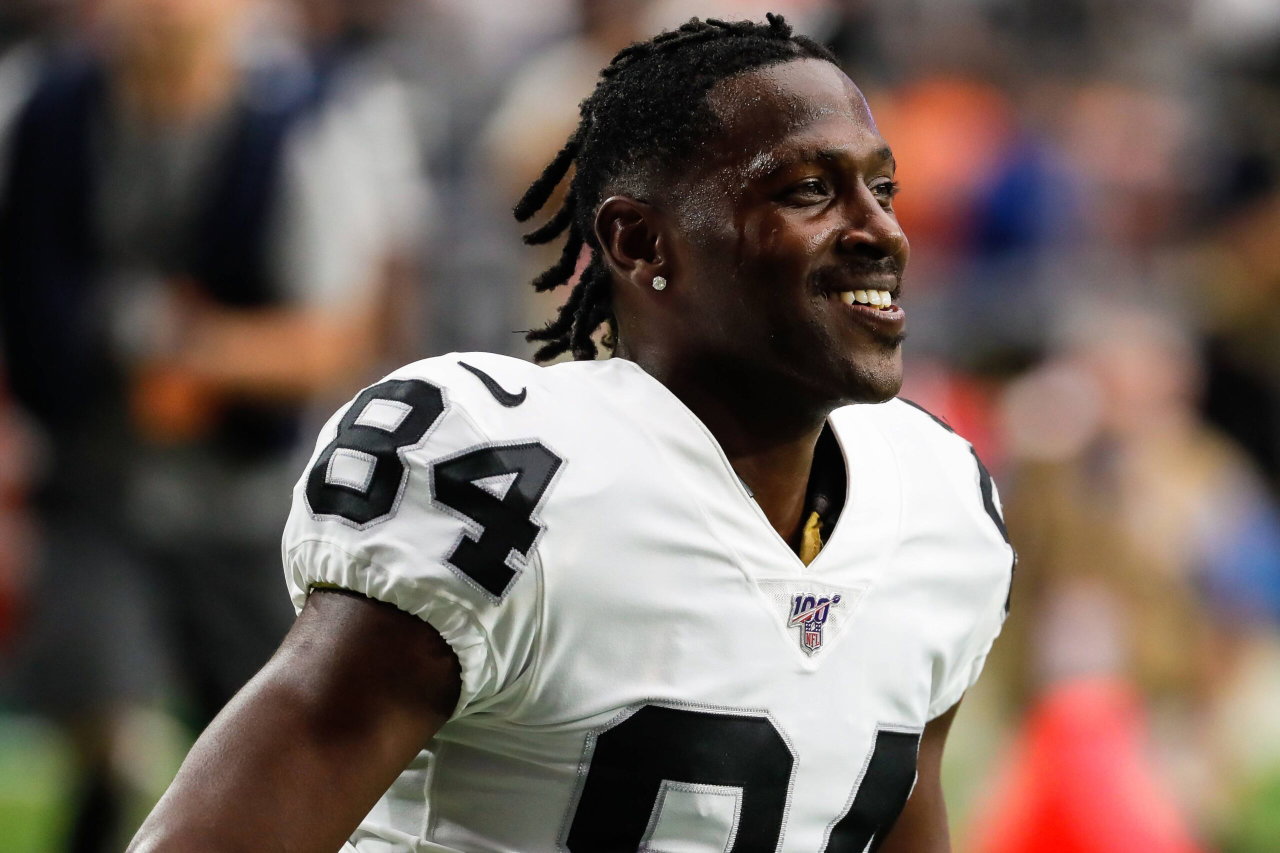
That history resurfaced in 2024, when former Steelers WR Antonio Brown discussed CTE on his YouTube channel, CTESPN, in episode 3 alongside former teammate Le’Veon Bell. When a clip from that episode resurfaced on X this September, Garrett Webster, Mike’s son, publicly put Brown and Bell on blast.
“As Mike Webster’s son, these two piss me off sometimes,” Garrett wrote on X, reposting the clip. “AB more than Bell. AB mocked CTE for years. Remember CTESPN. I hope he gets the help he needs, but he also needs to grow the f*** up at some point.”
In the clip, Brown and Bell notably asked each other whether they believed they had CTE before Brown offered his own loose definition.
“I don’t want to say it’s brain damage because you can’t live if it’s brain damage,” Brown said. I feel like people try to frame CTE as a concussion you may have, but yo, we had a bunch of concussions. You know what I’m saying? Like, you could live after a concussion. … I feel like CTE could be a bunch of different things, but I feel like it’s a characteristic of traumas that we all as people go through.”

Imago
NFL, American Football Herren, USA 2021: Tampa Bay at Carolina DEC 26 December 26, 2021: Tampa Bay Buccaneers wide receiver Antonio Brown 81 on the sideline during the fourth quarter against the Carolina Panthers in the NFL matchup at Bank of America Stadium in Charlotte, NC. Scott Kinser/Cal Media Charlotte NC United States EDITORIAL USE ONLY Copyright: xx ZUMA-20211226_zaf_c04_095.jpg ScottxKinserx csmphototwo843240
Now, Brown has treated CTE as online fodder for years. In February 2024, he posted a satirical graphic on X naming former NFL pass rusher Chandler Jones the ‘CTE Recipient of The Year.’ Later that month, on the Cam Capone News podcast, he claimed that the NFL created the CTE diagnosis to avoid paying disability money to retired players.
In a 2019 sit-down with ESPN, Brown also claimed he was “perfectly fine,” and argued that any brain damage would have prevented him from running businesses or communicating, later downplaying his 2016 playoff collision with Cincinnati Bengals linebacker Vontaze Burfict by claiming Vontaze “didn’t hit me that hard.”
CTE is a progressive neurodegenerative disease linked to repetitive head impacts and can only be diagnosed posthumously through microscopic brain tissue analysis. A study published in The BMJ analyzing 878 deceased NFL players who died between 2016 and 2021 found that at least 24.5% – nearly one in four – had confirmed CTE at death. The disease has also been linked to mental health issues and diseases like Alzheimer’s and Parkinson’s.
In July 2026, the Concussion & CTE Foundation announced that former Dallas Cowboys defensive end Marshawn Kneeland, who died by suicide in November 2025 at age 24, had Stage 1 CTE.
For the Webster family, the disease caused total financial collapse. Mike Webster used his four Super Bowl rings as collateral for loans before they were permanently auctioned off. His family spent years fighting for disability benefits they believed he was owed and never received. They were also left out of a billion-dollar concussion settlement that the league was offering.
USA Today via Reuters
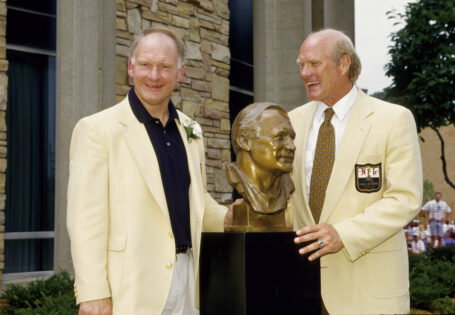
NFL, American Football Herren, USA USA TODAY Sports-Archive July 26, 1997 Canton, OH, USA FILE PHOTO Pittsburgh Steelers former center Mike Webster poses with his bust and portrait alongside Terry Bradshaw at Webster s enshrinement into the Pro Football Hall of Fame at Fawcett Stadium. Canton Ohio UNITED STATES, EDITORIAL USE ONLY PUBLICATIONxINxGERxSUIxAUTxONLY Copyright: xRVRxPhotosx 8391089
Garrett has spoken publicly before about how his family’s connection to CTE has shaped his life since his father’s passing, including his work as a liaison for the Brain Injury Research Institute. Now, it’s a bittersweet feeling for Garrett when he talks about his father’s legacy.
“I think that it’s obviously amazing to me that my dad is known in both ways, you know, for those two things, being such an amazing player and for being the first diagnosed case of CTE,” Garrett said on KDKA. “But I think that the fact that he is both of those things is amazing to me, because I don’t think that CTE would be as well known if dad was, let’s say, just an average guy who played two or three years in the league and then kind of disappeared.
Webster’s case went on to become one of the most important moments in the history of sports-related brain research. Omalu’s findings helped push CTE into the wider public conversation, eventually forcing the NFL to confront the risks players faced long after their playing days ended. More than two decades later, the Webster family is still part of that conversation.