
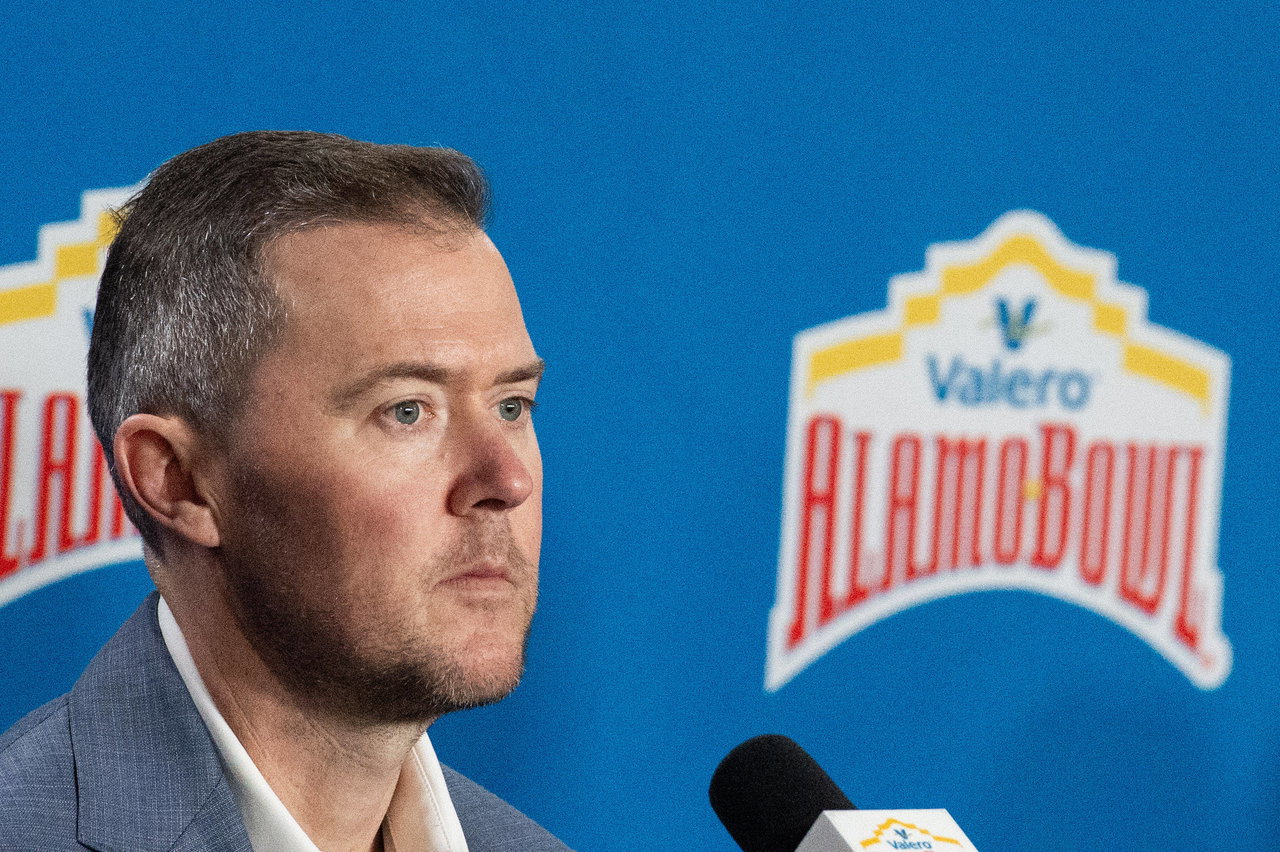
Even though 14th-ranked USC kicked off its 2026 college football season with a 42-26 victory over San Jose State on Saturday, nobody in Los Angeles was talking about the score. They were talking about the ghost town inside the 77,500-seat LA Memorial Coliseum. The school announced an official crowd of 51,144, which was the lowest turnout of head coach Lincoln Riley’s entire tenure. Anyone watching the TV broadcast could see entire stadium sections completely empty.
Watch What’s Trending Now!
Although the university later put out an official statement claiming it’s because of the 91-degree humid weather, according to analysts, this might be the price of Lincoln Riley’s abandoning their 100-year historic rivalry with Notre Dame. Fans simply refused to pay top-dollar ticket prices to watch a warm-up game instead of a historic blockbuster.
“It looked like the spring game. There was so sparse a crowd there,” Stewart Mandel of The Athletic said on The Audible podcast. “The point I would have made is, this is the game USC replaced Notre Dame with. You took away one of their two biggest rivalry games against a team that’s come. That would be a national championship favorite this year, and you replaced it with Week Zero against San Jose State.”
For traditional football fans, trading a historic rivalry for an easy opening win feels like losing the soul of the sport. Instead of hosting a prime-time battle against a top-tier Fighting Irish program, Trojan supporters were served an uninspiring early-season blowout. While Notre Dame expressed a willingness to play anytime, USC administration insisted on an early September kickoff slot that Notre Dame’s leadership ultimately turned down.
Sports analysts completely supported the fans’ decision for staying home. In a massive entertainment hub like Los Angeles, people have plenty of ways to spend their money on a hot weekend evening. If a university cuts out the premier game on the calendar, local fans will gladly spend their Saturday night at a concert or beach instead of sitting in an empty stadium.
From a pure win-loss perspective, you can understand why USC’s leadership wanted to dodge the Fighting Irish this season. Joining the Big Ten Conference already pushed USC into a brutal schedule.
With games lined up against top-ranked Ohio State, Oregon, defending champion Indiana, and a tough road trip to Penn State, expert Phil Steele ranked USC’s schedule as the third-hardest in America. Adding Notre Dame to that list would have given the Trojans the single hardest path in college football history, making a Playoff spot nearly impossible.
Had Notre Dame remained on the schedule, it reportedly could have been the most stacked strength of schedule in all of Division I. So, safe to say, by replacing the Irish with the Spartans, the coaching staff tried to build a structural cushion into its schedule.
And from a playoff perspective, the logic is understandable. In the expanded College Football Playoff era, every loss carries enormous weight, and one bad result against Notre Dame could potentially have made USC’s road to the postseason significantly more difficult.
Moreover, Stewart pointed out that people in other parts of the country, such as the South, where college football is practically a religion, are going to judge USC’s empty stadium scene heavily.
“I don’t fault a single USC fan for staying home. However, people in other parts of the country where college football is king and they’ll show up no matter what,” Stewart said.
It feeds right into the narrative that West Coast fans are “soft” and don’t actually care about supporting their team when it’s not convenient.
This empty stadium sends a crucial warning to university executives across America. When schools pause legendary rivalry games due to the financial and logistical chaos of conference realignment, the sport loses the magic that keeps fans connected.
If athletic departments keep prioritizing massive television media rights and rigid 9-game conference schedules over historic regional matchups, they will quickly find out that fans will stop showing up altogether.
Luckily for traditionalists, the public outcry over this rivalry pause already pushed both schools back to the negotiating table earlier this month. On August 3, USC Athletics and Notre Dame officially announced a four-game series starting in the 2030 season. While fans still have to wait four years to get the iconic match back, Saturday’s empty Coliseum proved that college football traditions cannot be replaced without serious fallout.