
LSU handed Lane Kiffin a $13 million annual contract to fix their football program, and he wasted no time making noise. In just one offseason, Kiffin assembled a transfer roster valued at nearly $40 million, hauling in 41 new players. On paper, the Tigers look loaded. But packing a locker room with four dozen strangers creates a massive problem. Money buys talent, but it cannot buy immediate chemistry.
Watch What’s Trending Now!
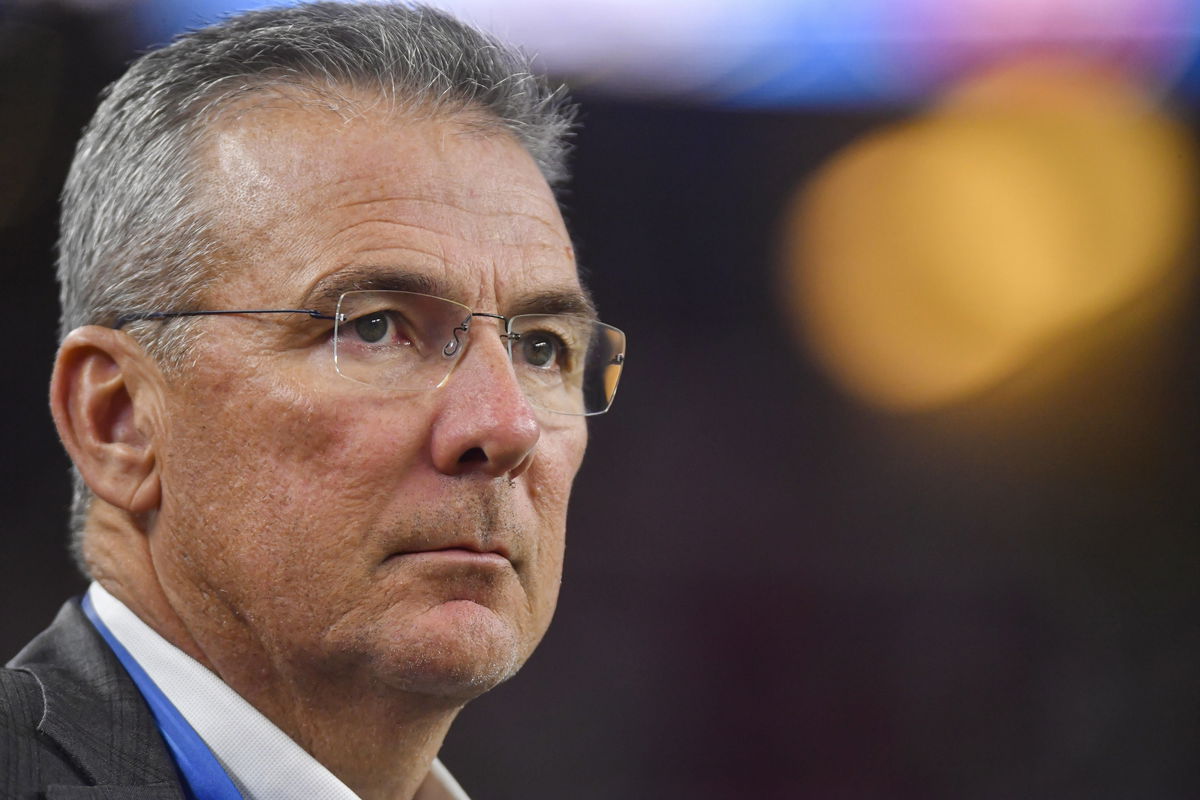
Hall of Fame coach Urban Meyer knows that trap all too well. Speaking on The Colin Cowherd Show, Meyer explained that bringing in dozens of transfers usually leads to total chaos unless a coach protects one specific side of the ball. When asked how to build culture amidst a transfer surge, Meyer pointed to his old coaching blueprint.
“Yeah, that’s tough. Here’s the thing that I did, though, Colin. I don’t want to take it off of that, but there’s a little method to the madness,” Urban Meyer said on the Colin Cowherd Show. “When I took over Bowling Green, I kept the defensive coordinator. His name was Tim Beckman. He was very good. Because it’s going to take a moment to get everything going the way you want it on offense.”
Meyer kept that exact blueprint alive at every stop. He retained Kyle Whittingham at Utah, Charlie Strong at Florida, and Luke Fickell at Ohio State. His logic was simple. An offense full of new transfers takes months to learn plays and build trust. But if the defense already knows the system, language, and standards, it buys the new offense time to catch up without losing games early.
That is where Lane Kiffin’s decisions in Baton Rouge get interesting. Kiffin essentially stole a page out of Meyer’s playbook. Instead of firing everyone, Kiffin fought hard to keep LSU defensive coordinator Blake Baker. Baker was heavily pursued for the head coaching job at Tulane after Jon Sumrall departed. Yet Kiffin convinced Baker to stay put.
The move made complete sense. Last season, Baker’s defense was the single reason LSU did not sink below .500. The Tigers gave up just 19.8 points per game, ranking 23rd nationally in scoring defense. While Kiffin rebuilds the offense around 41 new portal additions, Baker gives the program a proven, top-tier defense that already speaks the same language. If Kiffin had let Baker walk, LSU’s transition year could have quickly spiraled into a disaster.
LSU enters the season with nine preseason All-SEC players on the roster, but talent alone does not win titles. By keeping Baker and core defensive coaches intact, Kiffin bought his team time. The defense provides a stable floor while the star-studded offense figures out how to play together.
In the modern era of massive NIL deals and instant roster changes, Urban Meyer’s old formula has become a survival guide. LSU’s $13 million coach paid top dollar for talent, but sticking to a timeless coaching secret might be what saves his season from becoming an expensive transfer portal disaster.