
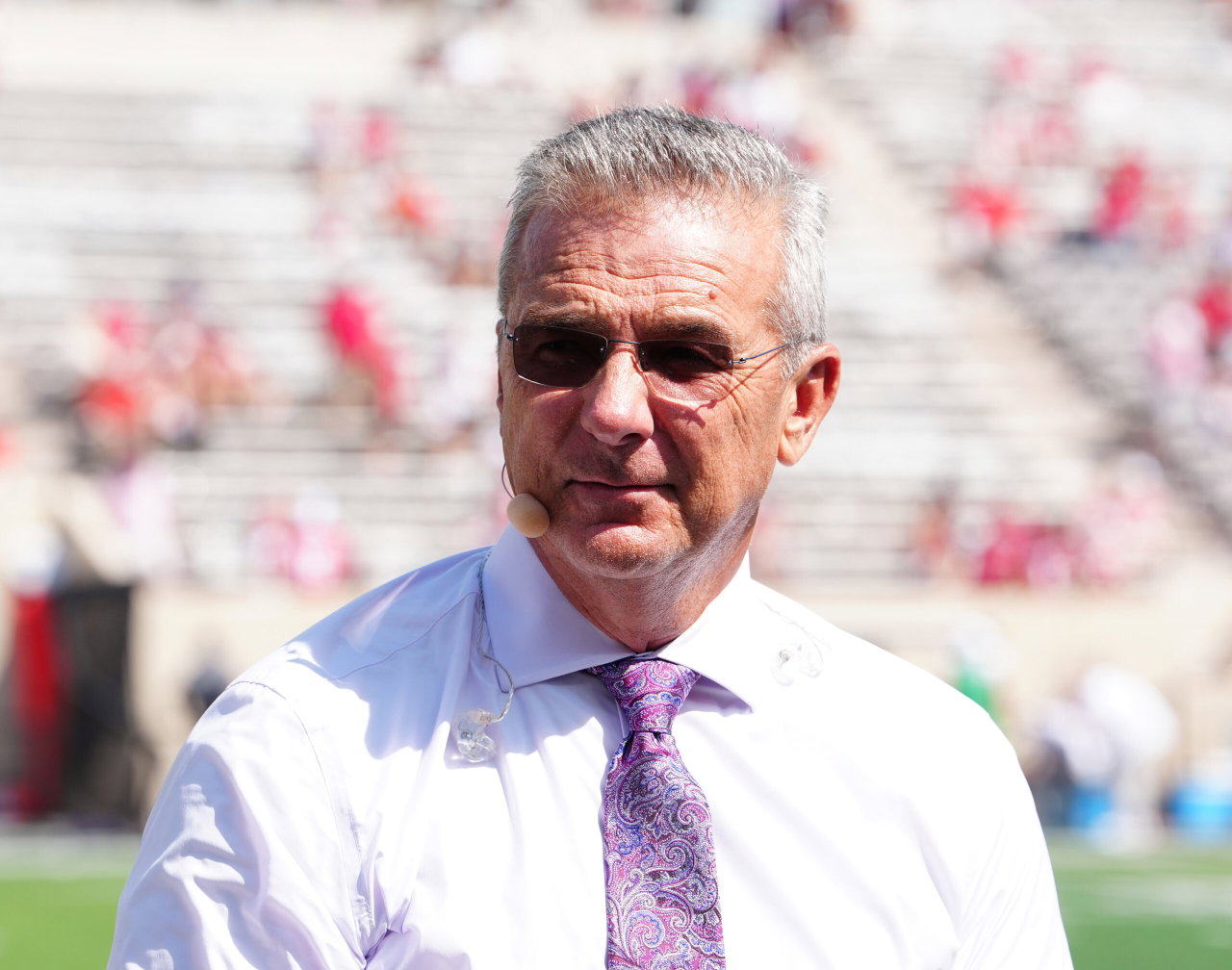
College football’s money game is getting dangerously close to a breaking point. Urban Meyer claims one program came within days of missing millions in player payments, with a brutal consequence hanging over its head: no money, no football.
Watch What’s Trending Now!
The former Ohio State coach revealed the alarming situation in remarks shared by The Triple Option, exposing how college football’s new financial reality could leave programs scrambling just to keep players on the field.
“I had someone deep within a program tell me that they were within two weeks of not making payroll,” Meyer said, according to an Instagram Reel post by 3xOptionShow. “He said, ‘We were within 10 days of not making payroll by several million dollars.’ And I said, ‘Who told you that?’ He said, ‘Well, they didn’t get into details.’ So what did they do? They had to go to the owners to make payroll. I s— you not.”
“Think about what I just said. Mid-season to make payroll. Because if you don’t make payroll, according to this person, you might as well close the doors on that because you’ll never sign another player. Making payroll. And then if you’re short on payroll, you go to the owners to make sure you make payroll. Oh, payroll to the players. Yeah. Is that wild? Yeah. And guess what? If those players don’t get paid? Done. They don’t play.”
Though Meyer didn’t name the school, the pressure behind it is real. The House settlement, which was approved on June 6, 2025, lets schools share revenue with athletes, and the cap was $20.5M in 2025-26.
It rose to about $21.3M this year. Out of 307 schools that paid athletes in year one, 68 hit that cap or came within 5% of it, per Associated Press. That amounts to $1.77B in total payouts, leaving schools with a major financial commitment once they agree to pay athletes.
Meyer’s warning also highlights how vulnerable programs can be when payments fall behind. Players have the option to enter the transfer portal, and rival schools can use better financial offers to lure them away. NIL has further made it messier.
Revenue sharing is capped, but outside deals aren’t. Opendorse found the average Power Four school had $13.5M in third-party offers on top of the cap in year one. The College Sports Commission has questioned between five and 10 Power Four programs about possible cap violations tied to those deals.
Nick Saban has also pushed for tighter guardrails, arguing that no business can operate without a budget and clear guidelines. He has compared the situation to the NFL, where owners would struggle to manage their teams if every player became a free agent each year. Saban supports the Protect College Sports Act, which would establish the spending cap in federal law.
The Protect College Sports Act, introduced in the Senate on May 27, would put the revenue-sharing cap into federal law, but its passage is far from certain. Until clearer rules are in place, schools remain responsible for funding player payments while navigating outside NIL deals and rising roster costs.